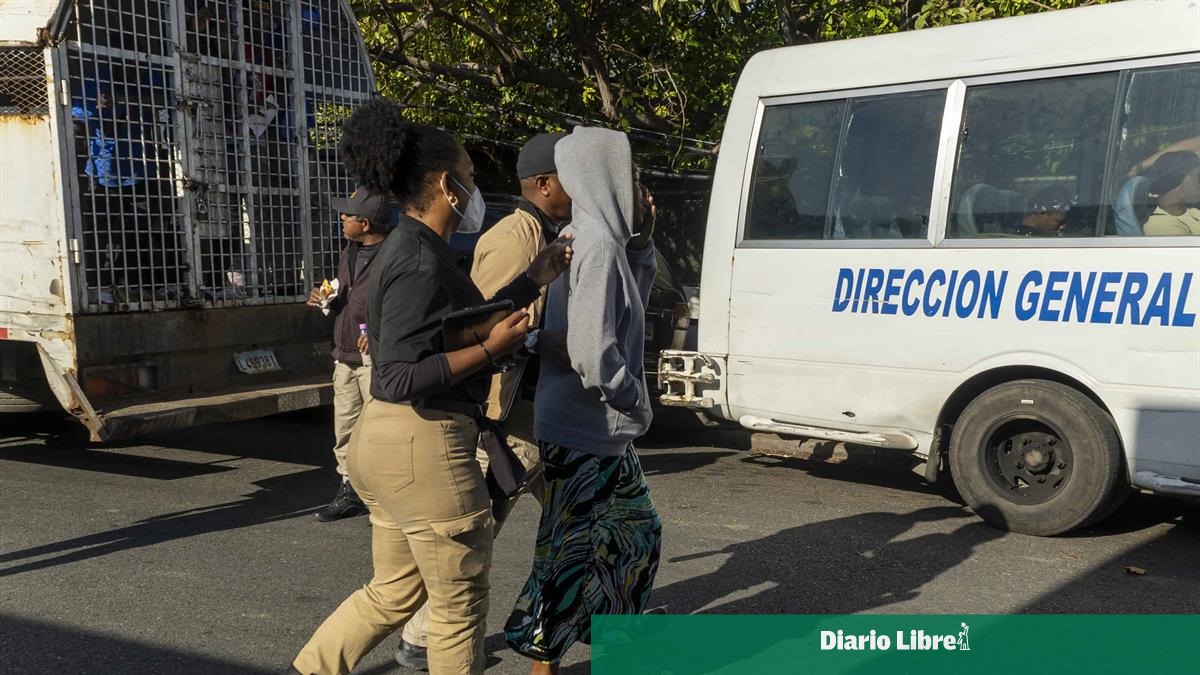
He Dominican government issued his position Regarding the statement published by the Inter-American Commission on Human Rights (IACHR) on February 6, 2026, on immigration policies adopted by the country.
In his response, the State affirms that he maintains his commitment with the protection of the human rightswhile ensuring compliance with its internal legal framework on immigration matters.
The government stated that the migration phenomenon must be analyzed from a regional perspectivedue to the prolonged political, security and humanitarian crisis in Haiti, which has generated a migratory flow sustained towards the country. He highlighted that the Dominican Republic has assumed, for decades, a disproportionate burden in this situation.
Likewise, he recalled that, in the exercise of his sovereigntyhe State has the right and obligation to regulate the entry, stay and exit of people, in accordance with the Constitutionnational legislation and international standards of human rights.
The statement emphasizes that the measures taken They seek to manage in an orderly manner a migratory flow extraordinary, avoiding negative impacts on the social cohesion and in public services.
For this reason, the Government rejected the call of the IACHR to apply the non-refoulement principle in a general way, arguing that this would imply accepting the entry of any Haitian citizen who wishes to enter the country irregularly.
Further
In your statementthe State affirms:
“Dominican Republic takes note of the statement from the Inter-American Commission on Human Rights (IACHR) published yesterday, related to the immigration policies adopted by the State. In this context, it establishes its position of clear and responsible mannerreaffirming its historical commitment to the protection of human rights and, simultaneously, with the legitimate compliance of its internal legal framework.”
The government indicated that the migration phenomenon must be analyzed from a regional perspective, due to the political crisis, security and humanitarian in Haitiwhich has generated a sustained flow to the country. According to the statement:
“The prolonged political, security and humanitarian crisis in Haiti has generated sustained and exceptional migratory pressure. For decades, the Dominican State has assumed, with a sense of solidarity and human responsibility, a “disproportionate burden in the face of a crisis that transcends its borders.”
Regarding the sovereignty of the country, the government remembered:
“In the exercise of its sovereignty, the Dominican Republic has the right and obligation to regulate the entry, stay and exit of people in its territory. This power is neither discretionary nor arbitrary: it is exercised in accordance with to the Constitutionnational legislation and international standards of human rights. As the inter-American system itself has repeatedly recognized, the power to define immigration policies constitutes an essential attribute of state sovereignty.”
The statement also emphasizes that the measures adopted seek to manage an extraordinary migratory flow in an orderly manner:
“The measures adopted by the Dominican Government respond to the legitimate need to manage an extraordinary migratory flow in an orderly manner to avoid the negative impact that it generates on social cohesion and on spending on public services. No State can be forced to assume the protection or service provisions of the population of another State in the face of the collapse of the second.”
Finally, about the app of the principle of non-refoulement, the Government clarified:
“We reject the Commission’s call to apply the principle of non-refoulement in a general way to all migrants in immigration status irregular, since the same would be equivalent to forcing the Dominican State to accept any Haitian citizen who wishes to enter, even irregularly, into our territory.”