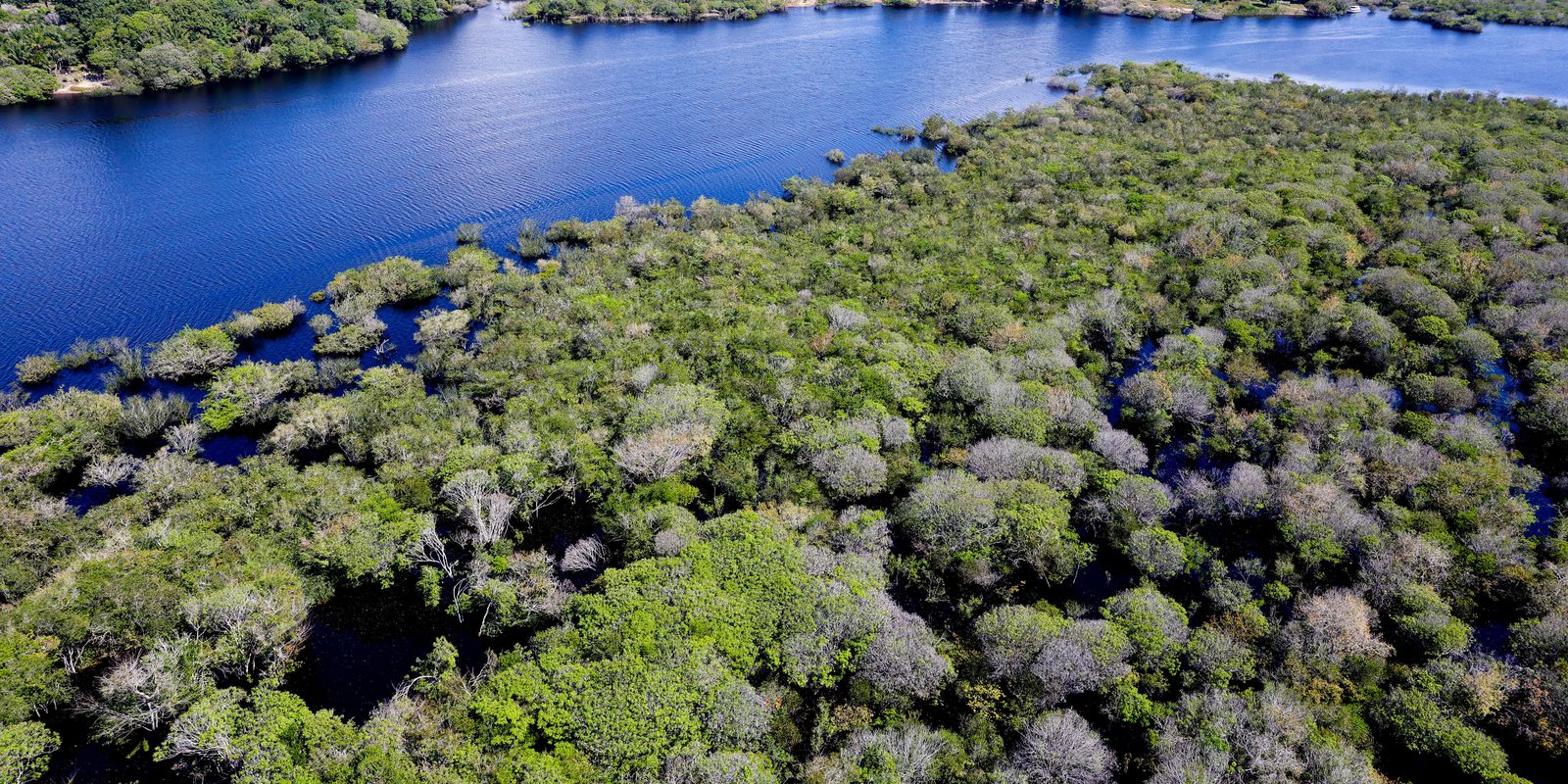
The registration process for the selection of organizations that will carry out activities to help control deforestation in the Amazon began today (7). The initiative is part of the federal government’s Union with Municipalities for the Reduction of Deforestation and Forest Fires in the Amazon (UcM) program, and is aimed at 48 priority municipalities for controlling deforestation that joined the initiative in 2024. The project is financed with resources of R$ 131.9 million from the Amazon Fund and should benefit around 7,300 families living in the region.
Organizations will be chosen through a public call as determined by the noticereleased last Monday (2). To participate, entities must be accredited with the National Agency for Technical Assistance and Rural Extension (Anater). Work proposals must be submitted by March 2nd by Land Management System (SGA). Questions should be sent to the email: [email protected].
The initiative aims to guarantee land ownership and productive inclusion in the Amazon. The project will support environmental and land regularization to offer Technical Assistance and Rural Extension (Ater). Technical assistance will also be offered, strengthening family farming and promoting sustainable rural development, so that farmers can improve their income in a sustainable way, keeping the forest standing.
“This region, marked by a multiplicity of actors, including traditional communities, indigenous peoples, family farmers, agrarian reform settlements, medium and large agricultural enterprises and conservation units, demands action strategies that consider local specificities, conflicts over land use, land regularization and different forms of appropriation and valorization of natural resources”, says the notice.
The project prioritizes small rural properties – properties with up to four fiscal modules – located in settlements or areas of undesignated federal public land.
Among the initial actions are the identification and visit to family farmers to begin land and environmental regularization on lands previously selected in dialogue between partners. Next, the teams will support farmers in implementing agroecological practices and agroforestry systems.
In this first stage, there will be 16 lots to be tendered through the notice, divided into the 48 priority municipalities for controlling deforestation that have joined the Union with Municipalities until April 2024.
“At this stage, the project plans to reach families from six Amazonian states – Acre, Amazonas, Mato Grosso, Pará, Rondônia and Roraima. The target audience is family farmers, occupants of federal public lands not yet allocated or settlers of the National Institute of Colonization and Agrarian Reform (Incra)”, informed the Ministry of Environment and Climate Change, one of those responsible for the program, together with the Ministry of Agrarian Development and Family Agriculture, Anater, Instituto Nacional of Colonization and Agrarian Reform (Incra) and the National Bank for Economic and Social Development (BNDES).
Union with Municipalities
This is the first project of the Union with Municipalities Program of three planned with resources from the Amazon Fund over the next 5 years. The goal is to complete the regularization of around 30 thousand families, with a total expected investment of R$600 million. Established in 2023, the program recognizes the leading role of local managers in reducing deforestation and forest fires in the Amazon.
Currently, 70 municipalities in seven states in the Amazon are already participating in the initiative. More than 1,800 pieces of equipment, including vehicles, vessels and monitoring items, have already been delivered, in addition to technical training activities and payment for environmental services for family farmers.
With around R$800 million from the Amazon Fund and the Floresta + Amazônia Project (a partnership between MMA, UNDP and the Green Climate Fund – GCF), the program carries out land and environmental regularization projects, the implementation of environmental governance offices in city halls, payment for environmental services and the recovery of native vegetation.