LIMA, Peru – The 34th International Book Fair (FIL) in Havana, which was about to take place from February 12 to 22, 2026, was postponed indefinitely as a result of “the extraordinary” and “complex” situation that the country is experiencing, reported the Organizing Committee of the event.
A report from the official press of the Cuban regime held Washington directly responsible for the current debacle that the island is going through, justifying itself after the embargo and the president’s recent measure. donald trump that warns of tariffs on countries that provide fuel to the dictatorship.
“The new date for this important cultural event will be informed in due course,” the statement said.
The last FIL carried out on the Island was carried out between February and March 2025 (both its capital and provincial tour) with South Africa as the guest country. The event took place amid complaints and the economic crisis, already raising questions about its relevance in conditions of widespread precariousness.
In a report for Cubanetindependent journalist Jorge Luis González Suárez said that one of the first points that caught his attention was the decrease and participation of visitors compared to previous fairs.
A review of the 33rd edition of the FIL
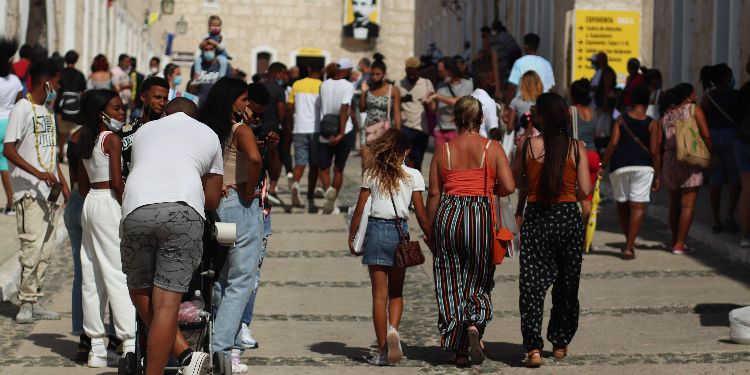
At the main headquarters of La Cabañain Havana, where there was always a large attendance of people, and even crowds, González Suárez described that it was feasible to travel without bumping into anyone. According to comments he heard, the low attendance was a product of the poor public transportation. Most attendees lived in nearby places, had private transportation, or had money to access taxis.
A second significant element was that the vaults where the participating exhibitors’ stands were placed in the La Cabaña fortress were empty. You could count the entire interior wing of its left side, plus 16 of the closed front ones, almost a total of 50% in that area, as many of the foreign businessmen traditionally present and even several of the Cuban publishing houses did not attend.
In La Cabaña, the guest country, South Africa, had its vault almost at the end, when it is always located in front of the square in the background, to the right of the entrance, as this is a more visible and busy place. It exhibited only books in English and exhibition books. The journalist did not verify the printing of works by authors from South Africa or related to that country.
As has been the case for a long time, merchandise and products that have nothing to do with literature abounded.
There were multiple tents with light food; boys, girls, and even adults, raising kites and chiringas sold on the spot; a small amusement park and platforms with various items. Most of the non-literary merchandise offered was very expensive stationery and school supplies.
Most of the books brought by exhibitors from the few countries that attended were mainly for children and their prices were unheard of: the average ranged from 1,000 pesos, but there were children’s titles that cost up to 6,000. “Imagine if a minor, who has no sense of monetary value, asks his parents to buy him one of these expensive books, and the parent does not have the income to satisfy it,” highlighted the journalist.
At least something positive happened last year: the number of political propaganda books decreased and numerous titles were reissued in the Biblioteca del Pueblo collection of universal literature and Cuban classics, which were published in the 1960s.