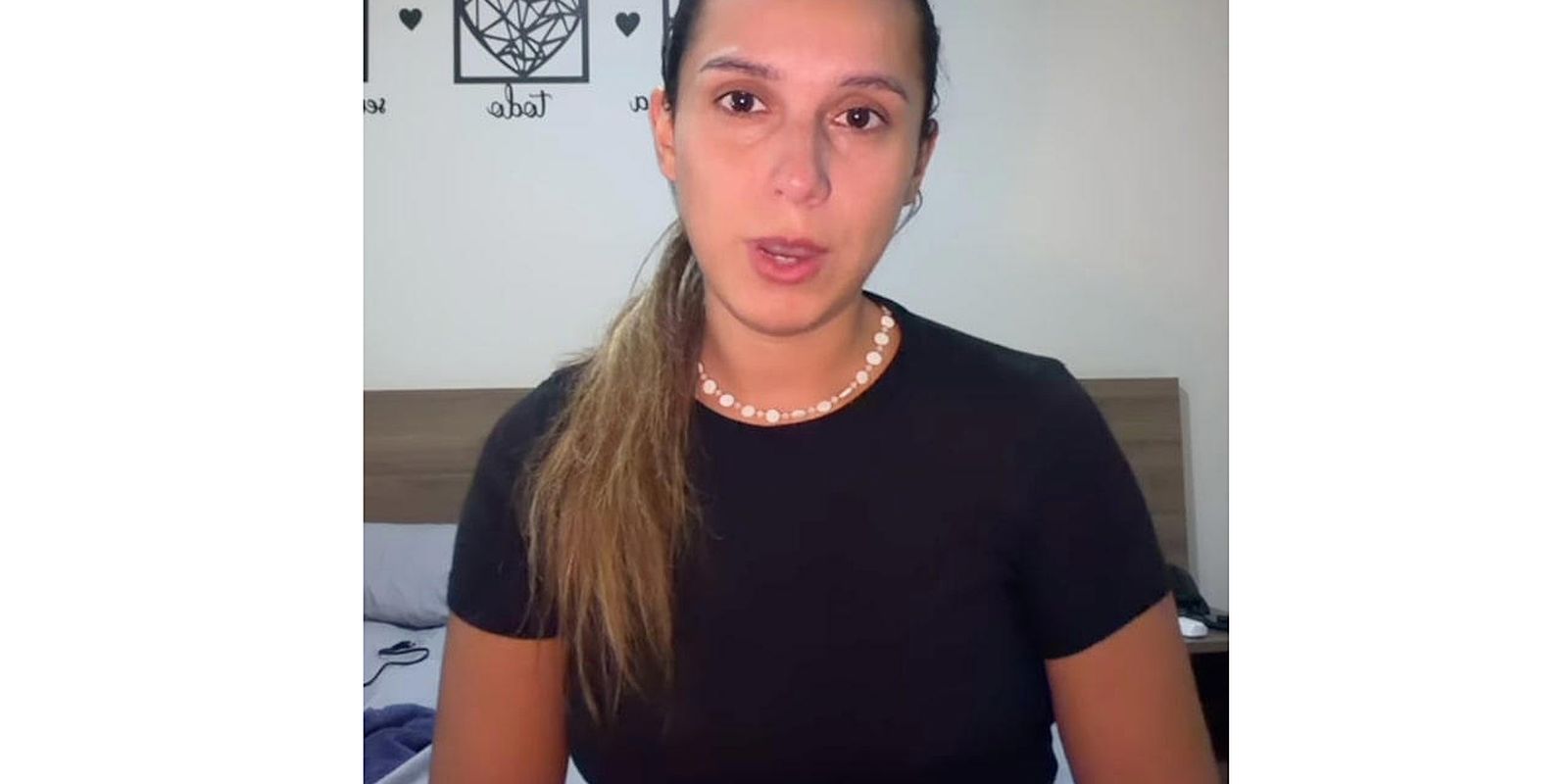
The Rio de Janeiro Court revoked late this Friday afternoon (6) the preventive detention of the Argentine lawyer and influencer, Agostina Paez, accused of having committed racist offenses, on January 14, against four employees of a bar in Ipanema. Agostina Paez was released at the police station this evening.
The Argentine tourist was arrested in the morning in compliance with a preventive arrest warrant issued by the 37th Criminal Court of the capital. She was located in a rented apartment in Vargem Pequena.
As the process is under judicial secrecy, the Court of Justice’s office limited itself to informing that “the preventive detention order was revoked by the court of first instance”.
The crime occurred on January 14, when one of the victims went to the police station and reported having been the target of racial insults during an argument involving payment of the establishment’s bill.. As determined, the tourist pointed her finger at the worker, used the word mono, which means monkey in Spanish, and started imitating the animal’s gestures and sounds.
The criminal conduct was recorded on video by the victim himself and confirmed after analyzing security camera images. Throughout the investigation, according to the Civil Police, agents interviewed witnesses and gathered evidence that allowed the dynamics of the facts to be completely clarified.
Before decreeing preventive detention, the Rio Court, at the request of the Public Ministry, had already prohibited the accused from leaving the country, withheld her passport and ordered the use of an electronic ankle bracelet.
This Thursday (5), in a post on Instagram, Agostina says that she received notification of the arrest due to danger of escape and said that she was wearing the electronic ankle bracelet and was available to the police. “I’m desperate, I’m scared to death.”
The lawsuit states that the version presented by the defendant is that the gestures were mere jokes directed at her friends.
The crime of racial insult – provided for in article 2-A, caput, of Law No. 7,716/89 – provides for a prison sentence of two to five years.