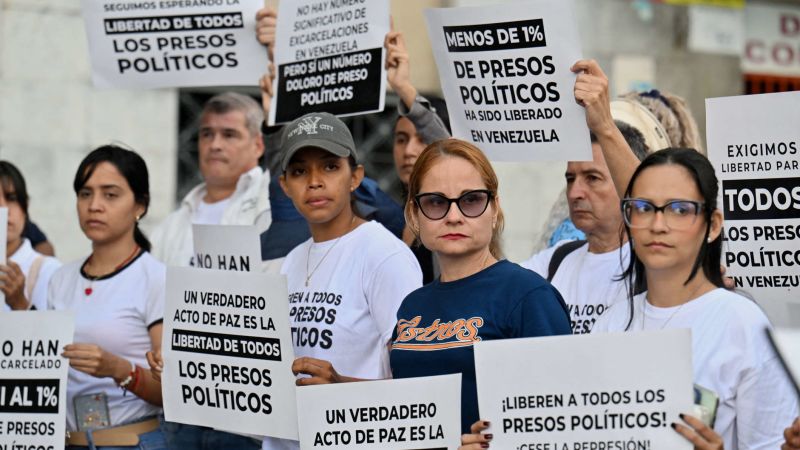
Before the start of debate in the National Assembly this Thursday on the amnesty billseveral non-governmental organizations dedicated to the defense of human rights in Venezuela warned about the lack of transparency in the discussion because the full content of the legislation has not been publicly disclosed.
Through a statement, the organization Justicia, Encuentro y Perdón (JEP) warned that it is incompatible with the basic principles of transparency and citizen participation that the legislative debate begins without victims, family members and civil society knowing the full text of the proposal.
“No amnesty law can be debated or approved without turning its back on the victims, their families or the human rights organizations that have accompanied them for years,” said JEP, while demanded the immediate publication of the text complete so that comments can be made before its eventual approval.
They warn about secrecy
JEP warned that the secrecy surrounding the project prevents a deep analysis of the scope of the norm, the inclusion and exclusion criteria, as well as its legal effects, which calls into question its legitimacy.
For its part, Foro Penal, an organization specialized in the defense of political prisoners, received the proposal with optimism, but insisted that Legislation must respond to the real challenges of the country and contribute to reconciliation, justice and the non-repetition of abuses.
Both the Penal Forum and the NGO Provea they clarified that The amnesty should not be understood as an act of forgiveness or grace from the Stategiven that many of the detentions that are intended to be covered were arbitrary and violated rights enshrined in the Constitution and in international treaties signed by Venezuela.
Along the same lines, Amnesty International (AI) warned that the law would be insufficient if it does not incorporate guarantees of non-repetition, such as the repeal of norms that facilitated arbitrary detentions and the dismantling of state organizations involved in human rights violations. The law should not become a mechanism of impunity and should guarantee truth, justice and reparation for the victims, he insisted.
What is known about the Amnesty Law project
According to the explanatory memorandum, The draft Amnesty Law for Democratic Coexistence seeks to promote peace and overcome political confrontationbased on article 187 of the Constitution. The text indicates that crimes such as serious violations of human rights, crimes against humanity, war crimes, intentional homicide, corruption and drug trafficking are excluded from the amnesty, in compliance with article 29 of the constitution and international commitments.
The initiative includes 13 articles that regulate general provisions, amnestiable acts, legal effects and procedures for its application, and maintains that it does not require additional budgetary resources.