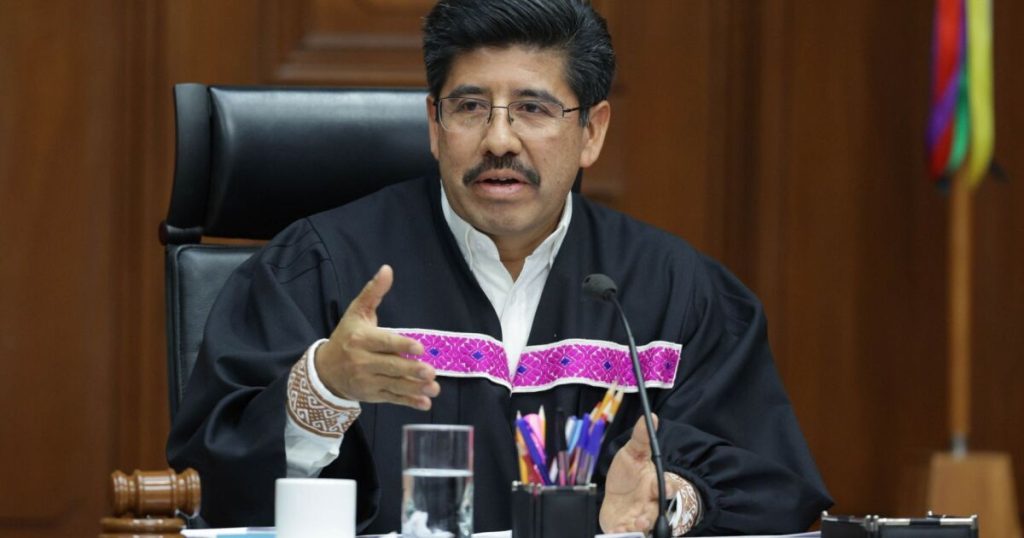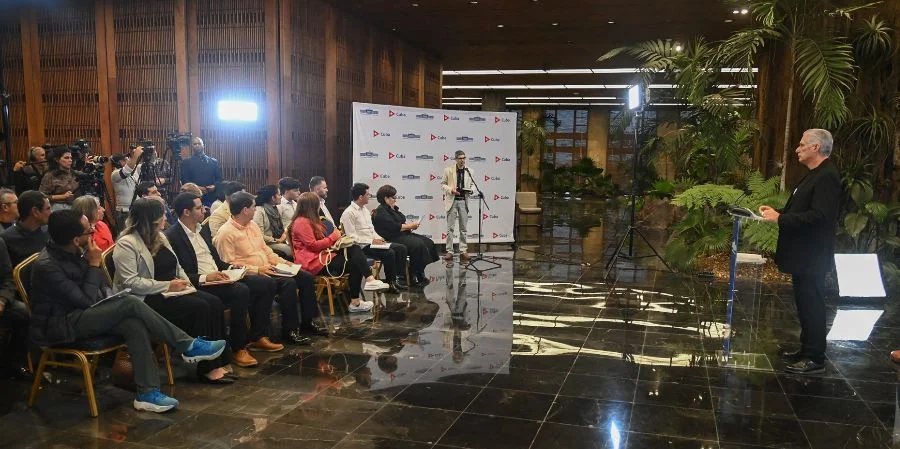
MIAMI, United States. – Cuban economist Mauricio de Miranda Parrondo criticized the public intervention of the ruler Miguel Díaz-Canel this Thursday considering that he was repeating failed policies and did not address the root of the structural crisis that the country is going through.
In a long post on FacebookDe Miranda maintained that “the system is the problem” and that the official proposals arrive “late”, without a coherent plan to confront widespread impoverishment, exchange rate distortion, the energy crisis and the lack of economic and political freedoms.
The economist analyzed, point by point, the economic issues addressed by Díaz-Canel in his speech this Thursday. Regarding the announced “improvement and updating of the economic management system”, which proposes combining central planning with market signals, De Miranda assured that “it is more of the same” and stressed that historical attempts at coexistence between central planning and the market have failed. In his opinion, planning should be transferred to companies and, at the national level, be limited to macroeconomic variables of an indicative nature.
In relation to the “new currency allocation system”, the economist described the proposal as “a new economic policy error” and defended the opening of a legal and transparent exchange market, with a single exchange rate determined by the market. He considered it “absurd” to maintain multiple segments with different rates, minimal quotas and waiting lists, warning that this scheme generates “distortions and perverse incentives, as well as discretion and space for corruption.” He also reiterated the need to eliminate partial dollarization of the economy.
De Miranda agreed on the urgency of restructuring the state apparatus to reduce duplication and budgetary expenses, but expressed skepticism about the Government’s political will to undertake fundamental changes. In that sense, he proposed that the Communist Party of Cuba (PCC) should stop being financed by the State and abandon the supervision of the Government, functions that – he said – would correspond to independent control bodies. He also advocated eliminating state funding from party-controlled social organizations and allowing free association.
Regarding the announced autonomy of the state company, the economist agreed in principle, but questioned whether the Government will eliminate ministerial subordination, the OSDE and directive planning. “The company must function as such and in any market companies with losses cannot survive,” he said, while asking what would happen to the workers who would be unemployed if loss-making entities were closed and if “the unrestricted development of private entrepreneurship” would be allowed.
Regarding municipal autonomy, De Miranda rejected the idea that national development is the simple sum of local developments. He stated that Cuba is experiencing “progressive, systematic and widespread impoverishment” derived from failed economic policies, including those adopted under the current Government. He also criticized the presidential phrase “we are going to eat what is produced in each place,” which he compared to a regression to pre-modern schemes, and defended that municipal autonomy must include its own financial resources and democratically elected authorities.
The economist dedicated a large section to the so-called food “basket.” He argued that the concept is poorly presented in Cuba and recalled that, in economics, the basic basket is the set of goods and services that determine consumption levels and serve to measure inflation. He proposed ending the Supply Book and closing the ration offices (OFICODA), in addition to recognizing before the international community that the country faces a hunger situation that requires external help. “Recognize before the world that Cuba is hungry and requires help from international organizations,” he wrote.
Regarding the external debt, De Miranda demanded transparency and a national debate. “We have the right to a national debate on this issue that is crucial for the future of the country,” he stated, pointing out that the debt decisions were made by the Government, but they compromise all citizens. He also questioned the characterization of the state company as a pillar of a supposed socialist economy and maintained that nationalization has been “the underlying evil” that destroyed the productive fabric.
The economist considered the facilities offered to foreign investment insufficient and listed the conditions that, in his opinion, investors demand: stable institutions and regulations, clear and transparent rules, functional markets, guarantees of property rights and solid macroeconomic policies. He rejected practices such as banking “corralitos” and the freezing of accounts. Regarding the participation of the Cuban community abroad, he stressed that, in addition to economic conditions similar to those of foreign investors, Cubans need “freedoms, guaranteed human rights; guaranteed civil rights; full political rights.”
When referring to the priority of the energy transition, De Miranda expressed his support for clean energy, but warned that Cuba’s energy collapse is an immediate problem. He criticized individual solutions such as the import of personal photovoltaic panels, which, he said, would only benefit those who have family members abroad or privileged sectors. Although he rejected external measures that penalize the supply of oil to Cuba, he affirmed that the current crisis is closely linked to the current economic model and the lack of investments to renew obsolete infrastructure.
Finally, he questioned the official discourse on “care for the vulnerable” and asked to recognize the existence of multidimensional and critical poverty in the country. “The entire country is vulnerable and a large part of it is poor,” he wrote, calling for concrete public policies, identifiable resources and respect for the elderly. He also expressed doubts about the announced improvement of tax, monetary policy and the banking system, asking if the corralitos, multiple exchange rates and the issuance of pesos to finance the fiscal deficit will be maintained.
The publication concludes with an observation about the absence of questions from international agencies and media such as CNN, EFE, AP or BBC in the presidential interview and with a final note from the author: “I was not brief, it could not be.”