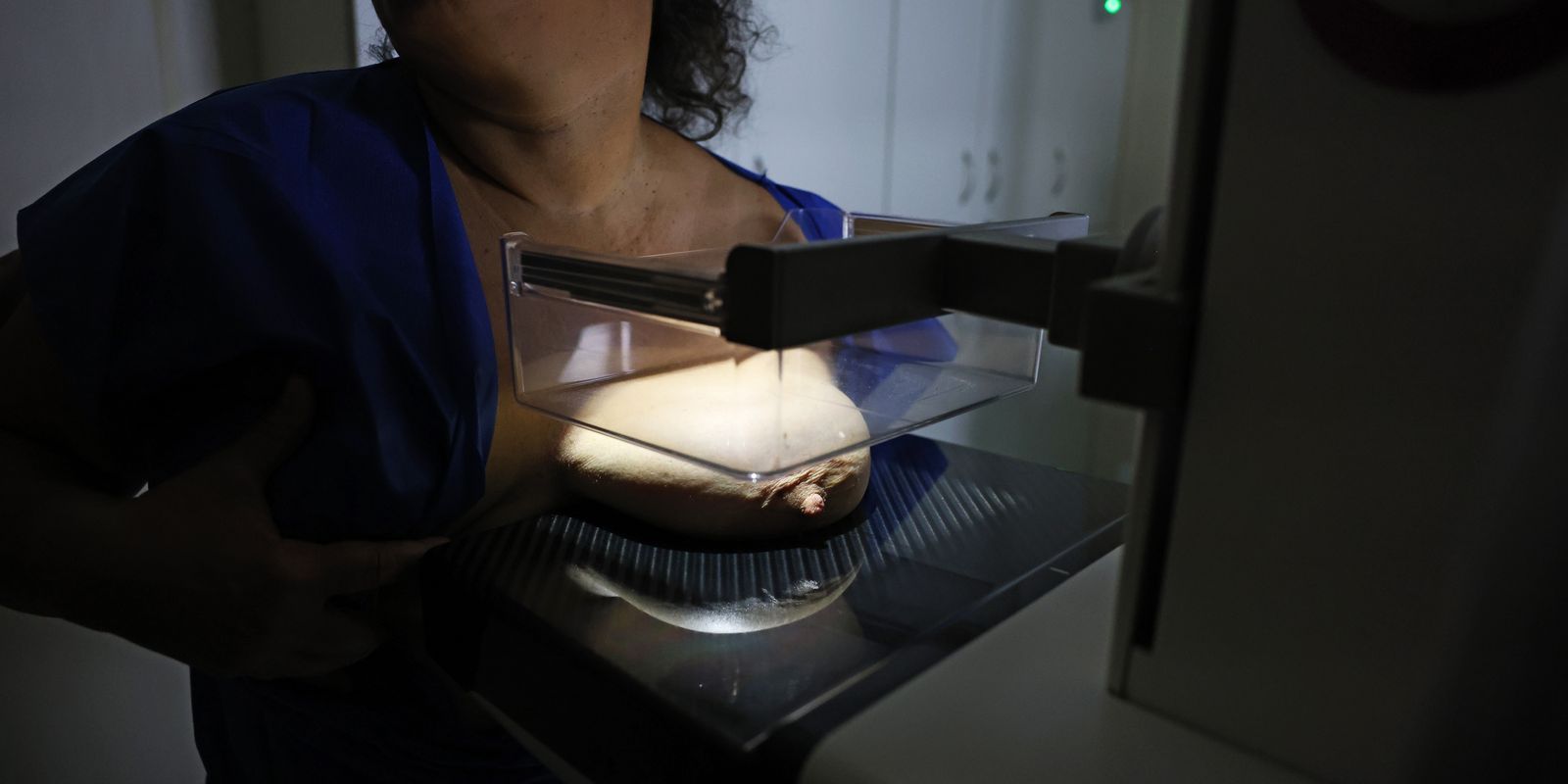
The survey by the Surveillance System of Risk and Protective Factors for Chronic Diseases by Telephone Survey (Vigitel) of the Ministry of Health released on January 28 showed that the frequency of women between 50 and 69 years of age who had a mammogram exam at some point in their lives increased in the period between 2007 and 2024, varying from 82.8% to 91.9%.
According to the survey, increases were observed in all age groups and education levels. In relation to age groups, the greatest increase was seen among women aged between 60 and 69 years old, ranging from 81% in 2007 to 93.1% in 2024. As for the level of education, the greatest increase was seen among women with no education and incomplete primary education, ranging from 79.1% in 2007 to 88.6% in 2024.
It was also observed that the frequency of women between 50 and 69 years of age who had a mammogram in the last two years increased in the 60 to 69 age group, ranging from 67.2% in 2007 to 74.2% in 2024.
The Minister of Health, Alexandre Padilha, said that a quarter of the cases of breast cancer detected occur in the age group of 40 to 49 years. He reinforces the importance of expanding mammography for this audience with an effort by the Unified Health System (SUS) for early diagnosis.
This Thursday (5), Mammogram Day is celebrated.
In September 2025, the ministry expanded mammography to women aged 40 to 49, even if they have no signs or symptoms of cancer. According to the ministry, women in this age group had difficulty with the examination in the public health network due to the assessment of family history or the need to already present symptoms. Even so, mammograms in the SUS in patients under 50 years of age represent 30% of the total, equivalent to more than 1 million in 2024.
“Another measure is the expansion of the age range for active screening, when mammography must be requested preventively every two years. The age limit, which until then was 69 years old, will now be up to 74 years old. Almost 60% of cases of the disease are concentrated between 50 and 74 years old and aging is a risk factor”, explained the ministry.
Breast cancer is the most common and the one that kills the most women, with 37 thousand cases per year.
THE publication Estimate 2026-2028: Cancer Incidence in Brazilfrom the National Cancer Institute (Inca), released this Wednesday (4), in Rio de Janeiro, on World Cancer Day, showed that the estimated number of new cases of breast cancer in Brazil per year between 2026 and 2028 is 78,610.
According to the president of the Brazilian Society of Regional Mastology Rio de Janeiro, Bruno Giordano, thousands of women still arrive at health services in advanced stages of the disease, which compromises the success of treatment and increases the risk of mortality.
For the doctor, this situation is directly linked to the low coverage of mammography in part of the population, the difficulties in accessing the care network and the prolonged time between the exam, diagnostic confirmation and the beginning of therapy, factors that continue to be historical obstacles in the health system.
“Mammography is the main test for detecting breast cancer in the early stages, often even before any symptoms appear. When we can diagnose it early, we significantly increase the chances of effective treatment and reduce mortality”, explains the mastologist.
Lifestyle
Giordano also remembers that, in addition to periodic mammography examinations, combating the disease also involves adopting healthy habits and health education. Regular physical activity, maintaining an adequate weight, eating a balanced diet and reducing alcohol consumption are measures associated with reducing the risk of developing the disease.
For doctors, these actions need to go hand in hand with public policies that expand access to information and diagnostic services. He highlights that, for women diagnosed, it is very important that they are given access to treatment immediately, respecting the 60-day law, which guarantees every patient with malignant neoplasm (cancer) the right to start the first treatment (surgery, chemotherapy, hormone therapy or radiotherapy) in the SUS within 60 days after diagnosis.
The president of SBM-RJ emphasizes that each exam carried out represents a concrete opportunity to save lives. “We cannot forget that, if diagnosed early, the chances of a cure can reach 95%. Our commitment is to expand access, reduce inequalities and make mammography part of women’s routine care. This is a collective responsibility, which involves managers, health professionals and the whole of society.”