Madrid/The political and rhetorical influence of the President of the United States, Donald Trump, has contributed to a deterioration in human rights in Latin America and the Caribbean, where several governments have committed abuses against migrants and their own citizens, or have used Washington’s policies as justification to reinforce repressive practices, Human Rights Watch (HRW) warned.
In its 2026 World Report, the organization points out that, during the first year of Trump’s new mandate, some countries in the region violated the rights of foreigners at the direct request of the US administration, while others deepened security policies based on mass arrests, militarization and excessive use of force.
“The impact of the Trump administration has been undoubtedly negative in Latin America and the Caribbean,” said Juanita Goebertus, director of the Americas Division of HRW, who stressed that, despite this, governments in the region remain responsible for defending democracy and fundamental rights, regardless of who governs in Washington.
Governments in the region remain responsible for defending democracy and fundamental rights, regardless of who governs in Washington
The report highlighted that the United States significantly cut foreign aid to human rights organizations and independent media, while countries such as El Salvador, Peru and Ecuador passed laws that allow the arbitrary closure of civil organizations and media outlets, weakening democratic checks and balances.
HRW also criticized what it considers a double standard of US foreign policy, which has repeatedly condemned systematic human rights violations in Venezuela, Cuba and Nicaragua, but has ignored serious abuses in allied countries such as El Salvador, Ecuador and Peru.
The document also warned about the United States military attack against Venezuela at the beginning of 2026, which, according to the organization, could strengthen the repressive Venezuelan government and respond to Washington’s political and commercial interests.
HRW urged Latin American governments to oppose US maritime strikes in the Caribbean and Pacific, which have left more than 120 people dead, which could constitute extrajudicial executions under international law.
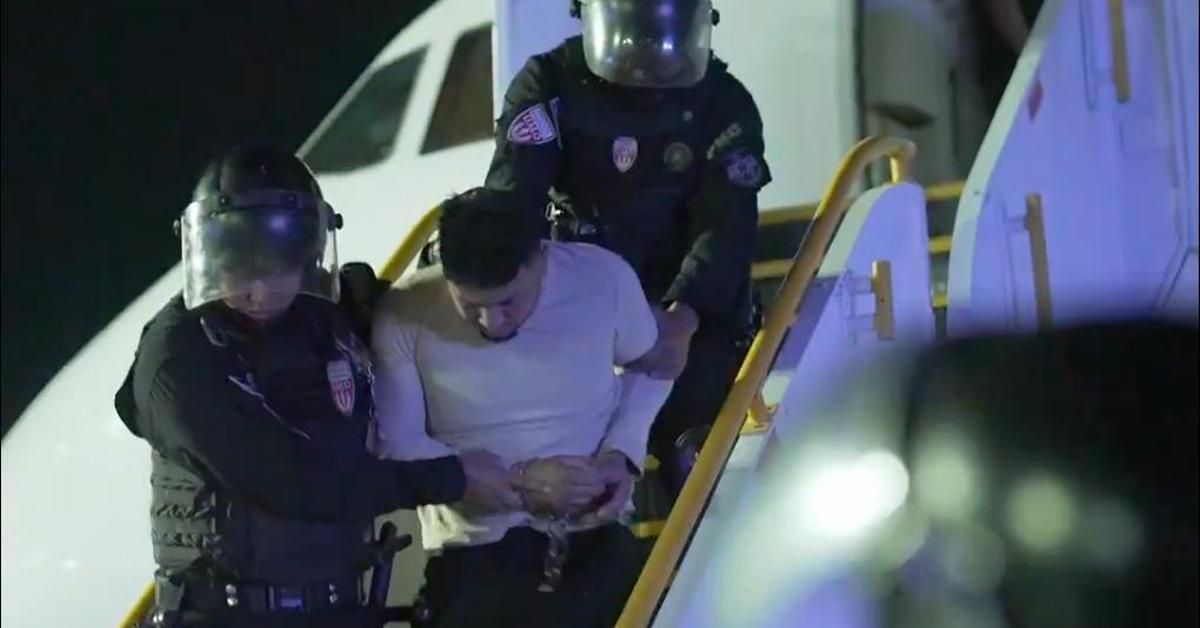
In the immigration area, the report documented widespread abuses against people deported from the United States, while Panama and Costa Rica arbitrarily detained third-country citizens.
El Salvador subjected deported Venezuelans to forced disappearances, torture, and arbitrary detention, and the Dominican Republic intensified the deportation of Haitians to high-risk contexts, in potential violation of international law.
The expansion of organized crime is identified as one of the main threats to human rights in the region. The most extreme case is Haiti, where criminal groups control 90% of Port-au-Prince.
In countries such as Brazil, Mexico, Colombia and Ecuador, state responses have included lethal operations, expansion of intelligence powers and prolonged suspension of fundamental rights.
In Mexico, HRW points out that the Government has combined the strengthening of intelligence with measures that open the door to mass arrests, such as the expansion of mandatory preventive detention. In Brazil, a police raid in Rio de Janeiro left 122 people dead, while in Colombia, during the implementation of the “total peace” strategy, armed groups expanded their territorial control.
HRW emphasizes that journalists and human rights organizations remain a key bastion for the defense of democracy, although they operate in an increasingly hostile environment
Despite the adverse outlook, HRW emphasizes that journalists and human rights organizations continue to be a key bastion for the defense of democracy, although they operate in an increasingly hostile environment. The organization called on governments in the region to support its work, instead of criminalizing or restricting it.
The organization has also warned of the situation in the United States, whose Government it accuses of showing “flagrant disregard for human rights” and “atrocious violations” of them in areas ranging from the treatment of immigrants and other minorities to setbacks in environmental policy.
“Alleging that there is a risk of ‘civilization erasure’ in Europe and appealing to racist clichés to characterize entire populations as unwelcome in the United States, the Trump Administration has adopted policies and rhetoric that align with the ideology of white supremacy,” writes HRW executive director Philippe Bolopion in the report’s foreword.
“Immigrants and asylum seekers have been subjected to inhumane conditions and degrading treatment; 32 of these people died in 2025 in the custody of Immigration and Customs Enforcement (ICE) and another four had died as of mid-January,” adds Bolopion.
The document also accuses the US Administration of showing a “marked turn towards authoritarianism” and warns about the treatment of migrant minors and the trans community, specifically.
On the other side of the world, the Chinese, North Korean and Iranian regimes are not spared, for whom it has devastating aspects. China’s authorities systematically deny freedoms of expression and association, and persecute critics of the Chinese government and Communist Party (CCP) through censorship and use of the legal system, the report emphasizes.
According to the document, the reinforcement of ideological control has been accompanied by forced assimilation policies in Tibet and Xinjiang, as well as the imposition of a “repressive” national security regime in Hong Kong.
According to the document, the reinforcement of ideological control has been accompanied by forced assimilation policies in Tibet and Xinjiang, as well as the imposition of a “repressive” national security regime in Hong Kong.
North Korea, for its part, carries out serious and systematic violations of human rights, such as executions and forced labor, in a context of intensified repression against the consumption of foreign content, the NGO denounces. “Authorities regularly attack those who access prohibited content, particularly media with South Korean influence,” he notes.
For its part, Iran executed a record number of prisoners, with 2,000 hangings in 2025, in which there were also arbitrary arrests and the persecution of women, religious minorities and dissidents in the country. “Authorities systematically imposed the death penalty after grossly unfair trials for acts that did not constitute the ‘most serious crimes’, such as drug-related crimes and for vaguely formulated national security crimes,” it added.
To this we must add the arrest of 21,000 people during the 12-day war with Israel for expressing “support” or joy” for the Israeli attacks, among other issues.