Washington’s pressure comes amid international complaints against the Cuban regime for labor exploitation in its medical programs abroad.
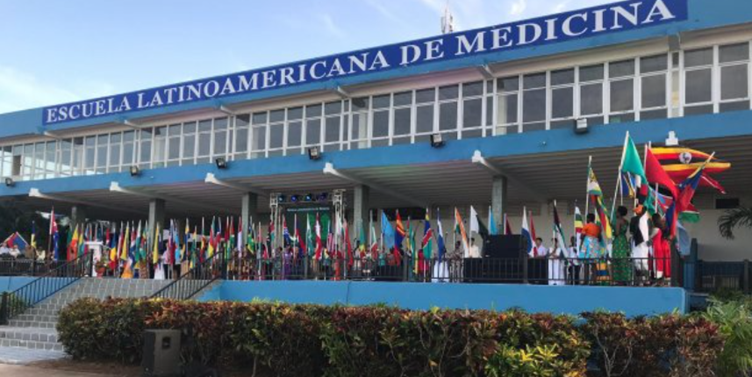
MADRID, Spain.- The United States Government has demanded that the Government of Saint Lucia prohibit its citizens from studying medicine in Cuba, a decision that Lucian authorities consider a pressure that could affect the training of health professionals in that Caribbean island country. The Prime Minister of Saint Lucia, Philip J. Pierre, cited by EFE, made the announcement during the Second World Congress on Racial and Ethnic Disparities in Health held in Castries.
Pierre pointed out: “many of our doctors were trained in Cuba and now the United States has said that we can no longer do it,” and warned that this requirement represents “a serious problem” for a health sector that has historically depended on professionals trained on the Island.
Washington’s request is part of a broader international campaign against Cuban medical missions and the export of labor through state programs. Human rights organizations and international observers have for years documented abusive labor practices in these missions, including the withholding of most salaries, excessive work hours, and restrictions on the freedom of movement of professionals sent abroad. In cases presented before UN mechanisms, experts have pointed out that these practices can constitute forms of forced labor or human trafficking, violating international standards on labor rights.
Various reports have documented that a significant proportion of workers sent by the Cuban regime do not have the real option of rejecting these assignments without facing severe penalties, such as the inability to return to Cuba for years or administrative sanctions, and that the State retains an overwhelming percentage of their income.
The United States has taken concrete steps to punish officials and governments that collaborate with what it calls a “coercive labor export scheme,” including the visa restriction to authorities that facilitate participation in these programs, both from Cuba and from other countries linked to their medical missions.
In response, the Cuban regime maintains that its medical missions are voluntary and altruistic, and presents them as an instrument of foreign policy and “international solidarity.” However, these narratives have been repeatedly questioned by international organizations, human rights defenders and former members of these missions, who highlight the precarious working conditions under which thousands of health professionals are deployed.
The pressure on Saint Lucia comes at a time when several Caribbean governments, such as those of Bahamas and Antigua and Barbudahave reviewed their links with Cuban health programs, after criticism similar to those raised by Washington.
We use cookies to ensure that we give the best user experience on our website. If you continue to use this site we will assume that you agree.