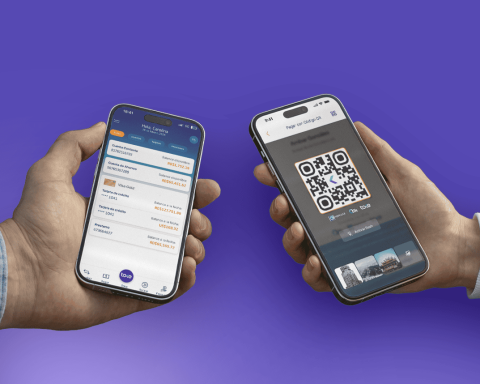
The digital wallets They are one of the most expanding contactless payment methods globally, a trend that is quickly gaining ground in the Dominican Republic: its growth as an alternative channel was 24% in 2025, transacting up to 41,652.6 million pesos in that period, according to Superintendency of Banks (SB) and the Central Bank of the Dominican Republic (BCRD).
As general manager of Visa in the Dominican Republic, Gustavo Türkiye catalog the digital wallets as “the big surprise” within the payments ecosystemthanks to the fact that they encourage the use of digital transactions in businesses, mitigate payment frictions and prevent fraud.
He indicated that when users bring their phone closer to pay with Apple Pay, Google Pay or another application available for it, an authenticated operation is generated through a digital token which guarantees that the transaction was generated safely.
“We believe, we bet, we promote and defend very much the use of (digital) wallets as a mechanism of boost trade“Türkiye said in an interview with Free Diary during Visa Payments 2026, a meeting with actors from the Dominican financial system to share the main advances in digital payments, consumer trends and new technologies in the financial industry.
He recalled that the rise of these tools is relevant to encourage financial inclusion and formality in an economy in which 90% of businesses are micro, small and medium enterprises (MSMEs).
The use of the digital wallets “They have triple-digit growth” compared to traditional transactions, says the executive. At the local level, the registration of cards in digital wallets It doubled in the last twelve months, going from 1,018,359 in January to 2,081,699 in December 2025.
The rise of tokens
Wallets work successfully because their security is provided by token technologyone of the main trends within the payment system and the main bet of Visa as a company that offers this technology to banks, fintech and digital businesses.
The tokenization consists of replacing the credentials of payment cards – generally represented by a 16-number code on the front or back of the plastic – with a unique token code for that transaction, thus protecting users’ sensitive data.
“There is no way to talk about the progress of e-commerceof the advance of digital transactions without the tokenization“says Turkey, who explains that these are capable of reducing digital fraud by up to 67% and reduce friction in payments by almost 10%, thus facilitating financial operations.
This has meant that 50% of the transactions being carried out in the region already work through digital token.
The Dominican financial system already has the tokenize infrastructure various digital transactions, with more than 90% of banks operating under this technology. For Türkiye, the main task is for businesses to accept and implement it in order to strengthen their digital operations.

Instant payments, what’s coming
The progress in the transaction of the instant payments It is another of the most growing trends within the financial ecosystem today. As a company, Visa offers solutions based on the data it manages in more than 200 countries to provide layers of security to this type of operations.
In the Dominican Republic, although the Central Bank offers this service through the Gross Settlement in Real Time (LBTR), it is expected that the monetary entity will adopt a more advanced modality to make the modality even more efficient and the cost of which would be free for users.
Other trends
Other trends that are impacting the payments ecosystem and in which Visa is deploying its actions to satisfy the needs of its clients are:
- Agentic trading: Increasingly, users trust their purchasing decisions in the generative artificial intelligencewhich can be enhanced through solutions that integrate AI to improve transactions via e-commerce
- Stable coins and blockchain: These are cryptocurrencies with a financial burden based on traditional currencies, being the digital dollar (USDC) one of the most widespread currently. Systems like the blockchain guarantee the digital registration of these operations in a secure manner
- Digital biometrics: It is the use of a person’s physical characteristics that allow their identity to be verified in digital systems. In this case, the multinational works on the development of Visa Passkeys, one technology that seeks to protect the digital identity of the user – their credentials – using the biometrics of their mobile device, improving the digital shopping experience.
Visa Payments 2026 is an annual meeting held by the company focused on digital payments, consumer trends and new technologies.
The third edition of the event – which began in the Dominican Republic and is already part of a regional fair that covers more than 10 countries – has talks and content linked to consumers, SMEs and technology and innovation content, as well as workshops on the services that Visa can offer to the financial ecosystem beyond cards, including security technology, digital identity and data solutions. The event has the participation of more than 150 local clients, including representatives of the main banks, acquirers, fintechs and unions such as the Association of Multiple Banks of the Dominican Republic (ABA).