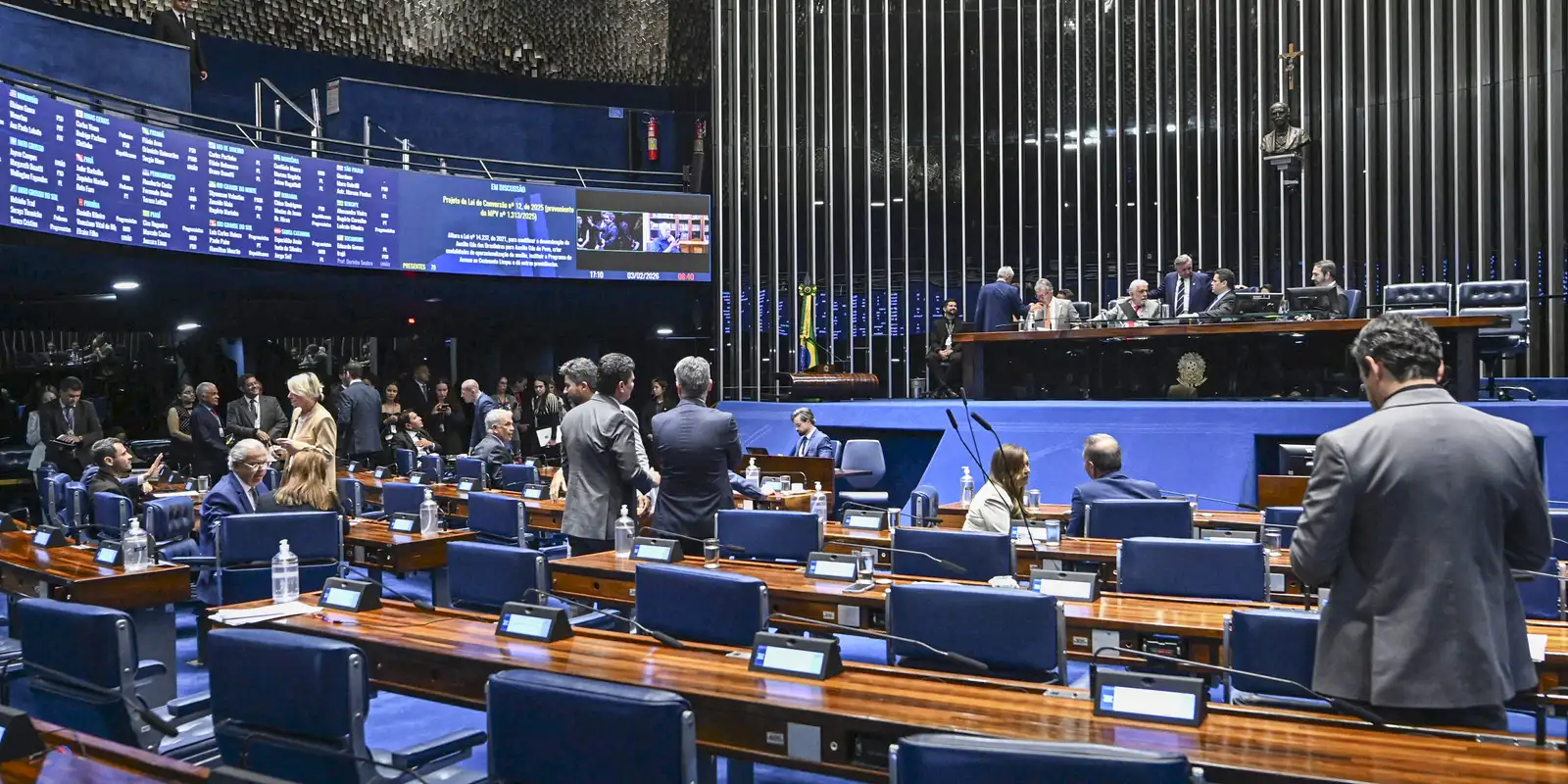
The plenary of the Federal Senate approved this Tuesday (3) the provisional measure (MP) that established the Gás do Povo program. The text guarantees free cooking gas (LPG) cylinders weighing 13 kilograms (kg) to families registered in the Single Registry for Social Programs of the Federal Government (CadÚnico), as long as they have income per capita of up to half the minimum wage.
The MP, whose validity ends on February 11, was approved in less than 24 hours both in the Chamber as well as in the Senate, and now goes to presidential sanction, as parliamentarians made some changes to the text.
“Here, we would like to thank the plenary sessions of the Chamber of Deputies and the Federal Senate, for approving, so quickly, a measure that reduces inequalities and strengthens social cohesion. The National Congress gives a clear message: people’s well-being is at the center of our decisions. May this benefit quickly reach the table and the lives of those who need it most”, stated the president of the Senate, Davi Alcolumbre (União-AP), when celebrating the approval of the measure.
According to the Ministry of Development, Social Assistance, Family and Fight Against Hunger (MDS), Gás do Povo should be fully operational in March, when just over 15 million families will benefit. The program aims to combat energy poverty, defined as a family’s difficulty in accessing essential and modern energy services, such as lighting, heating, refrigeration and energy for cooking. Currently, the program is installed in all capitals.
Gas Aid, a benefit created by the last government and which allows the purchase of a 13 kg cylinder every two months by around 4.4 million low-income families, will be replaced. In its place, Gás do Povo consolidates free gas cylinders in more than 10,000 accredited dealers spread across the country, increasing the reach and number of families served, according to the government.
According to the program regulations, the number of free 13 kg refills will be four per year for families of two to three people; for families with four or more people, it will be six per year.
The text also creates a new modality in the program, aimed at installing low-carbon emission systems and biodigesters that generate methane gas through the decomposition of food waste. This modality is aimed at rural areas and community kitchens, and still depends on regulations to be made by the government.
The text approved by the Chamber and now confirmed in the Senate reformulates the priorities for receiving aid. Priority will be given to families affected by disasters or in places with an emergency situation recognized by the public authorities; with women victims of domestic violence under monitoring of urgent protective measures; belonging to traditional peoples and communities, such as indigenous people and quilombolas; with a greater number of members; and with lower income per person.
*With information from Agência Senado.