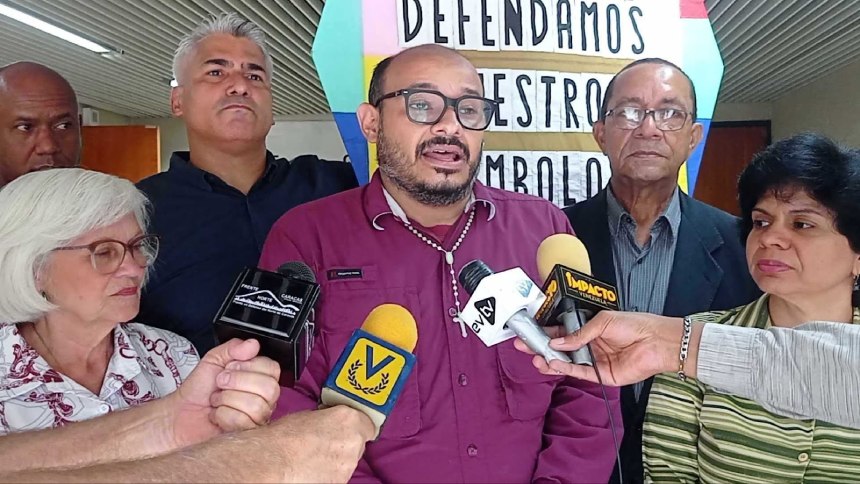
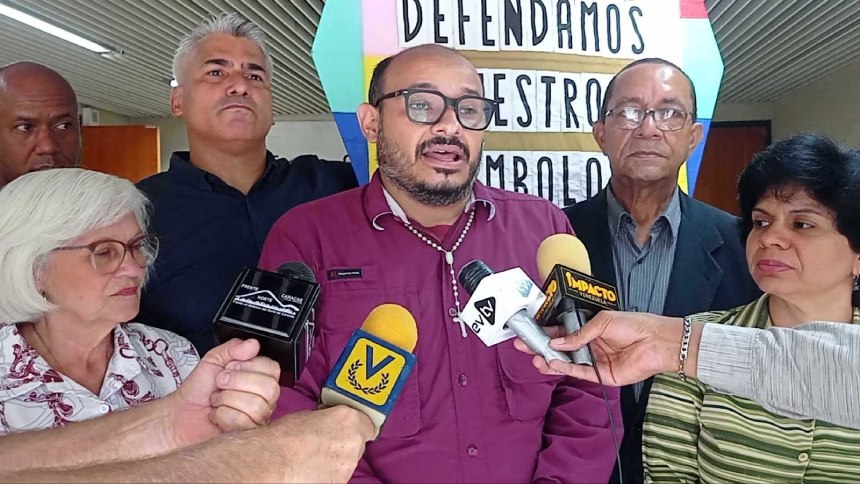
He journalist and human rights defender Carlos Julio Rojas, released from prison on January 14 after spending 638 days deprived of liberty in El Helicoide, headquarters of the Bolivarian National Intelligence Service (Sebin), He reported having been a victim of psychological torture, prolonged isolation and inhumane conditions during the 21 months he was detained..
Although he was warned by a court that he could not give statements to the press, Rojas assured that this is not the time to remain silent. In an interview with NTN24 recounted the human rights violations he suffered during his imprisonment and detailed the irregularities in the judicial process against him.
“It was 638 days, 21 months, almost two years. Dignity made me free and they couldn’t break me,” he said.
False accusations and pressure for a confession
Carlos Julio Rojas was arrested on April 15, 2023 and accused of serious crimes such as assassination and terrorismcharges that he described as completely false and constructed, with “rigged and implausible testimonies.”
“The setup fell apart when, for example, during a visit inside the prison, the witnesses admitted in front of everyone that they did not know me,” he said.
The journalist reported that during the first 10 days of detention He remained handcuffed continuously as a method of pressure to force him to record a video with a forced confession.
“They accused me of being a terrorist when all I have done is defend rights and the regime’s response has been to arrest me five times, including arrests in the Ramo Verde military prison and now in El Helicoide,” he said.
Isolation, punishment cells and denial of medical care
Among the most serious episodes, Rojas claimed to have spent 70 days without seeing the sun and to have been held in punishment cells known as “tigritos.”spaces of approximately two meters by two, without beds and in unsanitary conditions.
“For us, seeing the sun becomes an achievement. I was in a little tiger without a bed, surrounded by rats,” he explained.
He indicated that He spent four months completely isolated, without contact with his family or access to parcels. He also reported the withholding of medications despite suffering from hypertension and severe physical pain, which led to chronic low back pain.
“I spent four months completely isolated, without contact with my family and deprived of parcels, reaching the level of punishment that an official, when asking for my medications for tension and severe pain, told me they were withheld,” he said.
Rojas also reported an alleged attempted physical assault by the deputy director of the detention center.
“He raises his hand to me, tells me that the nets are on and they are trying to hit me; at that moment I tell him, looking into his eyes, that I am a prisoner of conscience declared by Amnesty International, a journalist and defender, that physical integrity should be respected; his response was to take me to the tiger where my companions were the rats in inhumane conditions.
After that episode, he assured that he was sent again to a punishment cell, where he remained for almost a month in extreme conditions.
Carlos Julio Rojas: “Raising your voice is not a crime”
Despite constant threats of transfer and warnings to behave and not speak, Rojas affirmed that he maintained his denunciation work even from prison.
“Raising your voice is not a crime. The rebellious Carlos Julio who was on the street remained firm and dignified in the dungeons,” he said.
Regarding the announcement by the acting president Delcy Rodríguez regarding the possible closure of El Helicoide, she noted that, if it came to fruition, “it would be an achievement for Venezuelans,” although she insisted that the priority must be the total release of political prisoners.
Rojas thanked God, the Virgin of La Candelaria and San José Gregorio Hernández, as well as the journalistic union, the National College of Journalists, Amnesty International, the Office of the UN High Commissioner for Human Rights and the communities that, he assured, did not stop reporting his case.
“Now we must raise the cry for those who are still imprisoned, to achieve a true democratic transition where freedom and justice reign,” he concluded.