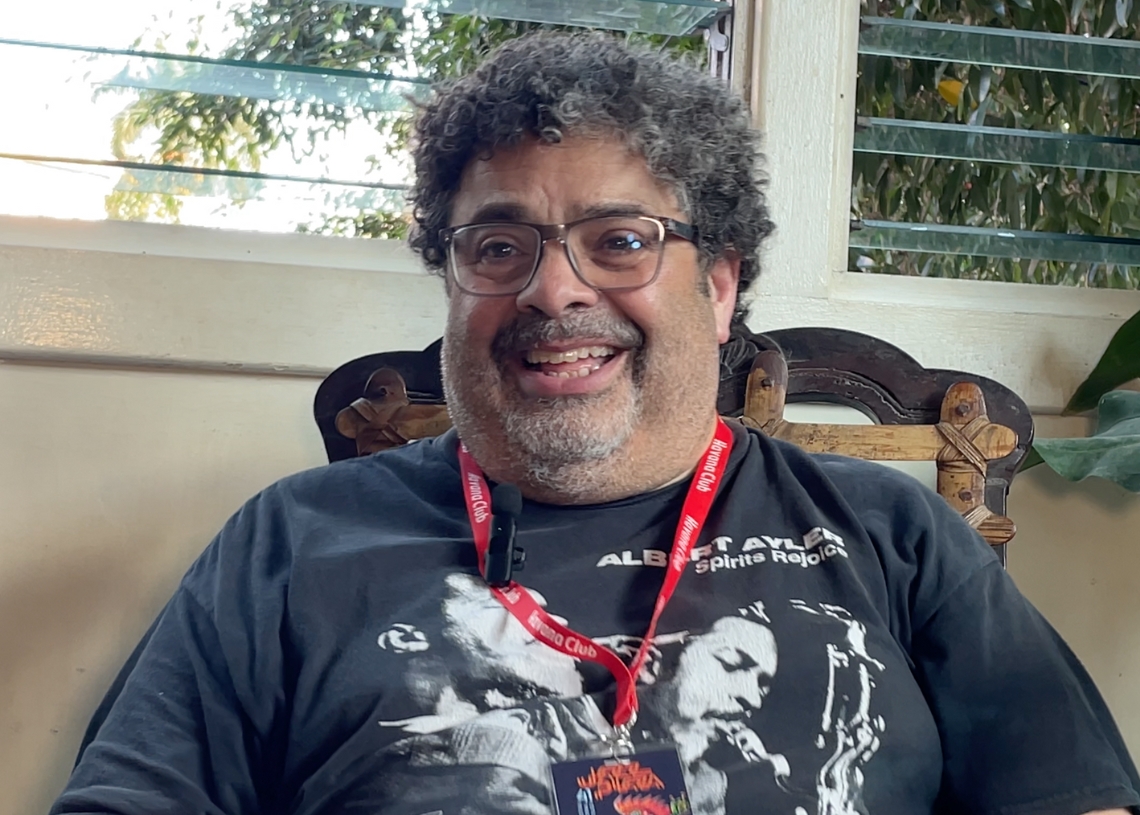
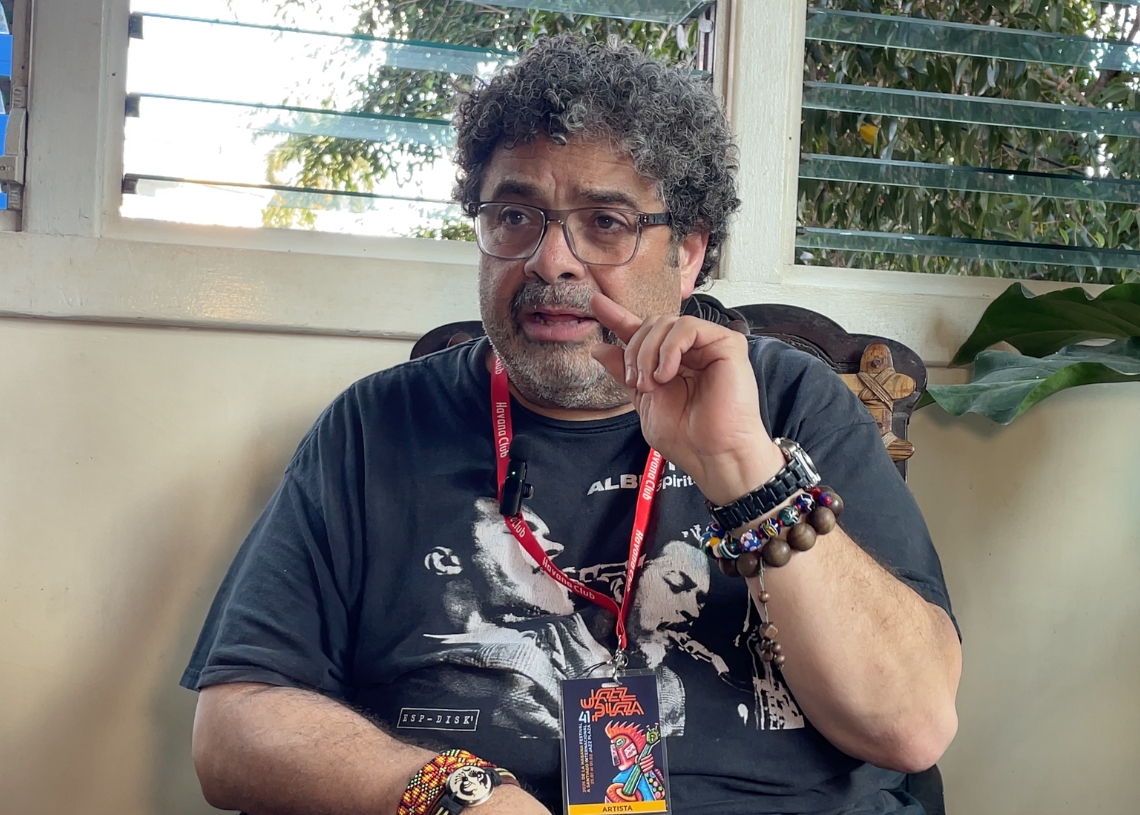
“Something in my DNA belongs to Cuba beyond my dad,” is one of the first categorical responses that Arturo O’Farrill offers when I place a microphone in front of him, taking advantage of his recent stay in Havana, where he returned once again to participate in the Jazz Plaza International Festival.
The ties of the American pianist and composer with Cuba are, initially, blood: he is the son of one of the greatest musicians this island has ever produced. However, it was not until after Chico O’Farrill’s death that Arturo visited Cuba for the first time and began to forge other ties, both emotional and professional.
“My father passed away, completely destroyed at heart, crying in his last years because he was never able to return to Vedado. And I thought I had to complete that, but when I came I found myself in my house. I came for him, but I found myself,” he tells us about his arrival to an island from which he has never been able to leave.
In 2016, Chico’s ashes arrived in Cuba and, at the hands of his son, they were deposited in the Colón cemetery. That is another of the vital links that tie him to this land.
“My dad was one of those Cubans who was of Irish and German blood. He was a gentleman, and never talked much about anything, but the only time I saw my dad cry was when he was remembering his childhood in Vedado.”
“I was about 6 or 7 years old, and I wrote him a letter, and I told him, ‘daddy, I’m going to take you to the Caribbean, I’m going to take you to Cuba’. That’s why I returned my dad’s ashes and they are in the Colón cemetery, next to my mom’s ashes. Having daddy and mommy here, in Cuba, is one of the most beautiful things in my life, and I also return to have a moment with them,” says the musician, who has also turned Cuba into a family feeling.
“I have brought my children for many years, almost from the beginning I returned with my wife, with my children, my sister, her husband, because I know that they feel the connection. That they know Tapaste, where my father came from, that they know Santiago de Cuba, I want them to have pride in the family, of being of Latin blood and even more of Cuban blood. Because I think that the most beautiful thing in my life is being Latin, I am Mexican, I am from the village, I am Cuban. I like being a musician, but being Latino, being from Cuba, that is my gift from God,” he says.
Cuba in the jazz of Arturo O’Farrill
His participation in the Cuban event is no longer a surprise: he is one of the artists who always returns. Even so, his presence generates expectations, because beyond the privilege of having a musician of his stature and career on stage, each year Arturo presents a special proposal conceived for the occasion.
This year, its agenda focused on the first days of the festival, with the main presentation being a concert on Tuesday, January 27 in the Covarrubias Room of the National Theater of Cuba. It was a short but intense program, about 50 minutes, in which he shared the stage with his son Zack O’Farrill and with the Cuban musicians Jorge Coallo, Roberto Álvarez and the Café string quartet.
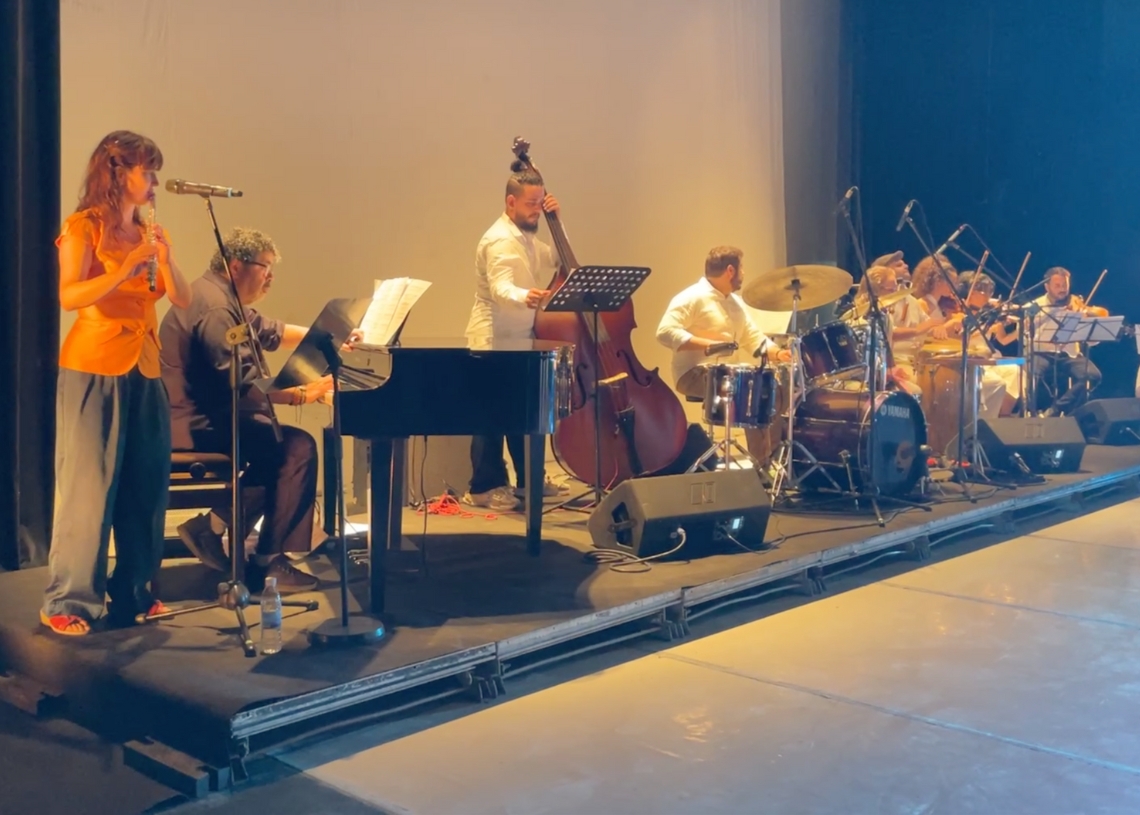
The concert took up another of the lines that the pianist and composer has explored in his dialogue with Cuban culture: collaboration with dance groups. On this occasion he did it together with the Orozco Contemporáneo company, directed by Liliet Orozco.
In addition, he accompanied the Taiwanese bassist Vincent Hsu in a concert at the Sala Tito Junco of the Bertolt Brecht Cultural Center and offered an intimate presentation in a gallery in Vedado.
“What I bring here is my childhood. I am an infant here again. Every time I come, I learn more. What I bring is what I have, and I leave it to you with all my heart,” he summarizes about the diverse preparation with which he always builds his stays at the Jazz Plaza.
A year ago, in a brief interview given to this newspaper, Arturo described the Cuban festival as “the most important and prestigious in the world.”
“I remember the first year I came, Leonardo Acosta was alive, and they dedicated the festival to him that year. I went to visit him, it was like a pilgrimage, you have to go to the feet of Leonardo Acosta, like to the feet of Bobby Carcassés, who are the true owners of the history of jazz in Cuba,” he recalls.
“I don’t know what Bobby thinks, but I know that if Leonardo sees what has happened at the Jazz Plaza, he will cry with joy, because this is a world treasure. Now people come from all over the world to see the jazz musicians here, but I’m going to tell you something: it’s nice to have foreigners who come to play here, but the young people from Cuba are playing the strongest jazz I’ve ever seen in my life. I’m very proud of them,” he says today.
Arturo feeds himself and reconnects with himself and with his father’s legacy through Cuba, music and Cuban musicians. He assures that his own essences are here, the meaning of his path and his musical concept.
“In this country, the musicians are the finest in the world, because they are classically trained, they are in love with jazz and they have that Afro-Cuban blood, and that resonates a lot with me, because I feel that they don’t have to be classical musicians, they don’t have to be jazz musicians, they don’t have to be Afro-Cuban musicians. You can be everything and you can understand the connection between all the worlds.”
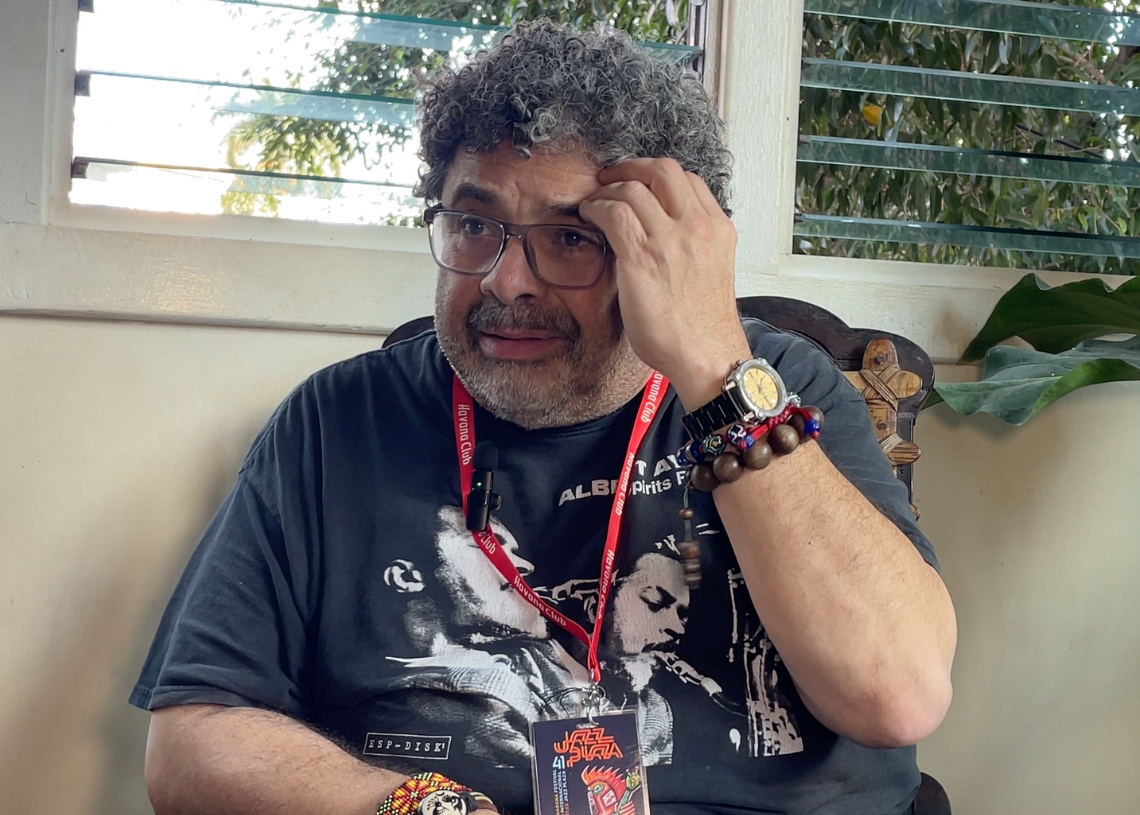
“That for me is one of the significant things about Chico O’Farrill’s life, why he is a genius, because he connected the music of Mozart with the music of Bola de Nieve, with the music of Dizzy Gillespie. He understood that that line goes directly to the three worlds, it is the same music. Different sides of that music, but the same twelve chromatic tones are between all the worlds.
“I am not a pianist, I am not a composer, I am a baby who is lost in an infinite sea called music. I never want to find the destination because the journey is super interesting, and here I feel that people are on that same journey. The possibilities in classical music, in jazz music, in Afro-Cuban music are limitless,” he reflects.
The artist before reality
Since his first visit in 2002 and until Trump came to power in his first term, Arturo O’Farrill traveled to Cuba four to five times each year. He then reduced the frequency of his visits, but never completely eliminated them from his schedule.
“I come to Cuba and I know that my people here are suffering, but there is also a generosity that I have never seen anywhere in the world. It is not understood, but here in Cuba you see in the faces of the people the future of the world, because there is so much mixed blood here and the world is becoming that. One day it is not going to be white, black, Chinese, it is not going to be anything, it is going to be humanity. And I see that right now in the faces of my people.
“Cuba is in a very dangerous time, this moment in the world is terrible everywhere, and yet I come to Cuba and I see in my people generosity, sensitivity, the people full of joy and warmth, and I don’t know how they do it, but it is a treasure of the world and for me it is nutrition, it is support for my soul. I am going to continue returning to Cuba until I die, because this is where I find life,” he says, and in the process he also looks at his own reality.
“The president of the United States is a very ugly man, it is a failure of the United States that they voted for this unfortunate president. I am going to tell you the truth: for here, for Cuba, for the world, the president of the United States is a terrorist, he is an imbecile, he is a rapist. When he won this election, I cried for the women in my life. How can they feel knowing that in your country they voted for a rapist? And we thought that this first year was going to be terrible, but it has been worse,” tells us an artist who has already accustomed his followers to not separating his art and his thoughts from the social reality of his country and the world.
Arturo was on the island when, on December 17, 2014, Obama and Raúl Castro announced what he himself defines as “such a beautiful time for Cuba.” He had also just participated in this week’s Cuban event when Trump declared a “national emergency” regarding the island and announced the imposition of tariffs on countries that supply it with oil.
Not only has the musician not been unaware of this process, but he has also experienced firsthand what the political and social tensions between his country and Havana represent.
“I don’t have problems with my government, which is killing its citizens, but they let me in, they let me out, but with my people from Cuba, who live there, yes. The Cubans who are leaving here have spoken to me very loudly. Paquito de Rivera publicly insulted me in such a rude way that I don’t understand it. I have also had problems with Arturo (Sandoval). I don’t come here to support anyone, nor the political ideology. I don’t get involved in that shit. I love my people,” assures OnCuba.
“I think the problem is a sadness they have because they don’t want to return and that sadness manifests itself with hatred, getting angry, and what a shame. I’m not going to insult Paquito, or Arturo, or anyone. Life is too short to have that hatred,” he explains his position.
Three questions to finish
How do you dream of the musical relationship between Cuba and the United States?
I have a dream that one day the Afro-Cuban musician and the jazz musician will not be separated. That they see themselves as heirs of the same heritage, because there is a vision that the jazz player is on top and the jazz players put the Afro-Cuban on top and they do not see themselves as equals. I think that will change one day, when they teach both disciplines at the same level.
Because we still play there, we are Latin jazz, we are down. For Latin jazz, a festival concert, a chapter of the book, below, like they have us all. In the United States, the Latino is down.
I think that one day it will not be Latin jazz or jazz, it will be music from the Americas, created from a disaster called slavery, but full of hope for what we have achieved for the equal treatment of everyone.
When they ask you about Cuba, how do you describe it?
There is poverty here, surely, there is; I don’t want to paint things: there is a lot that the people of Cuba need and there is a lot that the United States has. There is a lot 90 miles from here, but people are hungry for the spirit, for the soul; They hunger in their hearts for something that they have in abundance here.
The Cuban here, with his poverty, has more than the North American with everything we have. Walk in the streets, hear how people talk, hear the children, the family. It’s one thing we want in the United States, but with everything we have, we have nothing.
What do you wish for the Cuban people?
I wish you to continue with pride and never forget that you are some of the most beautiful people in the world. Never forget that there is a nobility here that has no equal in the entire world. Never forget that you are kings.