A mass of arctic air associated with high migratory pressures caused one of the coldest early mornings of the winter season in Cuba, with records below 10 degrees Celsius in dozens of inland towns this Monday, where a record close to zero degrees was reached.
The cooling was favored by the combination of very cold and dry air, low cloud cover and weak winds, conditions that intensified nocturnal heat loss.
General minimums between 11 and 14 degrees Celsius were reported, while 28 weather stations recorded values below 10 degrees, according to the Institute of Meteorology.
Among the lowest records, 6.8 °C stands out in Jucarito, province of Granma; 7.6 °C at the Frank País International Airport, in Holguín, and 7.8 °C in Veguitas, also in Granma, according to the official meteorological report.
In the center and west of the country, equally unusual values for the Cuban tropical climate were reported, with minimum temperatures close to 5 degrees in inland areas, such as Indio Hatuey, in Matanzas, where 1.4 °C was reached; in Jagüey Grande it was 3.4 °C.
The record of Indio Hatuey “constitutes a new record for the month of February in that season”, since the previous one was from February 18, 1996, with a value of 2.4 degrees Celsius, according to meteorologist Ailyn Jústiz.
Today winter conditions will persist, with maximum temperatures expected between 18 and 21 degrees Celsius in much of the national territory. Meanwhile, in the south east, the values could rise slightly, up to around 23 degrees, due to a greater influence of solar radiation and less effect of cold air.
Civil Defense alerts for a cold front with rains and strong waves on the northern coast of Cuba
Specialists remain vigilant about the evolution of the high pressure system and recommend that the population pay attention to meteorological bulletins, especially in rural and mountainous areas, where nighttime cooling is usually more intense and sustained.
Penetrations of the sea in Havana: 3,200 evacuees
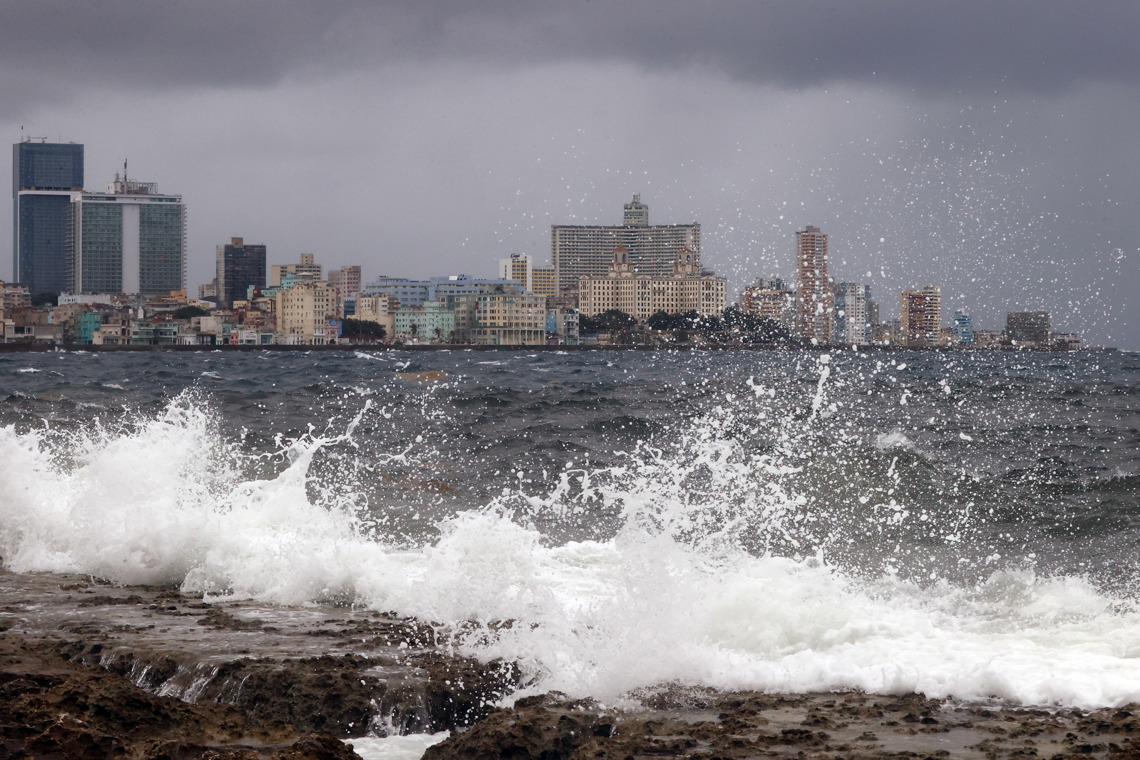
Yesterday, the National General Staff of the Civil defense warned about the arrival of this cold front to the western region of Cuba, which has caused rain, a marked drop in temperatures and strong waves on the northern coast.
In Havana, as Insmet had predicted, flooding was reported due to sea penetration in the low areas of Havana’s Malecon.
According to a Cuban television reportthe water reached very close to Línea Street, as a result of the “most significant” flooding of the current winter season. More than 3,200 people were evacuated in the capital.