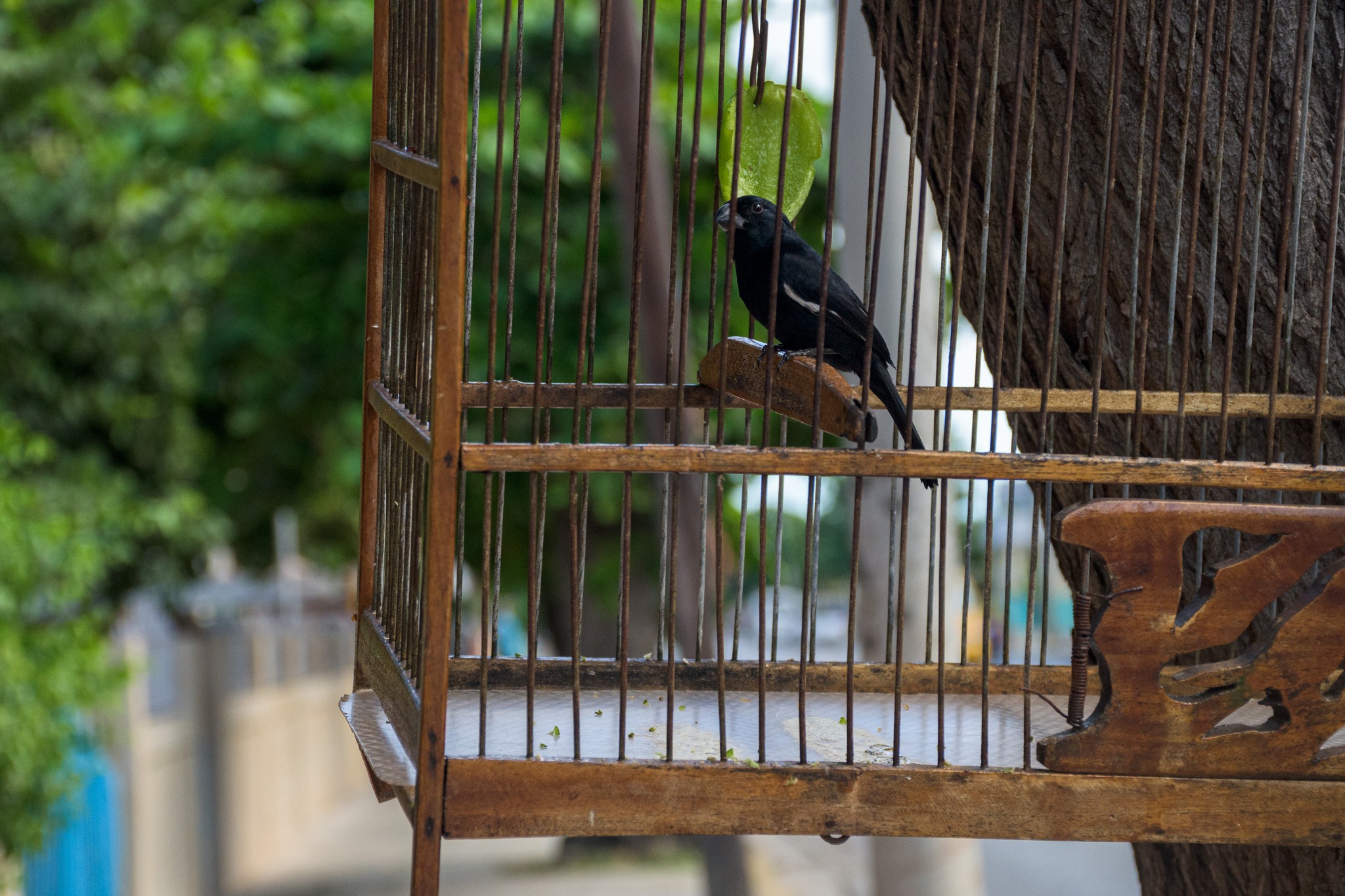
The illegal capture of wild birds has become “the main threat to Cuban birdlife,” even above climate change.
The statement, by the biologist from the Cuban Biodiversity Institute Hiram González Alonso and shared on Facebook by the Minister of Science, Technology and Environment, Armando Rodríguez Batista, indicates that andIn the last four years, the number of localities affected by this practice doubled, going from 98 in 2021 to 199 in the last quarter of 2025.
González Alonso, with 50 years of experience and a doctor in Biological Sciences, describes the phenomenon as a “true massacre” that causes local extinctions and damages the country’s natural heritage.
The activity, which went from a cultural tradition to an uncontrolled commercial business, affects both migratory and endemic and threatened species, including parrot, catey, tomeguín del pinar and negrito.
Methods include cutting down trees and palms to steal nests, destroying entire habitats. “There is no group that can resist this massacre,” warned the expert in an interview with Secret Nature.
In a previous post On the subject, the Citma minister pointed out that this reality is compounded by the economic and social dimension that makes the problem even more complex.
“A farmer who needs to earn income to support himself and his family, and who agrees to receive 25,000 or 30,000 pesos for a parrot chick, to achieve this, knocks down the palms, captures the bird and sells it,” the official wrote.
In his opinion, “there are those who hide the chicks in boxes, covered with a cloth, and they are good people, but they may be under pressure related to late payments for their work or difficulties in accessing cash.”
He added that, in these circumstances, “selling a bird can appear to be the only way to buy essential products. The ethical dilemma is mixed with the urgency of everyday life.”
Cuba has a solid legal framework (Constitution, Penal Code, Law 150 and international conventions), with sanctions that include high fines and imprisonment. However, González Alonso pointed out that “the legislation as such is being breached” and that the Forest Ranger Corps needs more police and municipal support to apply the rule.
The biologist reported threats and offenses against scientists who denounce the problem on networks or in interviews. He proposed promoting bird watching tourism as a sustainable economic alternative for communities, since it generates employment without damaging biodiversity.
“There are many guys who have become guides and they are very good,” he said. González Alonso clarified that species such as canaries, goldfinches and Australian parakeets are legally bred in captivity and can be pets without negative impact.
He asked for more environmental education in the media, accessible reporting channels and closure of international traffic with Customs. The concern is shared by CITMA, ORSA and the National Biological Diversity Program until 2030, which seeks equitable benefits from conservation.