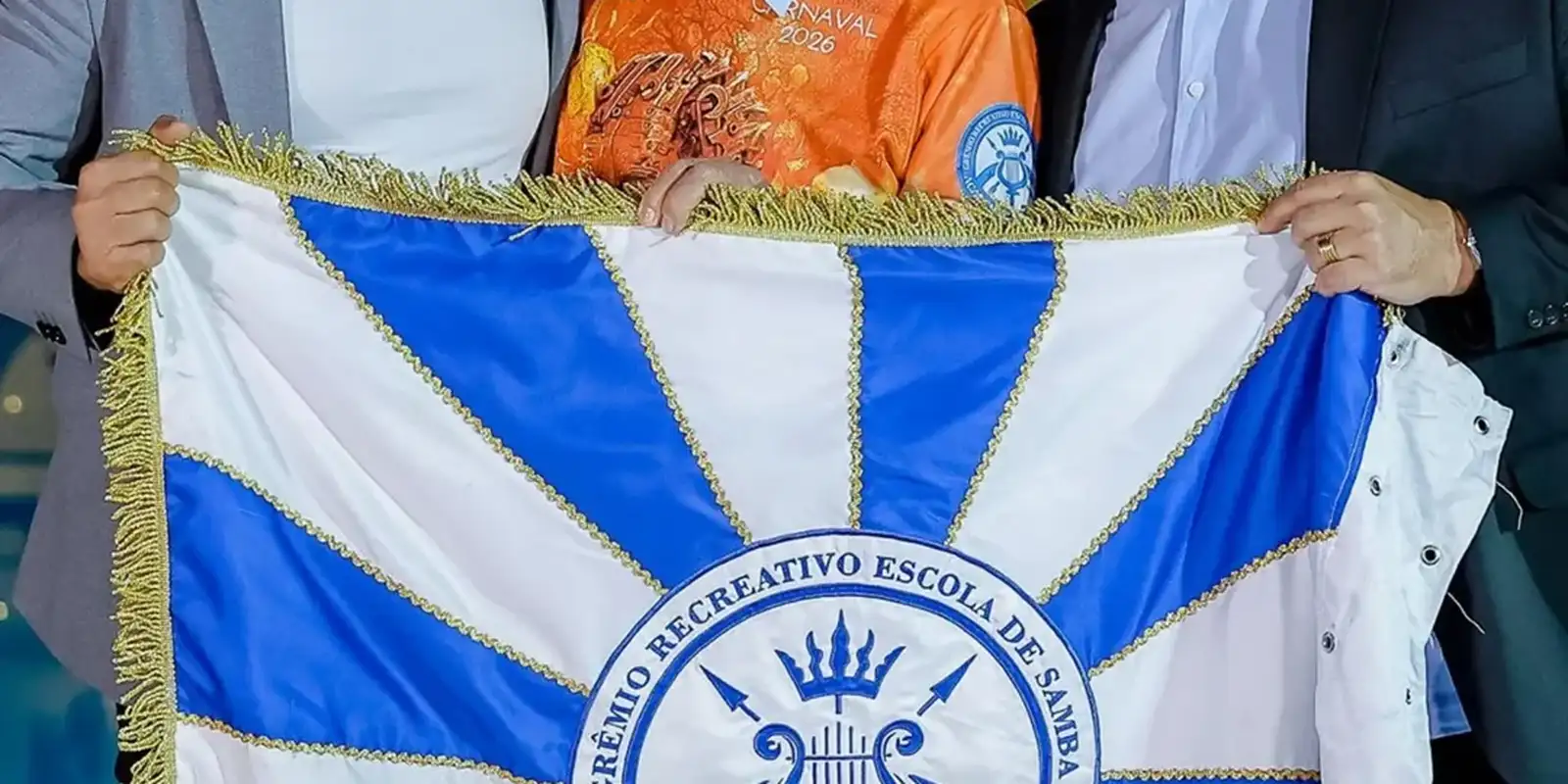
The parade of the Rio de Janeiro Special Group samba schools begins on Carnival Sunday, February 15th, with Acadêmicos de Niterói. The debutant school in the elite of the associations will bring a samba-plot narrated in the first person by a northeastern retreatant: Dona Lindu, mother of president Luiz Inácio Lula da Silva, who will be honored for the plot Hope emerges from the top of the mulungu: Lula, the worker of Brazil.
In the lyrics of the samba, Eurídice Ferreira de Mello, mother of eight children, narrates the journey of “13 nights and 13 days” with her family, in a “pau-de-arara” truck, between Garanhuns, in the interior of Pernambuco, and the outskirts of Guarujá, on the coast of São Paulo.
>> Samba school plots tell the unofficial story
>> Discover the plots of the Rio Special Group schools in 2026
>> Follow carnival coverage at Agência Brasil
In an interview with Brazil Agencysinger and composer Teresa Cristina, one of the authors of the samba-enredo, says that reuniting the family was the motivation for that crossing.
“She did it out of love, right? She came after her father [das crianças]”, he explains. “Samba is about Brazil. It’s about a Silva. It’s about survivors,”
Teresa Cristina writes the samba in partnership with André Diniz, Paulo César Feital, Fred Camacho, Junior Fionda, Arlindinho Cruz, Lequinho, Thiago Oliveira and Tem-Tem Jr.
Dona Lindu passed away in 1980, aged 64. When listening to the samba and reviewing memories, Lula was moved, reveals Teresa Cristina.
“When we told him: ‘look, samba is a story being told by your mother’, his eyes immediately watered up”.
“[Depois]he heard the samba and cried profusely. He started talking about his mother, he talked about his father. He was very emotional, you know? With a red face. I felt that he was happy to have his story immortalized in a samba-enredo.”

Recording of the Samba na Gamboa program, on TV Brasil, presented by samba singer Teresa Cristina, with singer Xande de Pilares. Photo: Fernando Frazão/Agência Brasil
From the countryside to the presidency
The mulungu (mulungu-da-caatinga), mentioned in the title of the samba, is a tree with a wide crown and reddish flowers, 12 to 18 meters high, with a trunk up to 80 centimeters in diameter, where rural children used to play, as Lula and his brothers did.
The journey of the boy from the backlands of Pernambuco who became a worker in São Paulo’s ABC, union leader, politician and president of the Republic deserves recognition, argues the president of Acadêmicos de Niterói, Wallace Palhares.

President of the Republic, Luiz Inácio Lula da Silva, during a meeting with members of the Acadêmicos de Niterói samba school. Photo: Ricardo Stuckert/PR
“I usually say that, regardless of whether people like it or not [dele]for politics, it is necessary to respect the history of a person who left the interior of Pernambuco, went to São Paulo and today occupies the highest chair in that country”, he said in an interview with professor and historian Leandro Silveira, who presents the picture In the Rhythm of Revelryin the program National Afternoonfrom the National Radio of Rio de Janeiro (FM 87.1 MHz or AM 1130 kHz).
In addition to the politician’s trajectory, the samba-plot makes reference to the improvement of the population’s living conditions throughout Lula’s three terms, such as the fight against hunger and the expansion of access to education.
The samba’s lyrics also remember former deputy Rubens Paiva, fashion designer Zuzu Angel, journalist Wladimir Herzog – killed by the military dictatorship (1964-1985) – and sociologist Betinho (Hebert de Sousa) and his brother, cartoonist Henfil.
Another samba reference is not explicitly cited. Part of the chorus has the verses “Hello, hello, hello, hello/Another popular samba will be on this avenue”a reference to the samba lyrics It will passby Chico Buarque.
“I was the one who wrote the lyrics. I wanted people to remember samba so much It will passas if they remembered Chico Buarque”, admits Teresa Cristina
For the singer, “Chico Buarque has always been at Brazil’s side. We always know we can count on him, an artist who never bowed to brute authority, dictatorship, generals. Chico is a very courageous man.”
Recurring plot
This is not the first time that Lula has become a samba school plot. In 2012, Gaviões da Fiel, an association from São Paulo, paid homage to the president with the plot You will see that a son of yours will not run away from the fight – Lula, the portrait of a nation. In 2023, Cidade Jardim, a samba school in Belo Horizonte, paraded with the plot Not afraid to be happy.
Other presidents of the Republic have already been honored. Getúlio Vargas was already the plot of Mangueira (1956) in Exaltation to Getúlio Vargas or the great President; do Salgueiro (1985), in Thirties, south wind – Vargas; and Portela (2000), in Workers of Brazil ─ Getúlio’s time. Juscelino Kubistchek, in turn, was the plot of Mangueira (1981) in From Nonô to JK.
Rouanet Law
The Acadêmicos de Niterói parade will not be financed by the Rouanet Law to encourage culture, unlike what was circulating on social media. In December, the school received authorization from the National Commission for Cultural Incentives and the Secretariat for Promotion and Incentives for Culture to raise up to R$5.1 million for the presentation. Due to the tight deadline, the group gave up trying to raise funds.
The Rouanet Law operates without any transfer of resources from the federal government to cultural projects. Producers who have their proposals authorized, after technical analysis by the two bodies of the Ministry of Culture, can try to capture the authorized amount from companies and individuals paying Income Tax. Potential sponsors can deduct the amount of financing from the tax due – up to 4% if it is a company and up to 6% if it is an individual.
On January 19th, Embratur and the Independent League of Samba Schools of Rio de Janeiro (Liesa) signed a technical cooperation agreementwith the intervention of the Ministry of Culture (MinC), which allows the transfer of R$ 1 million to each association of the special group of samba schools in Rio – a total of R$ 12 million to be invested in this carnival.
Discover the plots and order of parades of the Rio de Janeiro Special Group
1st day – Sunday (15/2)
- Academics from Niterói – From Alto do Mulungu Hope Arises: Lula, the Worker of Brazil;
- Empress Leopoldinense – Chameleon-like;
- Portela – The Mystery of the Prince of Bará;
- Mangueira First Station – Mestre Sacacá do Encanto Tucuju – the Guardian of the Black Amazon
2nd day – Monday (16/2)
- Independent Youth of Father Miguel – Rita Lee, the Patron Saint of Freedom;
- Hummingbird of Nilópolis – Bembé do Mercado;
- Viradouro Academics – Up, Ciça;
- Unidos da Tijuca – Carolina Maria de Jesus.
3rd day – Tuesday (17/2)
- Tuiuti Paradise – Lonã Ifá Lukumi;
- Unidos de Vila Isabel – Macumbembê, Samborembá: I dreamed that a Sambista dreamed of Africa;
- Grande Rio Academics – The Mangrove Nation;
- Salgueiro Academics – The delirious carnival journey of the teacher who was not afraid of witches, cod or the wooden-legged pirate.