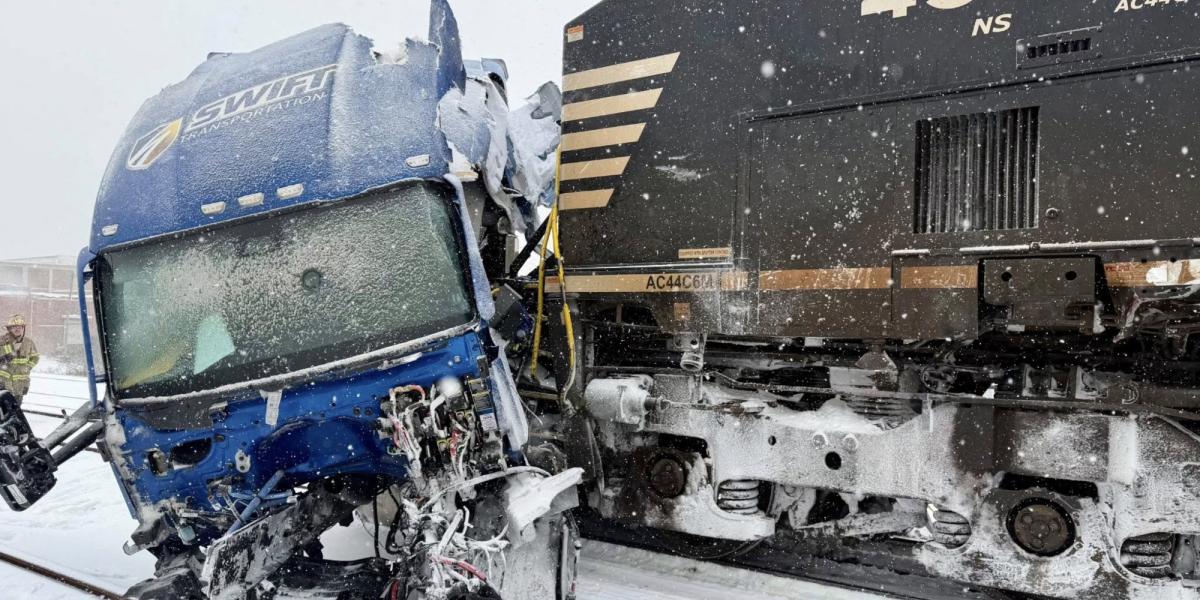
The winter storm that hit the southeastern United States over the weekend caused major transportation disruptions and literally caused iguanas to fall from trees in Florida, paralyzed by the cold.
The heavy fall of snow since Saturday in North Carolina and neighboring states caused hundreds of collisions on the roads, even though authorities asked residents not to leave their homes. Hundreds of flights were canceled at airports.
Although the bulk of the storm has already passed, a polar cold wave will remain on Monday in much of the country. This has already reached Florida, where unusual temperatures below zero were observed.
The Orlando airport recorded -4°C on Sunday morning, the lowest ever recorded for the month of February in more than a century.
In the state best known for its beaches and warm temperatures, these conditions cause a curious phenomenon: the fall of iguanas, which become paralyzed at temperatures close to 0°C or lower.
These cold-blooded reptiles can sometimes “fall from trees,” explains Florida’s wildlife agency.
Iguanas move again when the temperature rises, according to this agency, which on Friday authorized residents to bring animals they found down.
On Sunday, Florida residents shared images of these large lizards fallen to the ground on social media.
Another winter storm hit much of the United States a week ago, leaving more than 100 dead.
Tens of thousands of homes remain without power in Mississippi, Tennessee and Louisiana. This weekend, it snowed in only a handful of southeastern states, but up to 16 inches of snow still fell near Wilmington, a coastal town in North Carolina.
The snowfall, the heaviest in decades, caused more than 1,000 road accidents in this state, according to Governor Josh Stein, who reported the deaths of two people.
In air travel, more than 1,700 flights had to be canceled on Sunday according to the web monitor flightaware, with the Charlotte airport being the most affected by canceling more than half of its flights.
Winter conditions also postponed an important fueling test at Cape Canaveral, Florida, on a NASA rocket for the Artemis 2 lunar mission.