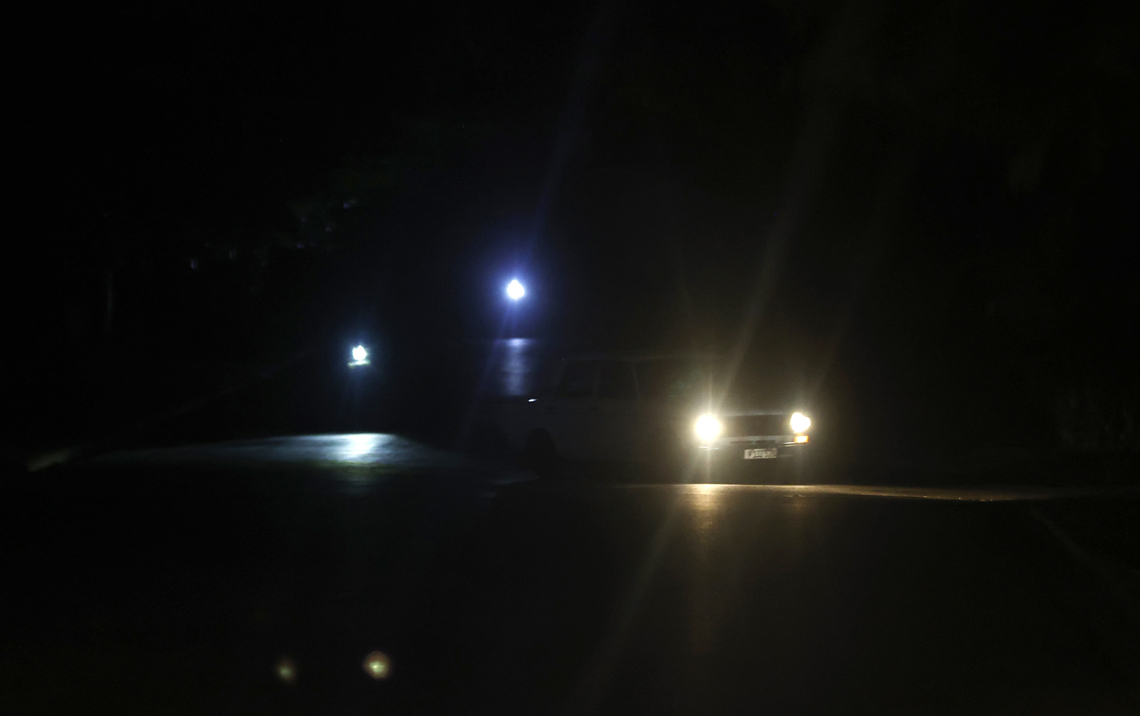
This Sunday, Cuba will face another day of prolonged blackouts that will simultaneously affect 59.3% of the national territory during peak hours, the time of highest electricity consumption, according to the state-run Unión Eléctrica (UNE).
The energy crisis on the island, which has worsened since mid-2024, is currently going through one of its worst moments. This Saturday, a record deficit of 63% was recorded, the second highest documented in January, when it was expected that up to 62% of the country would be left without electricity service, with cuts of more than 20 hours a day in large areas and up to 40 hours in some locations.
According to the UNE, for the afternoon-night schedule this Sunday, a generation capacity of 1,270 megawatts (MW) is expected compared to a maximum demand of 3,050 MW, which represents a deficit of 1,780 MW. The estimated impact—the amount of energy that will be disconnected to avoid disorderly blackouts—will reach 1,810 MW.
Among the main causes of this situation are the frequent breakdowns in thermoelectric plants, which operate with a high degree of technical deterioration after decades of exploitation, as well as the lack of foreign currency to import fuel, as recognized by the Cuban Government itself.
In recent weeks, the crisis has been aggravated by the cutoff in the supply of Venezuelan crude oil, following pressure from the United States following the departure from power of President Nicolás Maduro on January 3. Added to this is the executive order signed on Thursday by US President Donald Trump, which imposes tariffs on countries that sell or supply oil to Cuba, considering the island a “threat” to national security.
Trump declares a “national emergency” and threatens tariffs on countries that supply oil to Cuba
Currently, 10 of the 16 operational thermoelectric units are out of service due to breakdowns or maintenance, including the Antonio Guiteras plant, the largest generating block in the country. These plants contribute on average close to 40% of the national energy mix.
The UNE did not detail in its report the number of distributed generation engines out of service due to lack of fuel and lubricants, a key data to evaluate the impact of the end of Venezuelan oil. However, the available figures indicate that the number of idle equipment continues to increase.
Independent experts point out that the energy crisis responds to chronic underfinancing of the sector, completely in the hands of the State since 1959. The prolonged blackouts have had a strong impact on the economy, which has contracted more than 15% since 2020, according to official figures, and have been a trigger for the main protests registered in the country in recent years.
EFE/OnCuba