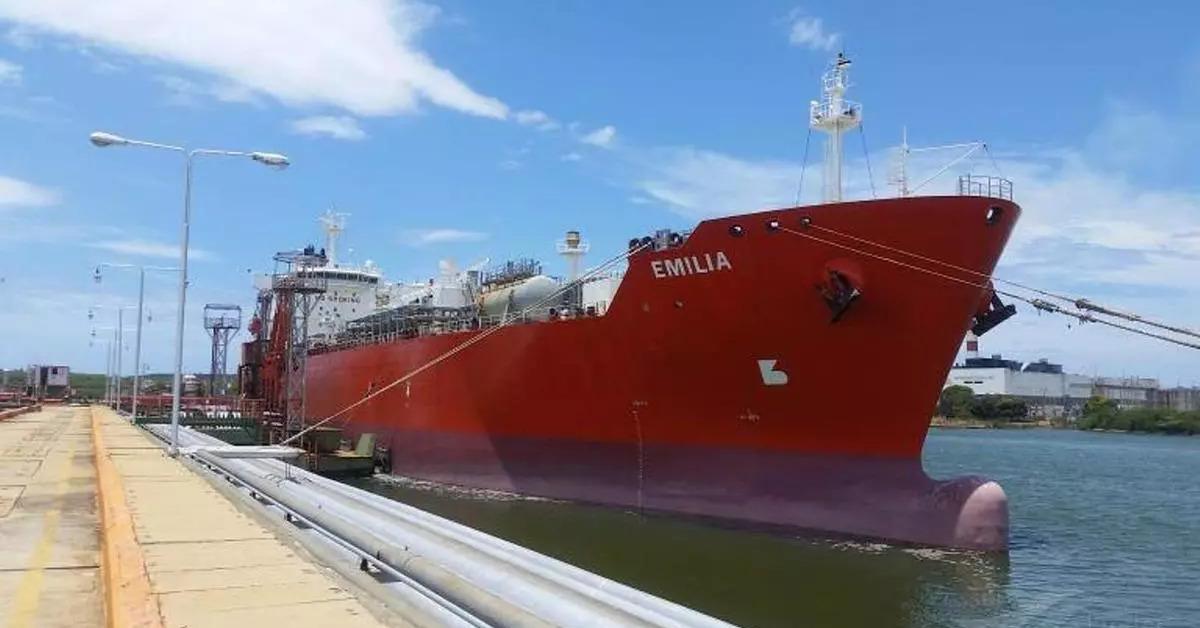
Havana/After weeks of apparent inactivity, the tanker Emilydedicated to the transportation of liquefied petroleum gas (LPG) under the Cuban flag, moved again. However, far from bringing relief, its arrival at the port of Cienfuegos confirmed the worst possible scenario: the ship entered empty.
As confirmed to 14ymedio the expert Jorge Piñón –researcher at the University of Texas in Austin–, the Emily had left Santiago de Cuba with the intention of loading LPG in Jamaica, one of its usual suppliers. The destination was the port of Kingston. But the plan was thwarted by a lethal combination of timing and politics. The ship arrived in Jamaican waters just hours before President Donald Trump’s new executive order took effect. The decree, effective from 12:01 am (Eastern time) on January 30, 2026, sanctions all countries that send fuel to Cuba.
Maritime tracking data confirms the failure of the operation. VesselFinder logs show that the Emily It never docked in Kingston. It approached with a draft of 8.4 meters and left with exactly the same draft, an unmistakable sign that it did not refuel. It entered Jamaican territorial waters at 08:35 UTC on January 29 and departed at 10:48 UTC on the 30th, insufficient time to conduct a cargo operation, even before the US decree formally came into effect at midnight.
For thousands of homes, getting the 10-kilogram cylinder has become an obstacle course
The tanker headed towards Cienfuegos and entered the port with the same draft with which it had left. It did not have LPG. The trip, watched for days with expectation by specialists and citizens, ended up being further proof that the Cuban energy system works day to day, without a safety net.
The Cienfuegos terminal concentrates key LPG storage and redistribution infrastructure for the west of the country. From there provinces that have been without regular service for months are supplied. The lack of gas not only deprives families of an essential domestic fuel, but forces them to improvise with firewood, charcoal or intermittent electricity to cook, fueling sustained social and health deterioration.
In 2025, the authorities themselves recognized almost total suspensions of gas sales due to depletion of inventories. Each download allowed only a few days of marketing before the “bullets” disappeared again. For thousands of homes, getting the 10-kilogram cylinder has become an obstacle course with no guarantee of success.
In January 2026, a balita of gas has been resold for between 10,000 and 30,000 pesos
Therefore, every movement of the Emily it is followed millimeterly. The ship has spent long periods at anchor or inactive, a behavior that some experts attribute less to technical failures than to financial constraints. Cuba buys LPG in specific operations, without stable contracts, and depends on regional intermediaries willing to take risks. The shortage of foreign currency, the history of non-payments and now the tightening of the sanctions fence make it increasingly difficult to close agreements, even short-term.
From Cienfuegos, when there is product, the LPG is redistributed to provinces that are months behind. Then the lines reappear, the shifts sell out in hours and the informal market raises prices. In January 2026, a balita of gas has been resold for between 10,000 and 30,000 pesos, several times the monthly salary of a state worker. The official price exists only for those who manage to get to the window.
The episode of Emily It is also part of a broader context of energy contraction. Since 2025, fuel imports to Cuba have fallen significantly, hitting both electricity generation and domestic consumption. With less fuel for distributed generation plants, blackouts intensify and gas becomes a critical substitute. The scarcity of one puts pressure on the demand of the other, closing a vicious circle.