The president in charge of VenezuelaDelcy Rodríguez, proposed a General Amnesty Law that seeks to cover more than two decades of political violence in the South American country.
The forgiveness period will begin in 1999, the year in which Hugo Chávez assumed power, as announced by the interim president this Friday.
The measure includes the release of hundreds of prisoners and the closure of Helicoide, the prison that the opposition accuses of being a center of torture and humiliation, which would now become a social and cultural center.
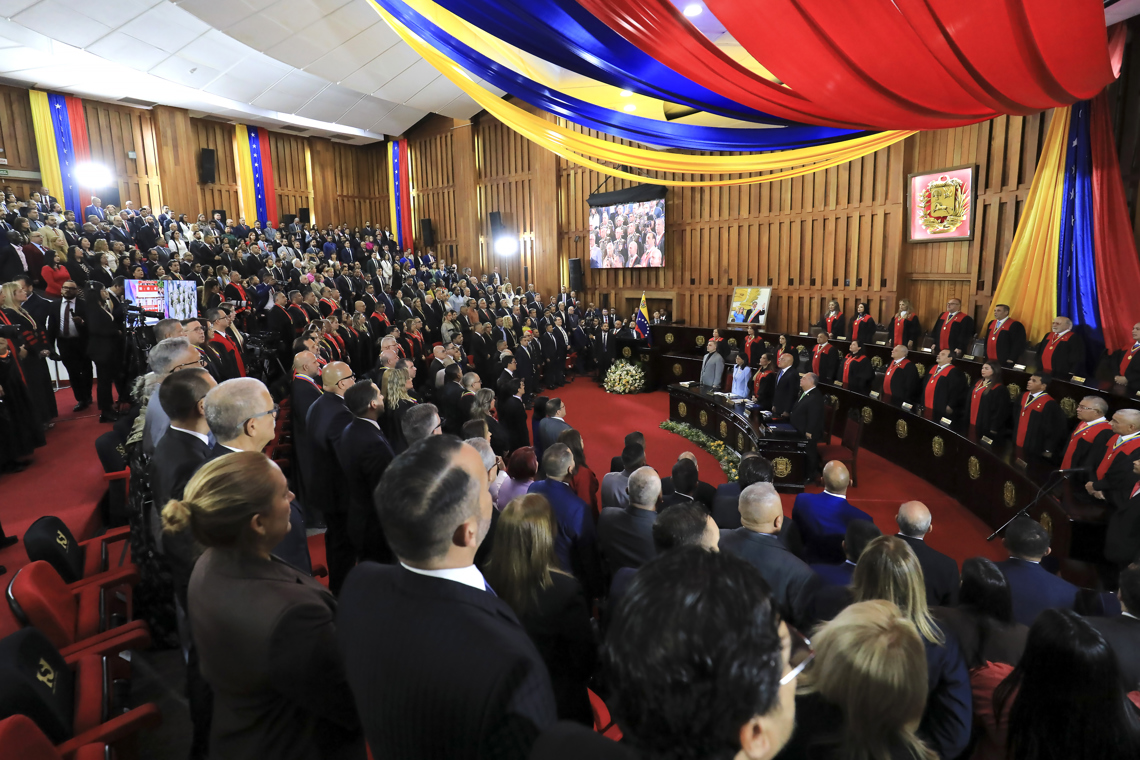
Rodríguez, who assumed the head of state after the capture of Nicolás Maduro by United States forces on January 3, asked the National Assembly to urgently approve the regulations and called on Venezuelans to leave revenge and hatred behind.
“May this law serve to repair wounds and redirect coexistence,” he said at the opening of the 2026 Judicial Year at the headquarters of the Supreme Court of Justice.
Delcy Rodríguez announces a general amnesty law in Venezuela and the reconversion of El Helicoide into a “social center” https://t.co/6eGUtjsHz7
— CNN in Spanish (@CNNEE) January 31, 2026
A forgiveness that covers the entire Chavista era
The amnesty proposed by the current Government will cover the period between 1999 and the present, that is, the entire period of Chavista governments that began with Chávez and continued by Maduro.
“Let it be a law that serves to repair the wounds left by political confrontation, from violence, from extremism, that serves to redirect justice in our country and that serves to redirect coexistence among Venezuelans,” stated, quoted by EFE.
According to Rodríguez, those who are prosecuted or convicted of homicide, drug trafficking, corruption or serious human rights violations will be excluded from the benefits.
The president in charge stressed that the measure seeks to “give an opportunity to live in peace and tranquility” and that political diversity can coexist with respect for the law.
The announcement was received with joy by relatives of political prisoners who were camping in front of prisons in Caracas, waiting for news of their release.
Closing of the Helicoid
One of the most symbolic announcements was the closing of the Helicoide, headquarters of the Bolivarian Intelligence Service (SEBIN), denounced for years as a torture center. Rodríguez ordered that the building be transformed into a social, sports and cultural space for the police family and the surrounding communities.
The NGO Foro Penal estimates that Venezuela has just over 700 political prisoners, many of them held in Helicoide.
Conceived in 1956 during the government of dictator Marcos Pérez Jiménez as a futuristic architectural project destined to become the largest shopping center in Venezuela, its helical structure allowed cars to ascend ramps to the different levels of stores and exhibition spaces.
However, the project was left unfinished after the fall of Pérez Jiménez in 1958 and never fulfilled its original purpose. For years it remained abandoned, making it a symbol of the failure of the dictatorship’s modernist ambitions.
Starting in the 1980s, the building was handed over to the political police and became the headquarters of the DISIP (Directorate of Intelligence and Prevention Services), a security organization created in Venezuela in 1969 during the government of Rafael Caldera to combat the insurgency and leftist forces.
In 2010, the building passed into the hands of SEBIN, the Bolivarian National Intelligence Service.
Releases and antecedents
Since January 8, Venezuela’s interim government has released some 300 prisoners as part of a gradual process. Families have followed each announcement closely, with scenes of hugs and celebrations outside police cells.
Opposition leader María Corina Machado, awarded last year with the Nobel Peace Prize, considered that the process “responds to pressure from the United States” and not to a spontaneous will of Chavismo. “When repression disappears and fear is lost, it is the end of tyranny,” he stated in a virtual intervention at the Hay Festival in Cartagena, in Colombia.
Opposition parliamentarian Tomás Guanipa, with two imprisoned brothers, celebrated the initiative as “the beginning of a path towards freedom and democracy definitively.” However, he warned that the amnesty must be applied “for everyone equally” and not on a discretionary basis. “It cannot be decided by those who control power,” he said in an interview with the international press.
Guanipa, who took his seat in the National Assembly after the US bombing that precipitated the fall of Maduro, defended that the process leads to a democratic transition and free elections. “Rodríguez has a great historic opportunity to close a cycle and open the doors of democracy,” he said.
The law announced this Friday is only the second amnesty in almost three decades of Chavista governments. The first was approved in 2007 by Chávez and benefited soldiers detained after the 2002 insurrection.
In 2016, an attempt at an amnesty law promoted by an opposition Parliament did not prosper.
More announcements from Rodríguez and new US ambassador
Delcy Rodríguez also announced a national consultation for a new justice system, which will be led by the Judicial Revolution Commission chaired by Diosdado Cabello. “Justice must become the queen of republican virtues,” he stated, asking for collaboration from all sectors.
In parallel, he asked the Supreme Court for a ruling on the General License issued by the United States Department of the Treasury, in order to preserve Venezuelan jurisdiction and guarantee international economic relations. The interim president has made progress in resuming diplomatic ties with Washington, broken since 2019.
This Friday’s announcements reflect the magnitude of the current changes in Venezuela after the fall and capture of Maduro, which caused a hundred victims, including 32 Cuban soldiers.
“The changes have been violent in terms of speed,” acknowledged Guanipa, who insisted that the transition must lead to a democratic process that recovers national sovereignty through the popular vote.
Rodríguez, who was part of Chavismo for almost three decades, now faces the challenge of demonstrating that the reforms are not cosmetic. “It is up to her to demonstrate that these changes are serious,” said the opposition parliamentarian.
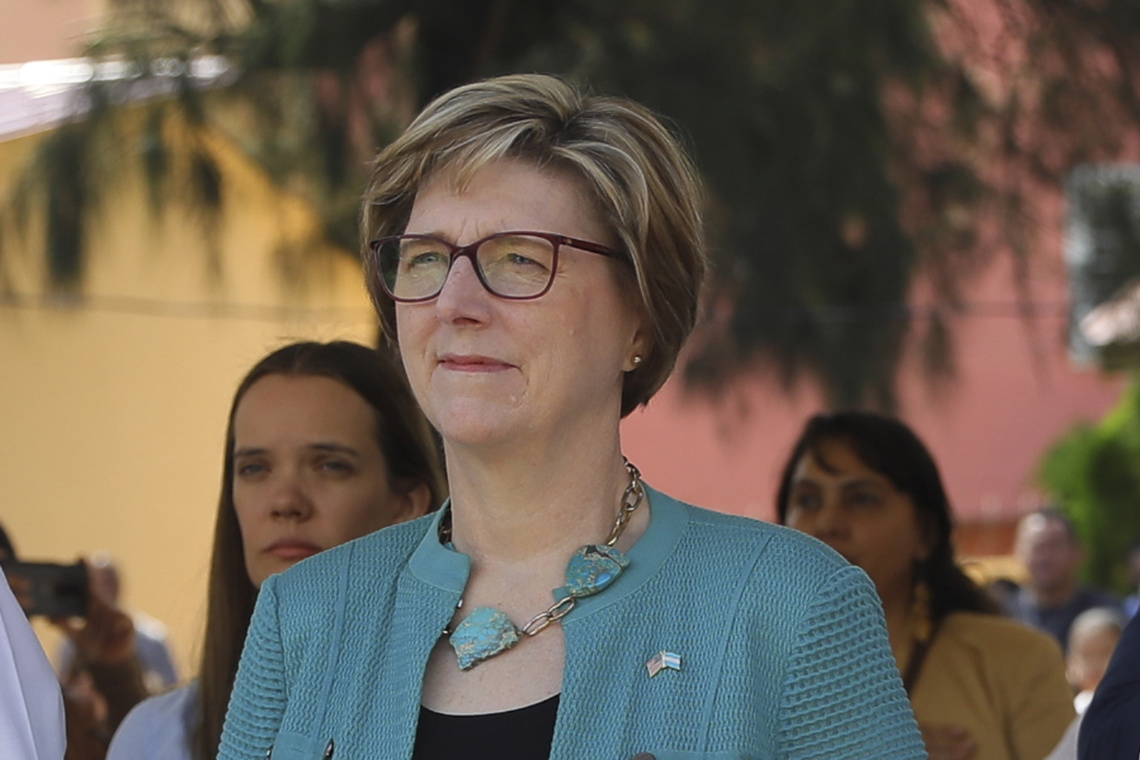
In this scenario, the arrival of Laura Dogu as the new head of the United States diplomatic mission in Venezuela, scheduled for this Saturday, marks a turn in bilateral relations. Washington and Caracas are advancing a “gradual” resumption of ties, with oil agreements and the release of American citizens detained in the country, among other steps.
Dogu, appointed on January 22, has extensive diplomatic experience: she was ambassador to Honduras and Nicaragua, in addition to holding positions in Mexico, Turkey, Egypt and El Salvador, as well as in the State Department in Washington.