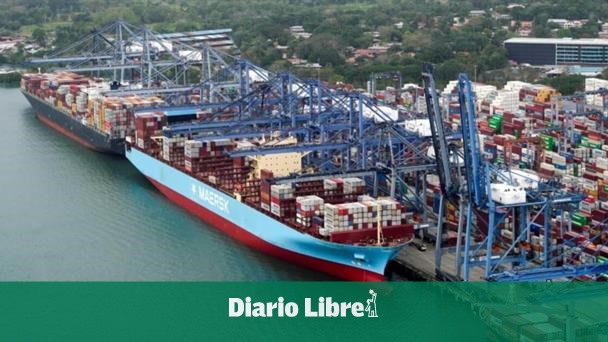
The Supreme Court of Panama determined on Thursday that the concession granted to a subsidiary of CK Hutchison Holdingsfrom Hong Kong, to operate ports at the ends of the Panama Canal was unconstitutional, a ruling that furthers the United States’ goal of blocking any Chinese influence over the strategic waterway.
The court decision It occurred after an audit carried out by the comptroller of Panama, which alleged irregularities in the 25-year extension of the concession awarded in 2021.
President Donald Trump’s administration has made it a point to block China’s influence on the Panama Canalone of its priorities in the hemisphere. Panama was the first country visited by Secretary of State, Marco Rubio, after taking over as head of United States diplomacy.
-
Despite the insistence of the Government of Panama and the canal authority that China has no influence over their operations, Rubio indicated that the United States considered the operation of the ports as a matter of national security. President Trump even went so far as to say that the Central American country should return the canal to the control of the North American nation.
The court’s brief statement does not provide guidance on what will happen with the ports now.
Reaction in Hong Kong
CK Hutchison’s subsidiary, Panama Ports Companysaid it has not yet been notified of the decision, but insisted that its award was the result of a transparent international tender.
In a statement, it indicated that the ruling “lacks a legal basis and endangers not only PPC and its contract, but also the well-being and stability of thousands of Panamanian families who depend directly and indirectly on port activity, as well as the rule of law and the legal certainty in the country.”
The company noted that it reserves all rights to undertake legal actions in Panama or elsewhere, but did not offer further details.
The Hong Kong government strongly rejected the ruling and said in a statement that it strongly opposes any foreign government using coercive, repressive or unreasonable means to seriously harm the commercial interests of Hong Kong companies.
Furthermore, he pointed out that the Panamanian executive should respect the spirit of the contracts and provide a fair business environment.
“Given the current situation in Panama, Hong Kong companies should carefully review their existing investments and future ones there,” the note stated.
In Beijing, the spokesman for the Ministry of Foreign Affairs, Guo Jiakuntold reporters that China would take all necessary measures to safeguard the legitimate rights and interests of “the Chinese company,” without detailing possible steps to follow.
Political analyst Edwin Cabrera pointed out that, once the parties are notified, the question of what to do with the ports will go to Executive power of Panama, specifically to the Maritime Authority.
“I have the impression, for conversations that I have had with some people, that the operation (of the ports) will not stop,” said Cabrera.
Agreement angered Beijing
CK Hutchison Holdings announced last year an agreement to sell its majority stake in the ports Panamanians and others in other parts of the world to an international consortium that included BlackRock Inc. But the agreement seemed to stall, due to the objections of the Chinese government.
The company said last July that it was considering seeking a chinese investor to enter the consortium as a relevant member, a measure that some interpreted as a way to please Beijing, but CK Hutchison has not commented on the matter again.
The company’s awkward position underscores the challenges Hong Kong’s business elites face in dealing with the expectations of national loyalty from Beijing, especially when relations between China and the United States are strained.
CK Hutchison is owned by the family of richest man from Hong Kong, Li Ka-shing.
In parallel, the comptroller of Panama audited the concession to Panama Ports Companywhich had had the contract to operate the ports since 1997. The concession was renewed for 25 years in 2021, during the previous Panamanian Government.
The Controller Anel Flores said the audit found payments that were not made, accounting errors and the apparent existence of “phantom” concessions operating within the ports since 2015. The company refuted those accusations.
The audit determined that the irregularities had cost him government around $300 million since the concession was extended and an estimated $1.2 billion during the original 25-year contract. Flores also said that the extension was awarded without the support from your office, as required.
On July 30, the comptroller challenged before the Supreme Court the contract of Panama Ports Company to operate the ports.