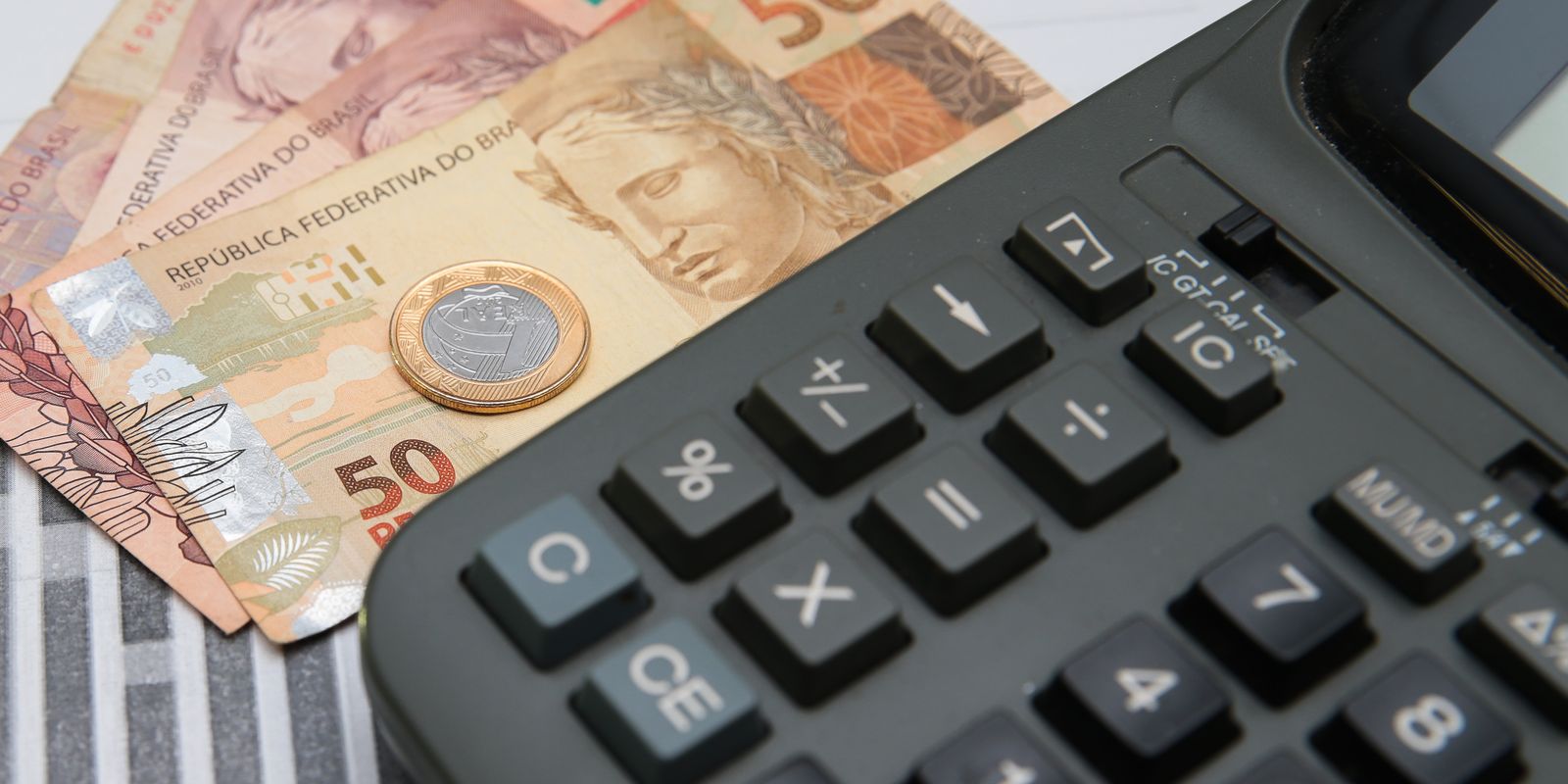
Public accounts closed 2025 with a negative balance, mainly due to the federal government’s deficit, which saw expenditure growth greater than revenue. The consolidated public sector, made up of the Union, states, municipalities and state-owned companies, recorded a primary deficit of R$55.021 billion last year, which represents 0.43% of the Gross Domestic Product (GDP, the sum of goods and services produced in the country).
Compared to 2024, there was an increase in the deficit. In 2024, public accounts closed the year with a primary deficit of R$47.553 billion, 0.4% of GDP.
Fiscal Statistics were released this Friday (30) by the Central Bank (BC) with the consolidation of data from December 2025. That month, public accounts had a surplus of R$6.251 billion.
The primary deficit represents the negative result of public sector accounts (expenses minus revenues), disregarding interest payments on public debt.
Spheres of government
Last year, the Central Government’s account had a primary deficit of R$58.687 billion compared to a negative result of R$45.364 billion in 2024. The amount differs from the result released this Thursday (29) by the National Treasury, of deficit of R$61.69 billionbecause the BC uses a different methodology, which takes into account the variation in the debt of public entities.
According to the Treasury, the Central Government’s accounts were pressured by the growth in mandatory spending, such as Social Security and Continuous Payment Benefit (BPC). On the revenue side, the record collection of 2025 prevented a higher deficit. In real terms, net revenue grew 2.8% (R$64.3 billion), while expenses increased 3.4% (R$79.1 billion.
To reduce the deficit in public accounts, regional governments – state and municipal – contributed to an increase in the surplus, closing 2025 at R$9.537 billion, compared to a positive result of R$5.885 billion in 2024.
Federal, state and municipal state-owned companies – excluded from the Petrobras and Eletrobras groups – also contributed to the increase in the deficit in the consolidated accounts, with a negative result of R$5.871 million in August. There was a reduction, however, compared to 2024, when the deficit reached R$8.073 billion.
Interest expenses
Interest expenses reached R$1 trillion last year, a record for such expenses, according to the BC. There was a nominal increase compared to the R$950.423 billion recorded in 2024. According to the BC, however, nominal GDP grew faster than interest expenses. In 2025, interest expenses were 7.91% of GDP, while in 2024 they reached 8.07% of GDP.
It is not common for the interest account to show large variations, especially negative ones, as interest is appropriated on an accrual basis, month to month. Furthermore, there was an increase in the basic interest rate, the Selic, during the period, which is one of the account’s indexes. THE Selic is at 15% per yearat the highest level since July 2006.
But, in the result, there are the effects of the Central Bank’s operations in the foreign exchange market (currency swap, which is the sale of dollars in the futures market) which, in the case of 2025, contributed to the improvement in the interest account. The results of these operations are transferred to the payment of interest on public debt, as revenue when there are gains and as expenses when there are losses.
Last year, swap operations had gains of R$105.9 billion, reducing the interest bill. In 2024, there were R$115.9 billion in losses from swaps, which increased the interest bill.
As a result, the nominal result of public accounts – formed by the primary result and interest expenses – rose in the interannual comparison. In 2025, the nominal deficit was R$1.062 trillion against the negative result of R$997.976 billion in 2024.
The nominal result is taken into account by risk rating agencies when analyzing a country’s debt, an indicator observed by investors.
Public debt
The public sector’s net debt – the balance between the total credits and debts of federal, state and municipal governments – reached R$8.311 trillion in 2025, which corresponds to 65.3% of GDP, the highest percentage in history. In the previous year, the percentage of net debt in relation to GDP was 61.3% (R$7.220 trillion).
The growth is due, in particular, to the nominal deficit of the month, the appropriate nominal interest and the exchange rate appreciation of 11.1% in the year. As the country is a creditor in foreign currency, an increase in the dollar means an increase in net debt.
In 2025, the gross general government debt (DBGG) – which only accounts for the liabilities of federal, state and municipal governments – reached R$10.017 trillion or 78.7%, an increase compared to the previous year – R$8.984 trillion or 76.3% of GDP. Just like the nominal result, gross debt is used to draw international comparisons.