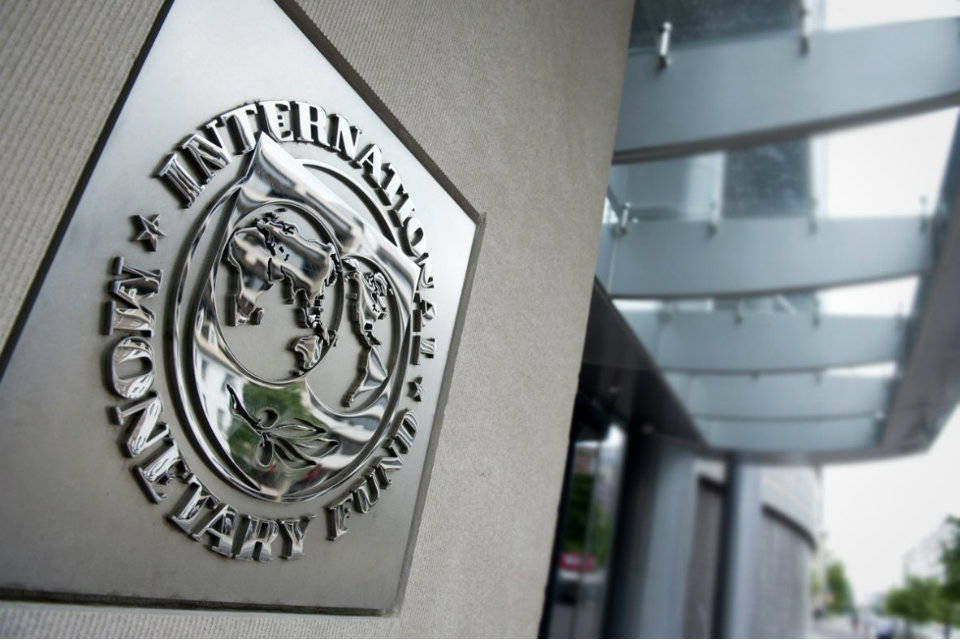
The International Monetary Fund (IMF) slightly lowered the growth prospects for Latin America, which will grow 2.2% this year and 2.7%
The International Monetary Fund (IMF) considered that, although Latin American growth is not expected to be as solid as the rest of emerging economies, the subcontinent will show “stable” growth and will be able to weather with “resilience” an environment with a weak dollar.
As indicated by the IMF’s chief economist, Pierre-Olivier Gourinchas, in a meeting with the press in Washington, “growth in emerging and developing markets is projected at around 4% for the next two years”, something that is a “historic performance based on historical standards”, although Latin America will be “the exception.”
This month, the IMF slightly downgraded growth prospects for the region, which will grow 2.2% this year and 2.7%. Gourinchas pointed out that this “reflects that some data that has arrived for some countries shows a weaker performance than expected,” but with growth that will be “relatively stable.”
«We will have a combination of easing monetary policy, which will help, but also some fiscal consolidation that is necessary. And the balance of this is that growth will remain relatively stable, while inflation is expected to decrease in the region,” with the exception of Argentina and Venezuela, noted the Fund’s chief economist.
*Read also: National Assembly unanimously approves the oil reform: learn about the changes here
Gourinchas pointed out that there are still countries that have to control inflation with restrictive monetary policies, as in the case of Brazil, but if the trend in prices is progressively controlled there will be room for greater flexibility and that could stimulate the economies of the region.
As part of the risks for the global economy, the Fund’s chief economist highlighted that “growth is increasingly concentrated in a few sectors, especially in information technologies and artificial intelligence” and whether expectations of greater productivity can materialize and justify the investment boom in those sectors.
Likewise, he mentioned that the weakness of the dollar could help emerging countries that have debt denominated in that currency, something especially important for Latin America, while in the case of economies dependent on raw material exports, there are many factors that could compensate for the fall of the US currency.
On February 16 and 17, the IMF will host a conference on emerging economies (Alula Conference) in Saudi Arabia to explore how “different external forces” affect these countries in the global macroeconomic environment and how they can adapt to these changes.
With information from the EFE agency
*Journalism in Venezuela is carried out in a hostile environment for the press with dozens of legal instruments in place to punish the word, especially the laws “against hate”, “against fascism” and “against the blockade.” This content was written taking into consideration the threats and limits that, consequently, have been imposed on the dissemination of information from within the country.
Post Views: 61