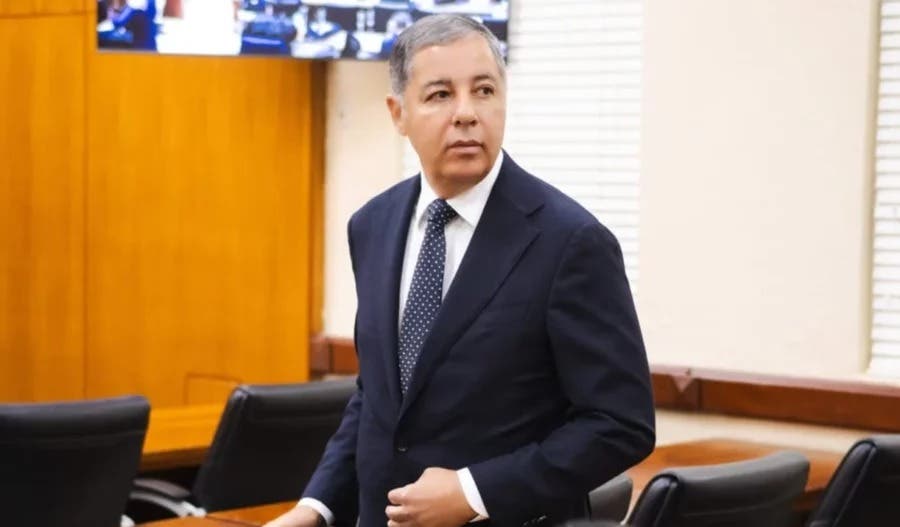
Santo Domingo.– Eduardo Núñez, lawyer for former Finance Minister Donald Guerrero Ortiz, stated this Thursday that the payments for expropriations made during his client’s administration responded exclusively to the fulfillment of legal obligations of the Dominican State.
The jurist explained that said disbursements derived from final judicial rulings, expropriation decrees and official appraisals issued by the General Directorate of National Cadastre, in accordance with the procedures established in laws no. 150-14 and 107-13.
According to Núñez, a significant part of these cases correspond to expropriations carried out several decades ago, some since the 50s and 60s, when the State occupied land intended for roads, airports, parks and other public works without completing compensation to the owners at the time.
“The Constitution prohibits the State occupies private property without prior compensation and fair. These payments were not a discretionary decision, but rather the fulfillment of a pending legal obligation,” he said.
The lawyer explained that more than 40% of the payments were ordered directly by courts, including decisions of the Supreme Court of Justice.
The rThis, he explained, was carried out based on technical appraisals from the National Cadastre, in many cases below the market value and subsequently validated by judicial authorities.
“Compliance with a court ruling is not corruption,” he emphasized.
Núñez also specified that the Treasury It did not set prices, choose beneficiaries or resolve ownership conflicts, but rather acted as an administrative executing entity.
“The function of the Treasury was to verify that the documentation complied with the legal requirements and execute payments previously defined by decrees, appraisals or sentences. “There was no margin of discretion,” he said.
In response to accusations of Public Ministrythe defense assured that it is “materially impossible” that Donald Guerrero has committed the crimes of which he is accused, alleging that there was no property damage, personal benefit or discretionary decisions.
Likewise, he maintained that the expropriations did not generate losses for the State, but rather represented savings greater than RD$10,000 millionas compensation has been agreed below the market value.
“The State paid what legally owed and received in exchange land that it already occupies and uses for public purposes,” he added.
Finally, Núñez reported that the defense will present before the court the legal bases, technical and constitutional provisions that, he said, dismantle the accusations made in the case initiated in November 2020.
“Questioning these payments would imply accept that the State can occupy land for decades without paying them, which is contrary to the Constitution and the public interest,” he concluded.