The Cuban Government considered the new executive order from Donald Trumpwhich imposes tariffs against any country that supplies oil to the island.
After signing the order, which declares a “national emergency” due to the alleged threat that Havana represents for the United States, Trump stated that “Cuba will not be able to survive” the impact of pressure from Washington in the midst of the very difficult scenario that the country is suffering.
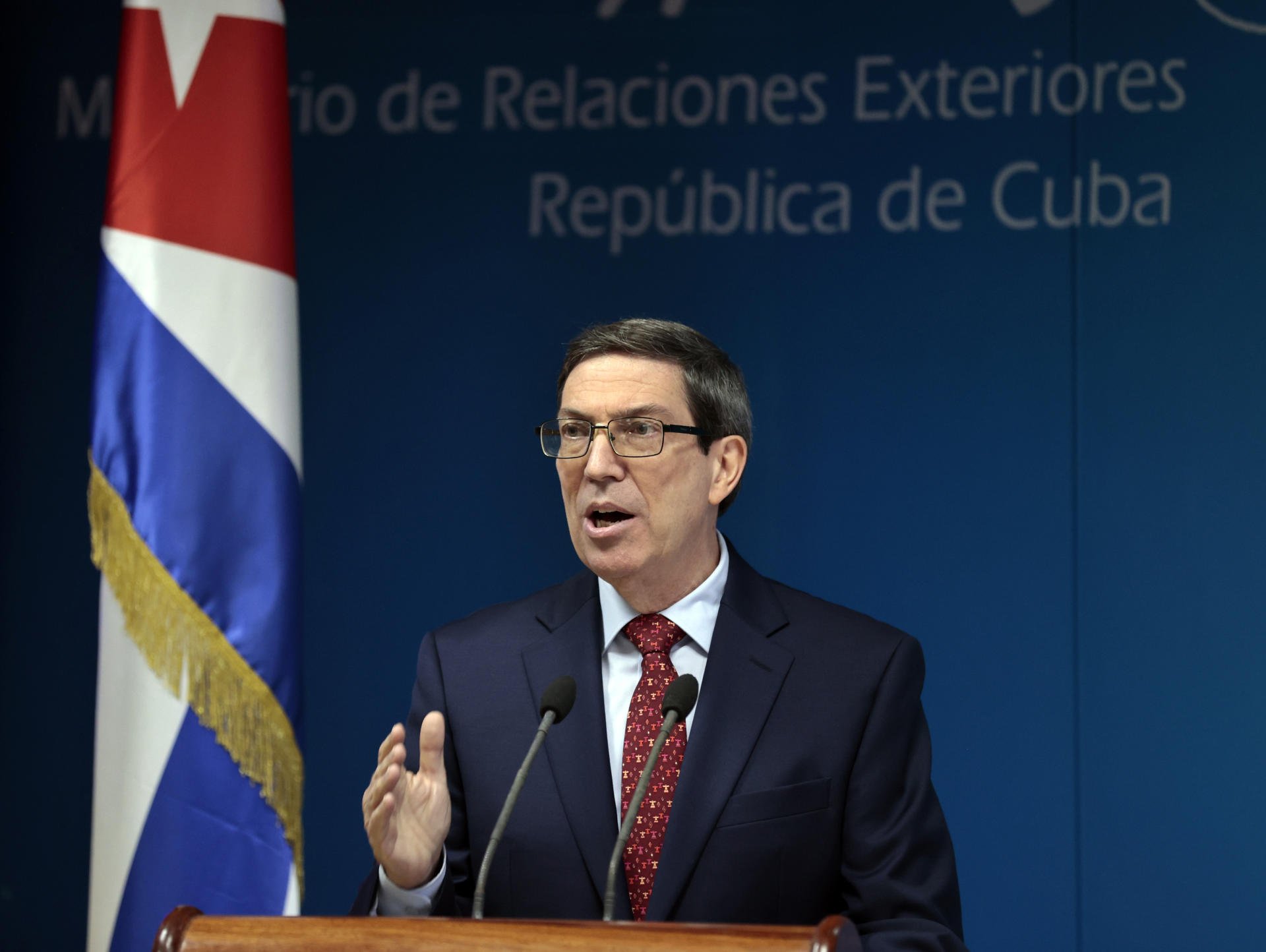
The island’s government reacted through its Foreign Minister, who classified the measure as a “new escalation” against Cuba and condemned it “in the strongest terms.”
In a message on X, Bruno Rodríguez He denounced that Trump’s purpose is to “impose a total blockade on fuel supplies,” which he described as a “brutal act of aggression against Cuba and its people,” based on “lies,” “blackmail” and “coercion.”
The Republican Administration, he said, intends to “present Cuba as a threat that it is not,” and its new measure “promises to subject the island’s population to extreme living conditions.”
We condemn in the strongest terms the new escalation of #USA against #Cuba.
Now it is proposed to impose a total blockade on fuel supplies to our country.
To justify it, he relies on a long list of lies that attempt to present Cuba as a threat…
— Bruno Rodríguez P (@BrunoRguezP) January 30, 2026
Threat of tariffs
Rodríguez pointed out that Washington resorts “to blackmail and coercion to try to get other countries to join its universally condemned blockade policy against Cuba, to which, if they refuse, it threatens with the imposition of arbitrary and abusive tariffs.”
The actions of the US Administration violate “all the rules of free trade,” he considered.
The Cuban Foreign Minister denied that Cuba was a threat to the United States and pointed out that the “only threat to the peace, security and stability of the region” and the “only evil influence” is that of the North American Government itself against the Latin American countries, “which it tries to subject to its dictation, strip of their resources, mutilate their sovereignty and deprive of their independence.”
Trump’s executive order authorizes the imposition of additional tariffs ad valorem on imports of goods from countries that, directly or indirectly, sell or supply crude oil or derived products to Cuba.
The measure does not establish automatic tariffs, but rather enables a case-by-case evaluation process. The determination will depend on the assessment made by the US Government and the final decision will be in the hands of Trump himself.
Trump declares a “national emergency” and threatens tariffs on countries that supply oil to Cuba
Trump: “Cuba will not be able to survive”
After ordering the imposition of tariffs on countries that sell oil to the island, the president of the United States stated this Thursday that “Cuba will not be able to survive.”
“It seems that it will not be able to survive. Cuba will not be able to survive,” the president declared to the press during the presentation of a documentary about the American first lady, Melania Trump.
According to the agency EFETrump was asked if he is trying to “smother” Cuba, to which he responded that that word is “very harsh,” but assured that the Caribbean country is “a failed nation.”
“You have to feel bad for Cuba because they have treated people very badly. We have many Cuban-Americans who were treated very badly and would like to return,” he declared.
The Republican gave these statements hours after signing the executive order that declared the island “an unusual and extraordinary threat to the national security and foreign policy of the United States” and establishes the imposition of tariffs on oil suppliers to Cuba.
The measure is a strong blow to the precarious energy scenario of the island, in crisis for several years and now also affected by the cutoff of Venezuelan crude oil after the US attack on Venezuela and the capture of Nicolás Maduro.
Trump has previously maintained that the Cuban Government’s days are numbered due to the loss of oil supplies from Caracas and now he points to Mexico and Russia, which have remained the island’s only fuel suppliers.