After years of litigation, Nelson Odalis Soriano managed to get the Constitutional Court (TC) ordered to stop the irregular paralysis of its financial products, after its bank account was blocked in 2019 without a court order to support it.
Soriano denounced that, despite going to the Superintendence of Banks and to Superior Administrative Court (TSA), did not obtain an effective response to the measure adopted by the financial institution.
He T.C. He finally agreed with him in his ruling number TC/0952/25 by establishing that the blockade lacked legal basis.
The ruling also showed the arbitrariness that, according to high courtusers of the banking system face as a consequence of the indiscriminate application of measures linked to the prevention of money laundering.
The citizen was involved along with other people in a investigation which was carried out by Public Ministry for alleged drug traffickingmoney laundering and illegal possession of firearms.
By virtue of this process, the Investigative Court of the Judicial District of San Cristóbal authorized the prosecutor’s office to obtain his financial information and the delivery of the related documents, without this implying, as the constitutional plenary warned, the immobilization or blocking of its assets.
TSA refused
He Reserve Bank He proceeded to paralyze his accounts until he presented documents justifying the origin of the funds. Dissatisfied with this decision, Soriano filed a protection action which the TSA rejected for not verifying the violation of the rights invoked.
The high court He revoked this sentence in October 2025, considering that it was contrary to the law, proceeded to hear the appeal for protection and ordered the lifting of the blockade.
The referee concluded that the actions of Banreservas and of the Superintendence of Banks had been “manifestly arbitrary“.
“Initially, it was certified that the procedure followed against the plaintiff corresponded to a freeze of funds and, subsequently, it was alleged that it was a request for information… Such a procedure constitutes a violation of its fundamental property right“, argued the T.C..
Free Diary consulted the Bank Association of the Dominican Republic about the recurrence of this practice, but until the closing of this edition their response was not obtained.
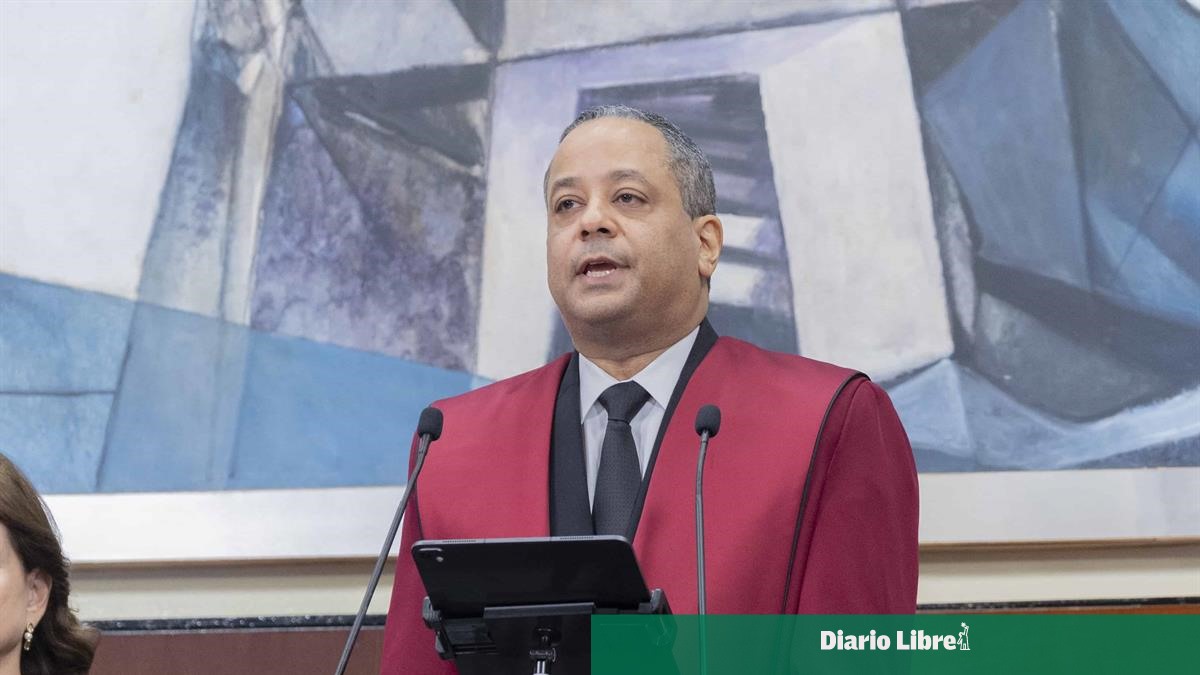
The president of the TC, Napoleón Estévez, highlighted this sentence among the most important of 2025 in his accountability on January 22.
“The refusal to lift the blockade, seizure or immobilization of financial products of a person under investigation, without authorization from the competent judge, constitutes an arbitrary action that results in a clear impact on the right of property,” the magistrate reiterated.
Law 155-17, On Money Laundering and Financing of Terrorism, indicates that the judge is the one who, at the request of the Public Ministry, must order the provisional immobilization of assets or banking products (article 23).
Prosecutors can do so on their own exceptionally when the delay jeopardizes the investigation,” but a judge must confirm it within 72 hours.