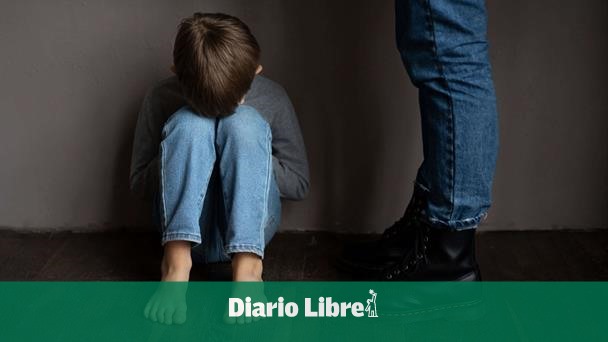
In Dominican Republicat least six out of 10 Boys, girls and adolescents from 0 to 14 years old are subjected to violent disciplinemost often at home or at school.
The data is contained in the report “Violence against children and adolescents in Latin America and the Caribbean”prepared by the United Nations Children’s Fund (UNICEF) and Pan American Health Organization (OPS), which indicates that 63.5% of Dominican infants and adolescents are subjected to violent discipline.
The physical aggression includes blowsslaps and spankings, while the psychological aggression It is made up of insults, threats, screams and humiliation.
Despite this high percentage, UNICEF points out that only 8.8% of adult caregivers openly defend resorting to violent disciplineunderstanding that it is the only way to command respect and teach about good behavior.
“Parentsmothers, grandparents, teachers and staff in children’s homes and juvenile detention centers may resort to physical or psychological means to discipline and set limits“, highlights the text.
TO regional levelthe entity highlights that 57% of children and adolescents have been subjected to some type of violent disciplineincluding physical aggression in 46% of cases.
-
Furthermore, 38% have suffered some type of physical punishment, of which 33% correspond to other forms of physical punishment and 5% to severe physical punishment.
In half of the countries in the regionmore caregivers believe that children and adolescents with disabilities need physical punishment to raise them properly compared to those without disabilities.
Encourage positive parenting
In the case of Dominican Republic12% of caregivers believe that physical punishment It is necessary for good parenting. Argentina is the country with the lowest percentage, 5%. Meanwhile, Honduras with 41% and the Turks and Caicos Islands with 42% exhibit the highest values in Latin America and the Caribbean.
“Special attention is required to young carersespecially to teenage fathers and mothers. Their sons and daughters are more likely to suffer violent discipline“notes the report.
Both the OPS as UNICEF call on governments to provide practical tools to manage conflicts, exercise positive parenting and avoid the use of violenceencouraging more positive interactions between parents and children through play and shared activities, while offering support to reduce stress, citing counseling and psychological therapy as the best examples.
Unicef and PAHO affirm that hurting or even threatening to hurt a child or adolescent, whether physically or emotionally, does not work.
“It causes harm, affects their health and well-being, hinders their learning and can damage relationships with their family. It also sends the wrong message: that violence is an acceptable way to deal with conflict, creating a cycle of aggression and violence that continues into the future,” they say.