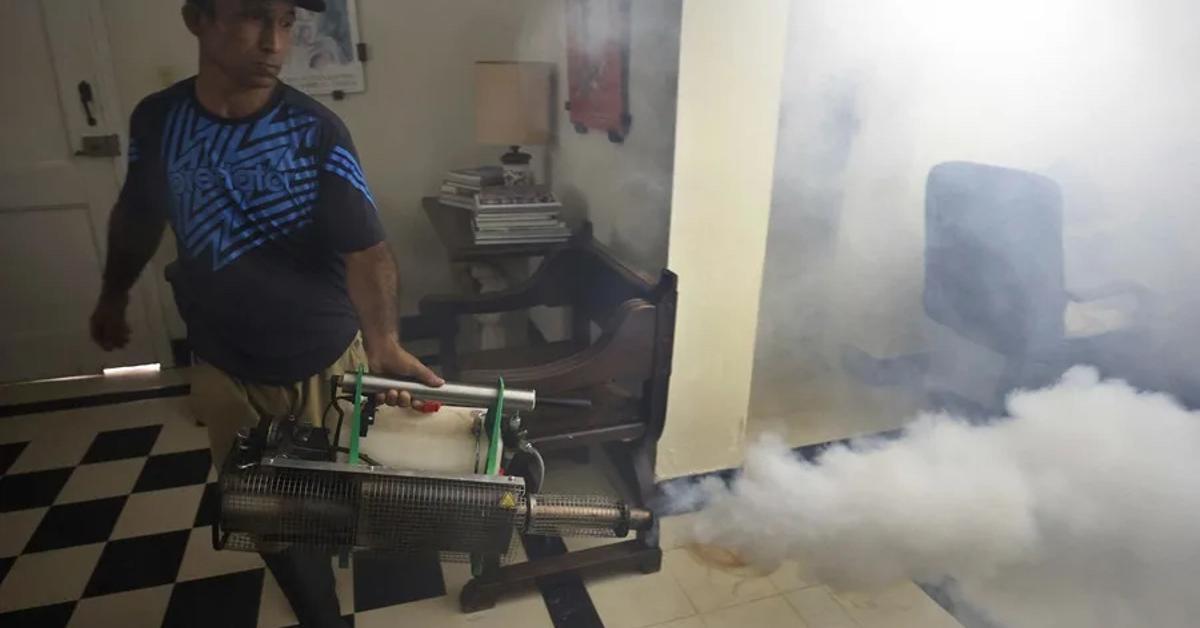
Havana/According to the authorities, the arbovirus epidemic in Cuba is subsiding and infections have decreased for three weeks. However, despite the report this Tuesday by Carilda Peña García, deputy head of the Ministry of Public Health, the Government itself issued a warning to “not lower the population’s risk perception” and “continue with the planned hygienic-sanitary measures.”
During a meeting with experts and scientists, it was reported that the country recorded a 29.3% drop in confirmed and suspected cases of dengue and chikungunya this week, compared to the previous week. In his speech, Raúl Guinovart Díaz, mathematics expert and director of Science and Technology at the University of Havana, confirmed that the downward trend is observed in all regions, especially in the West and Center, while in the East “the drop in cases is smaller, but also with a decrease”, so “the endemic channel of the febrile syndrome in the country is in the safety channel.”
However, the report did not mention figures for both infections and deaths, a policy that the Government adopted at the end of last year, despite having declared that the country was experiencing an epidemic. According to the Pan American Health Organization (PAHO), which relies on official data, 65 people have died due to the health crisis (more than half of them minors) and a total of 81,909 have been infected, although these figures could be just a sample. The statistical calculations of the Cuban Observatory of Citizen Audit (Ocac) and Cuba Siglo 21, however, have given a higher mortality: as of December, they estimated the death of 8,700 people in the epidemic.
According to the Pan American Health Organization (PAHO), which relies on official data, 65 people have died due to the health crisis.
Despite the Government’s cheerful figures, the country continues to be a breeding ground for outbreaks to re-emerge. One of the main problems is the accumulation of garbage in the streets. In the capital alone, in mid-2024, waste generation exceeded 30,000 cubic meters per day, according to data provided by the Provincial Directorate of Communal Services of Havana.
A report from the EFE agency this Wednesday points out that “piles of garbage appear in almost every corner of the capital”, according to the authorities, due to broken down trucks and, above all, the lack of fuel, exacerbated by the end of supply from Venezuela after the capture of Nicolás Maduro.
“No one takes care of this. They have a mess with worms, all that stuff there. It’s even getting into the houses. Every day it’s worse. They say there’s no gasoline (for the garbage trucks)… but I don’t know,” complains Javier, a 55-year-old Cuban who must dodge garbage while walking through the streets of Havana.
“In the absence of workers, the State has used people with minor sentences, who lift what they can with cartons of beer”
A few meters away, EFE says, a garbage truck passes by with a group of people who identify themselves as prisoners. “In the absence of workers, the State has used people with minor sentences, like this crew of four people, who lift what they can with beer cartons or with their own hands due to lack of tools and gloves.”
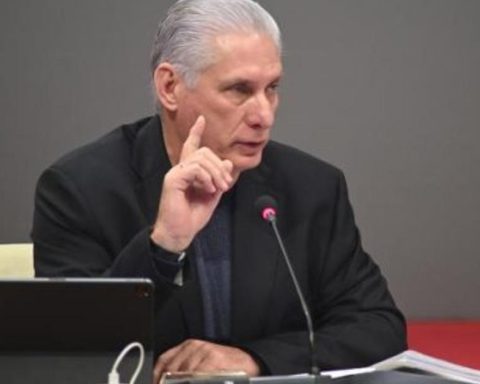
Three months ago the Cuban Government loudly announced a crusade to end the mountains of garbage, promising “a before and after” and showed Miguel Díaz-Canel collecting it on the street together with volunteers.
The issue is not minor. Various epidemiologists agree on the relationship between the proliferation of dirt and the increase in diseases, such as vomiting and diarrhea caused by flies; the leptospira associated with mice, and dengue, Zika, chikungunya and oropouche, caused by different species of insects that act as vectors.