The Secretary of State of the United States, Marco Rubio, also explained that to rebuild, stabilize or transition in Venezuela, the United States will not give its money “because historically it has been the wealthiest country in South America.”
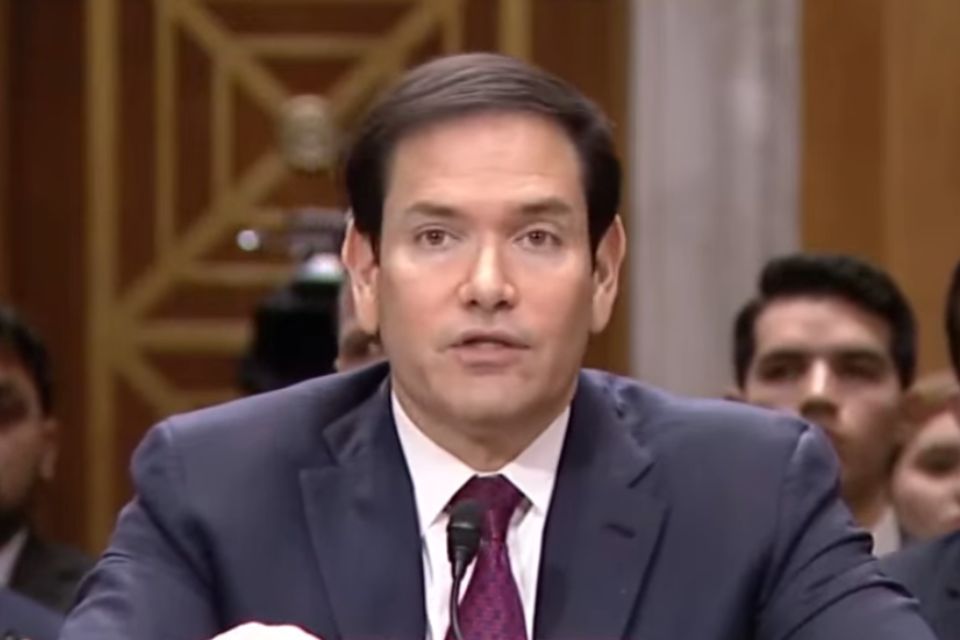
The Secretary of State of the United States, Marco Rubio, appeared before the Senate this Wednesday, January 28, to address the situation with Venezuela and assured that after the capture of Nicolás Maduro and Cilia Flores on January 3, the two countries “are better off with Maduro in custody.”
After being consulted about the public comments of Delcy Rodríguez, in charge of the Executive, about the links with Russia, Iran and China and that she does not accept foreign “orders”, Rubio insisted: “In order for the situation to be normalized in Venezuela, they are going to have to cooperate with the United States” and added that his country “would have a better ally in a future democratic Venezuela.”
He recalled that dissidents from the Revolutionary Armed Forces of Colombia (FARC) and the National Liberation Army (ELN) “operate with impunity from Venezuelan territory, they control the territory” and noted that it is an opinion with which Rodríguez agrees.
In that sense, he assured that in Venezuelan politics “we are going to judge based on actions, not words, and that goes from side to side. “You can propose fabulous things, but they are of no use if they are not executed.”
As part of the positive progress that the US observes in Venezuela, Marco Rubio mentioned the reform of the Hydrocarbons Law. In reference to the situation of political prisoners, he indicated that “every day they are releasing more” and announced that what happens to those imprisoned “will be part of the trial.”
In reference to investment by oil companies in Venezuela, Rubio insisted that they will do so only if “they know that they are going to recover their investment with a guarantee and that there are contracts that are solid” and reiterated that legal security is part of the transition and recovery.
In Marco Rubio’s opinion, the interim authorities will not take risks because “they are interested in having a transparent process that encourages foreign investment, not only oil, but also other sectors of the economy and natural resources; Whether in commerce, in banking, a prosperous country promises many economic advances,” he indicated.
No efforts to negotiate with Maduro
On the other hand, the Secretary of State explained that the US authorities did not inform Congress of the “Absolute Resolution” operation to avoid leaks, as he asserted that there had previously been leaks by “a War Department contractor.” He indicated that Maduro’s arrest “fell in the realm of possible at the end of December,” after “Efforts to negotiate with Maduro collapsed” and the option was presented to President Donald Trump.
From Congress they urged Marco Rubio to trust them, to consult them, and communicate the actions to be able to do their job.
Marco Rubio also explained that to rebuild, stabilize or transition Venezuela, the US will not give its money “because historically it has been the wealthiest country in South America.” He added that the problem is that the country’s wealth was “being stolen” and maintained that currently, the resources will be used “responsibly and for the benefit of the population.”
He assured that the only money that the United States is “spending” is the cost of reactivating the American embassy in Caracas.
Rubio insisted that no US official died during the arrest of Maduro and said that the US has received support from different Latin American countries for the “Absolute Resolution” operation. He explained that between Venezuelans and Cubans there were between 75 and 100 deaths; However, to date, Venezuelan authorities have not reported the exact number of people killed and it has been said that the number exceeds 150 and at least a hundred injured.
*Journalism in Venezuela is carried out in a hostile environment for the press with dozens of legal instruments in place to punish the word, especially the laws “against hate”, “against fascism” and “against the blockade.” This content was written taking into consideration the threats and limits that, consequently, have been imposed on the dissemination of information from within the country.
Post Views: 29