Madrid/Cubans in Spain, especially those pending an asylum application, read with suspense the announcement, this Monday, that the Government of Pedro Sánchez would approve a extraordinary regularization of immigrants. The new measure, unlike the Immigration regulations Published just seven months ago, it includes them without reservation, as long as they meet the requirements established for all irregulars: having arrived in Spain before December 31, 2025 – where appropriate, having submitted the asylum file by that date –, having been residing in this country for at least five months and not having a criminal record.
However, some of them are still skeptical, especially about that third requirement. “It is clear that asylum seekers benefit from it, but we have to look at the fine print,” he tells 14ymedio the independent journalist Magdiel Jorge Castro, who has lived in Spain since November 2023 and is awaiting a resolution on his asylum, presented in February 2024. “We have to see what they ask of us, if they ask for a criminal record, if they ask for a valid passport, that series of things we need to know.”
The fear, in fact, comes mainly because obtaining a criminal record certificate implies requesting it from the country of origin. Given that Cuban refugee seekers are, by definition, people fleeing the dictatorship, in many cases they have open proceedings on the Island, accused of crimes related to their dissidence, or threats of criminal proceedings if they return.
Although clearly among the requirements is not having a criminal record, Cubans hope that there will be an exemption for those who request asylum. The leader of Podemos, Ione Belarra, stated this Tuesday in an interview with Canal Red – the media of Pablo Iglesias, founder of that leftist party – that if migrants cannot provide a criminal record certificate “a responsible declaration will do” that they have not committed crimes.
In the absence of the rule being published in the Official State Gazette, the information released indicates that this type of migrants are not obliged to give up their asylum process.
No one else from the Government has stated that this will happen, so it remains one of the points that are not entirely clear.
In the absence of the rule being published in the Official State Gazette this Wednesday, the government information released indicates that this type of migrants are not obliged to give up their asylum process if they accept the new regularization, that is, they can continue with their refugee process, but, equally, the details remain to be known.
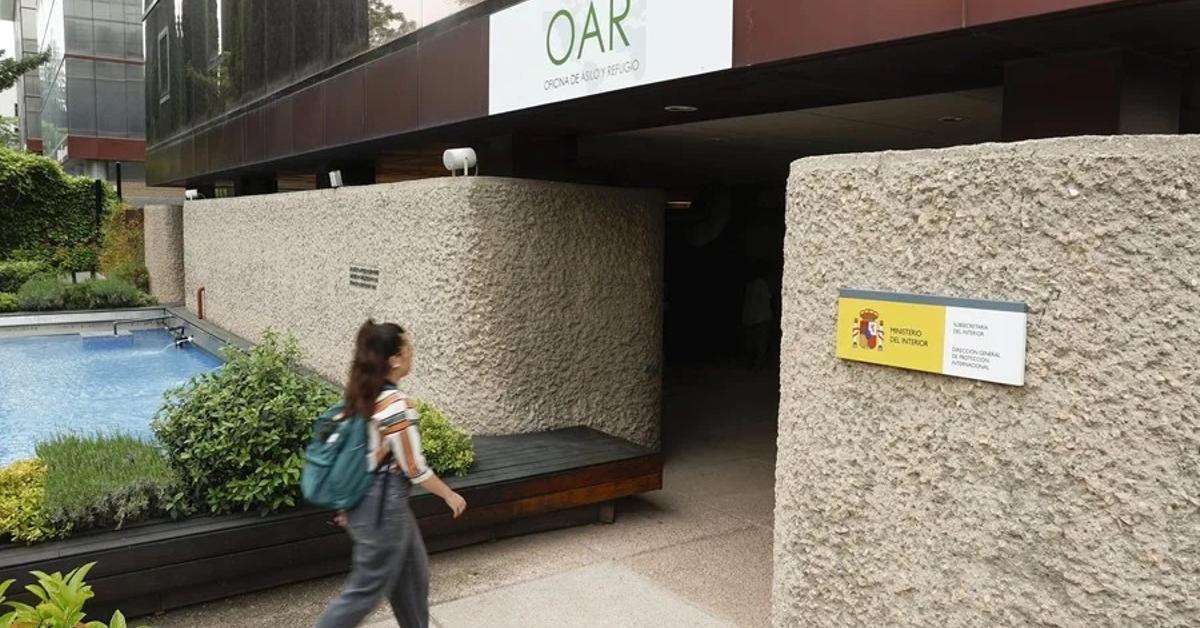
Those who are in the asylum process, technically called international protection, are not strictly irregular migrants. Once requested, they are given a “white card” through which they can begin various administrative procedures, such as acquiring a foreigner identification number (NIE), registering, working legally or requesting a Social Security number, which allows access to health services. This document is valid for six months. The Spanish Government then provides them with a “red card”, renewable each year.
What, then, is the practical advantage of benefiting from this new regularization? Fundamentally, being able to travel outside of Spain, something that is not allowed while waiting for international protection. “Not being able to leave Spanish territory greatly limits the options you have. Sometimes you have invitations to events in other places, job offers, and you have to reject them because you can’t leave,” explains Aries Madian Cañellas Cabrera, a historian from Havana who arrived in the country with a 15-day tourist visa for Holland – which he never set foot in – at the end of 2023.
In his case, it would also allow him more contact with his wife, who lives in the United States and whom he can only see if she travels to Madrid. “The family issue is one of the great advantages for me,” he says. “In addition, what was happening with the Cuban asylum was a sword of Damocles.” Cañellas alludes to the difficulties for the island’s nationals in obtaining refuge in Spain.
In 2025, in fact, no Cuban received residence authorization for humanitarian reasons in the European country. According to data from the Ministry of the Interior, throughout the year 225 new applications were submitted, 40 favorable resolutions were issued, 331 were rejected and 1,177 files are on file, the majority presented in previous years.
“This measure will help me find work more easily, and have labor rights. Mainly, contributing to Social Security, and everything that that implies for a future pension”
The Immigration Regulation of May 2025, although it expanded the modalities for applying for residency based on roots – such as the “socio-laboral” one, which requires two years of residence and a contract of at least 20 hours per week, or the “socio-training” one, which allows the regularization of those studying “in strategic sectors” for the Spanish labor market –, left those whose asylum applications were rejected unprotected.
Firstly, because the time physically residing in Spain while waiting for refuge for the purposes of roots was not counted, a wait that ends up taking years, and secondly, the window to benefit from roots if the asylum has been rejected is very small: until May 20, 2026, provided that there has been a firm denial before March 20, 2025 and that they have been in an irregular situation for at least six months. Those who received resolutions after March 20 or did not have accumulated that time were left out.
A very different case is that of Marian (fictitious name), an irregular Cuban without an asylum application, the same situation in which some 840,000 migrants living in Spain find themselves, according to the registry of the Savings Banks Foundation (Funcas). For her, the new Government decree, agreed upon in the Council of Ministers – that is, without going through Parliament – after an agreement with the Podemos party offers her all hope.
“This measure will help me find work more easily, and have labor rights. Mainly, contributing to Social Security, and everything that that implies for a future pension.” The young woman arrived in Madrid in September 2024 with a tourist visa and tried to obtain a student visa. “It didn’t work and from that moment on I found myself in an irregular situation.”
Marian, who works “occasionally and always without permission,” also hopes that this resolution will allow her to bring her parents in the future.
Regularization can be requested between the beginning of April and June 30 of this year, and also protects family unity, allowing the simultaneous legalization of minor sons and daughters who are already in Spain. In these cases, the validity of the permit will be five years and not one, as in the case of adults without children.
Nearly 230,000 Cubans live in Spain, according to the National Institute of Statistics and in 2025 alone, 27,000 were registered. Some 8,000 citizens of the Island obtained residency in 2024, and tens of thousands of people have obtained Spanish nationality through the Democratic Memory Lawalthough it will take years before processing the more than 600,000 cases received at the Havana consulate.