The release of hundreds of detainees in Venezuela has opened a narrative gap between official figures and those of non-governmental organizations, while US President Donald Trump assures that they are regaining freedom at an accelerated pace.
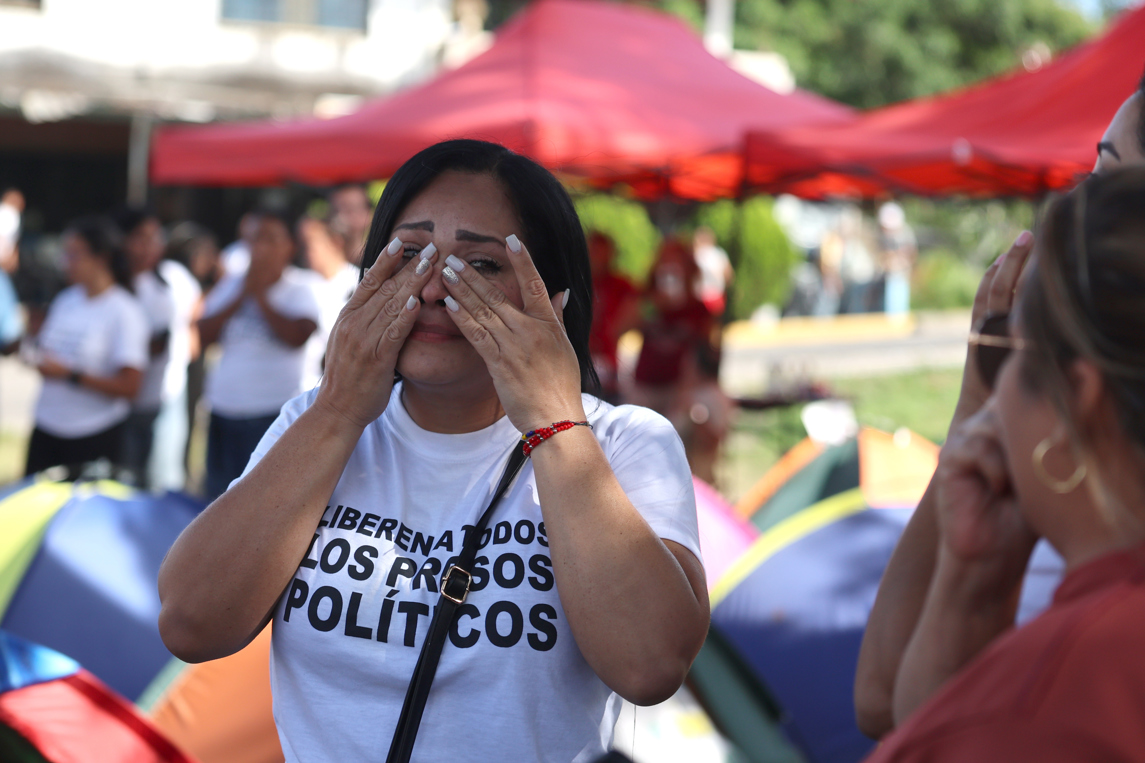
While the United Socialist Party of Venezuela (PSUV) assures that there have been 808 releases Since December 2025, the Penal Forum has barely counted 266 releases of political prisoners since January 8, after the kidnapping of President Nicolás Maduro in the devastating US military operation that caused a hundred deaths.
The difference is not minor: for the interim government headed by Delcy Rodríguez, there are no political prisoners, but rather people convicted of common crimes; For NGOs, however, they are victims of persecution and arbitrary deprivation of liberty.
The general secretary of the PSUV, Diosdado Cabello, insisted this Monday that the releases respond to a unilateral decision of the Executive and ruled out any link with NGOs, which he accused of being “mafiosi and extortionists.”
“In Venezuela there are no political prisoners, but people who committed crimes,” he stated, emphasizing that those facing charges of homicide, drug trafficking or pedophilia will have no option for freedom.
For his part, Alfredo Romero, president of Foro Penal, pointed out that his organization only verifies cases of political prisoners, which explains the difference with the official figures. “Not every person released from prison or every detainee is a political prisoner,” he clarified, although he denounced that arbitrary deprivation of liberty constitutes a violation of human rights.
Foro Penal maintains that there are still between 777 and 780 people detained for political reasons; For its part, the Democratic Unitary Platform raises the figure to 942 and international organizations such as Human Rights Watch and Amnesty International do not offer exact numbers, but denounce thousands of arbitrary arrests in recent years, claims denied by Chavismo.
From his social network, Trump, for his part, assured that Venezuela was releasing political prisoners “at an accelerated rate, and that this rate will increase in the near future.”
Russia maintains its support for Caracas, including military support
Judging by the political discourse, the Venezuelan crisis has not altered the strategic relationship with Moscow. Kremlin spokesman Dmitri Peskov assured that Russia maintains daily contact with the Venezuelan authorities and that bilateral projects, including investments in the military industry, will continue.
“We have independent bilateral relations, we have several projects that we are interested in continuing,” he declared, recalling that last year an ammunition factory for Kalashnikov rifles was built in Venezuela.
The Russian position combines economic pragmatism with diplomatic caution. Although the Ministry of Foreign Affairs condemned the US military operation that captured Maduro and his wife Cilia Flores, President Vladimir Putin avoided speaking out head-on against Washington. In parallel, Moscow expressed concern about the blockade plans against Cuba, a country that lost 32 combatants in the defense of Caracas during the January 3 incursion.
The Kremlin values the relationship with Havana and Caracas as part of its Latin American strategy. The recent visit of the Russian Interior Minister, Vladimir Kolokoltsev, to Cuba reinforced that link, in a context in which Russia also demands the release of Russian sailors detained by the United States after the seizure of the ship. Sailor near Venezuelan waters.
Migrants return under the Return to the Homeland plan
In the midst of political tension, the interim government of Delcy Rodríguez reactivated the program Return to the Homelandcreated in 2018 by Nicolás Maduro. This January 26 they arrived at the Simón Bolívar international airport in Maiquetía 128 migrants deported from the United Stateson a flight from Arizona.
The Great Mission Return to the Homeland reported that among those repatriated there are 89 men, 22 women and 17 children. The Venezuelan authorities highlighted that they were received “with dignity” and ready to begin a new stage in their country. Since its creation, the plan has facilitated the return of more than 1.6 million Venezuelansaccording to official figures.
The program seeks to counteract the impact of mass migration that has marked recent years, offering support for the social and labor reintegration of those who return. The arrival of this new contingent is framed in an official discourse that insists on the defense of sovereignty and the need for national unity in the face of external pressures.
Currently, the number of Venezuelan migrants and refugees amounts to about 7.9 million people in the world, according to official figures compiled by the Interagency Coordination Platform for Refugees and Migrants of Venezuela (R4V), supported by UNHCR (UN Refugee Agency) and the IOM (International Organization for Migration).
Houston prepares for the new oil rush
Less than a month after the US incursion in Caracas, the US oil industry in Houston is experiencing a climate of enthusiasm for the opportunities that are opening up in Venezuela. Executives such as Matthew Goitia, director of Pelorus Terminals, have presented investment projects ranging from 250 and 1 billion dollarsintended to reform and build maritime terminals to export crude oil and transport chemical products.
The interest is not limited to small companies willing to take risks. Giants like Halliburton They are seeking licenses to return to the country, after having left in 2020 due to US sanctions. Its executive president, Jeff Miller, acknowledged that “there are opportunities for us sooner rather than later” and that the inquiries about Venezuela do not stop coming.
The White House, under the direction of Donald Trump, has summoned sector magnates such as Harold Hamm (Continental Resources) and Jeff Hildebrand (Hilcorp Energy) to explore investments that could reach the 100 billion dollars. The objective is to rebuild the Venezuelan oil industry, a member of OPEC and holder of the largest crude oil reserves in the world.
Denver is also emerging as a hub of activity, with companies like Raisa Energy and Tallgrass Energy interested in getting involved.
Currently, the Venezuelan National Assembly, with a pro-government majority, is debating a reform of the hydrocarbon law that would allow more flexible contracts for foreign companies, which could open the door to a new stage of independent exploitation.
However, obstacles remain: US sanctions still prohibit trading in Venezuelan oil and any company needs licenses from the Treasury Department. In addition, internal legal reforms are required to guarantee legal certainty.
Even so, analysts such as Francisco Monaldi, from the Baker Institute at Rice University, warn that “everyone wants to be on the move” and that the expectation of quick profits keeps the idea of a new gold rush in the Orinoco alive.
Coexistence, unity and peace as an official discourse
In parallel to international and economic tensions, the PSUV’s discourse insists on the need for unity and internal coexistence. Cabello recalled that both Hugo Chávez and Nicolás Maduro appealed for peace after the 2002 coup d’état, and that the current priority is the release of the presidential couple, the tranquility of the territory and sustainable economic development.
For his part, the Minister for Communes, Social Movements and Urban Agriculture, Ángel Prado, reported that former governor Nicolás Maduro and the so-called first combatant Cilia Flores are in good health.
The confirmation was made through his Telegram account, after speaking with deputy Nicolás Maduro Guerra, son of the former president. According to him, both leaders, held in a maximum security and rigorous prison in New York, are attentive to the national situation and maintain full confidence in the Venezuelan people, whom they urge to defend the peace and integrity of the territory.
Prado added that Maduro is closely following the preparation of the next National Popular Consultation of the Communes, called by the acting president Delcy Rodríguez for March 8.