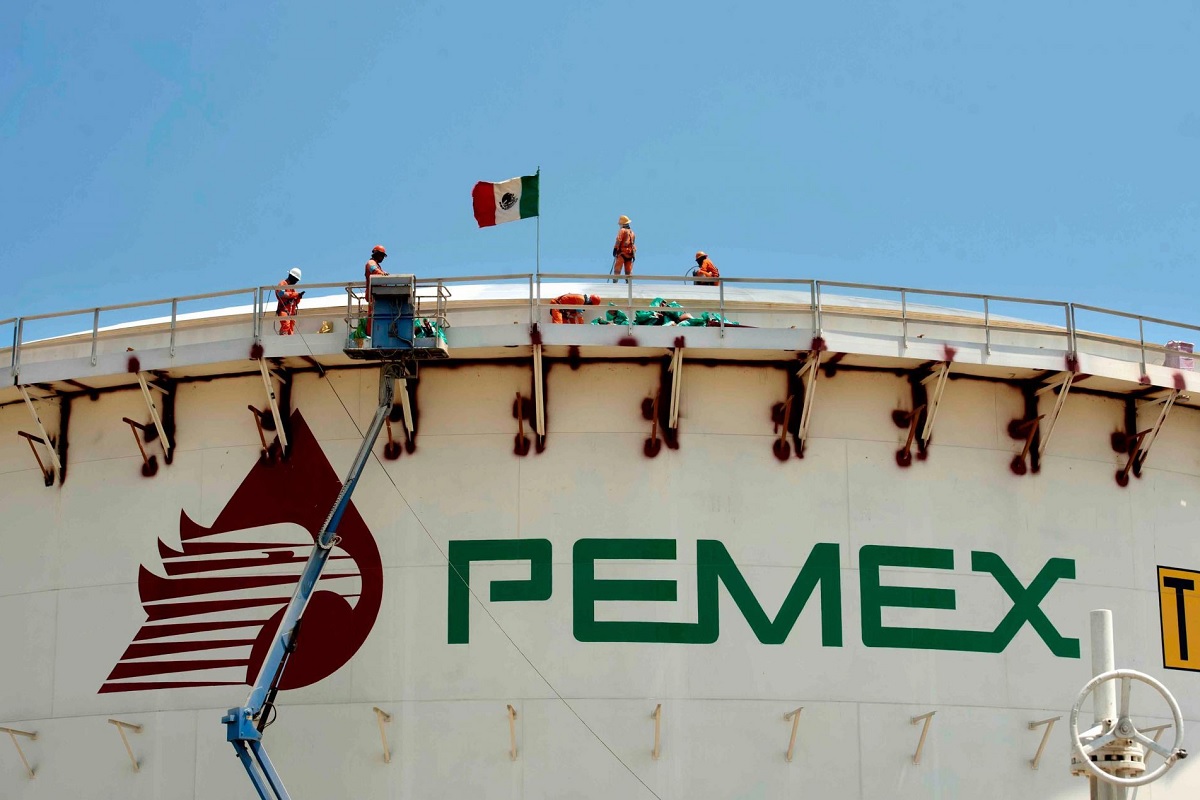
The Petróleos de México company (Pemex) gave reverses plans to send a shipment of crude oil to Cuba in Januaryaccording to international media reports, in a context marked by the increase in US pressure on the island.
So far, neither the Mexican nor the Cuban Government has issued an official statement on the alleged cancellation.
According to documents consulted by Bloomberg and cited by The Country, The shipment was scheduled to be loaded in the first half of January and arrive in Cuba at the end of the month, but it was removed from Pemex’s export calendar without explaining the reasons.
The operation, which was to be carried out on the Panamanian-flagged ship Swift Galaxy, was canceled and the boat never made the trippoints out the Spanish media.
Neither the state company nor the Mexican Ministry of Energy have responded to requests for comment on the issue, For his part, he emphasizes The Financier.
Newspaper reports place this decision in parallel with Washington’s hardening of its discourse towards Havana and the threat of an oil blockade.
A week after the capture of Venezuelan President Nicolás Maduro by US forces, President Donald Trump publicly warned that there would be “no more oil or money for Cuba”in a message spread on their social networks.
Trump warns the Cuban Government that it will not receive more oil or money from Venezuela
Mexico and the shipment of oil to Cuba
Reports on the suspension of oil shipments contrast with recent statements by the Mexican president Claudia Sheinbaumwho publicly assured that Mexico would maintain the supply of oil to Cuba as “solidarity support” to the island.
In a recent press conference, Sheinbaum pointed out that his country “will always be there” to help the Cuban people “in very difficult conditions,” in reference to the endless blackouts, food shortages and lack of fuel that the Caribbean country suffers.
Mexico has regularized the shipment of oil to Cuba from 2023coinciding with the reduction in Venezuelan supplies to the island caused by the drop in its production.
According to data collected by BloombergDuring the last year, Pemex shipped an average of one ship per month, equivalent to about 20 thousand barrels of crude oil per day.
Specialists consulted by the agency EFE they point out that Mexico has become the main supplier of oil and derivatives to Cubaa position that increases the geopolitical cost in its relationship with the United States.
In this complicated scenario, and despite Sheinbaum’s public statements, the Mexican Government would have been reviewing whether it maintained oil shipments to Cuba to avoid retaliation from the Trump Administration. as reported last week by the agency Reuters.
The last shipment from Pemex to the island arrived this January with about 86 thousand barrels, according to what was reported at that time by EFE.
Oil tanker arrives in Havana with nearly 86 thousand barrels of fuel from Mexico
Pressures and threats from the US
From the United States, the Secretary of Energy, Chris Wright, recently stated that so far the US Government has not asked Mexico to stop crude oil shipments to the island.
However, analysts have warned that political volatility in Washington could translate into new pressure measures, which could lead to the reduction or cancellation of shipments.
Ramsés Pech, partner of the energy consulting firm Grupo Caraiva, commented to EFE that, in order to hit the oil supply to Cuba, Trump could promote tariffs or other sanctions to stop this type of shipments, as has already happened with Iran.
Furthermore, the Trump Administration would be considering imposing a total blockade on oil imports to Cuba as part of a range of new tactics to force a regime change on the island. as reported just days ago by the magazine Political.
Three sources cited by the American mediapointed out that the idea of preventing any shipment of crude oil to the island, although it is not a firm decision, has been promoted in Washington by critics of Havana and has the support of Secretary of State Marco Rubio.
After these plans were disclosed, Cuban Vice Foreign Minister Carlos Fernández de Cossío considered this claim as “a brutal assault against a peaceful nation that does not represent any threat to the United States.”