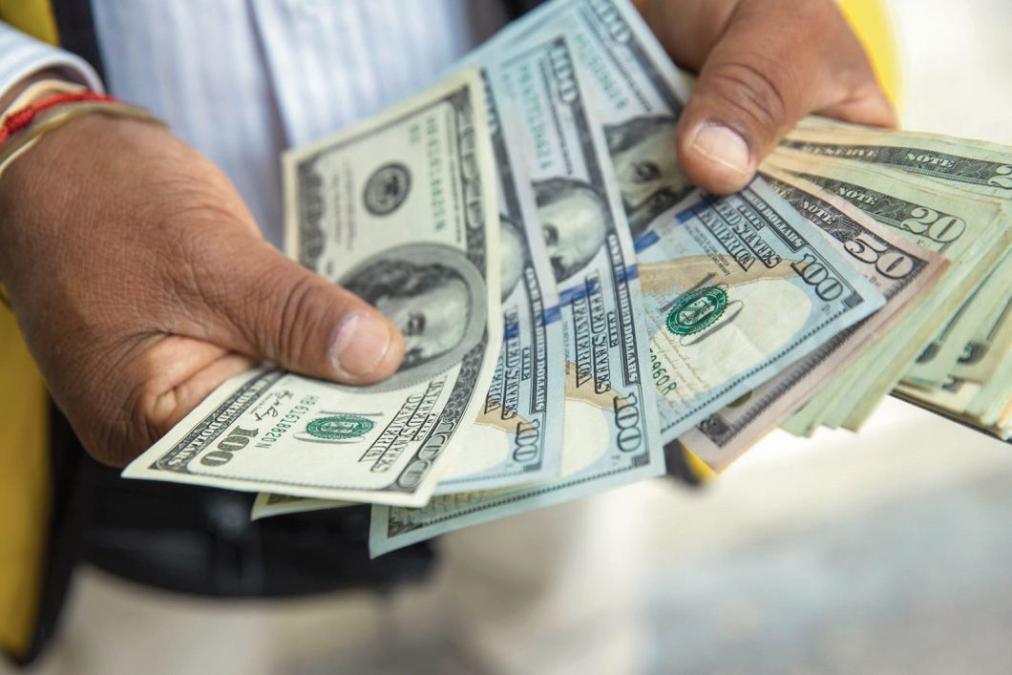
The exchange market began the week maintaining the downward trend that has characterized the first month of the year.
In today’s session, the price of dollar It closed at S/3,351 per unit, which represented a slight decline compared to the S/3,353 registered at the close of Friday, according to the Central Reserve Bank (BCR).
With this result, the US currency has accumulated a fall of 0.39% so far in 2026, a figure that, according to specialists, would be significantly higher if it were not for the active participation of the monetary authority.
Factors
The downward pressure on the currency responds to a combination of external and local factors, according to those interviewed by this newspaper.
At the international level, the global weakening of the dollar is marked by political uncertainty in the United States. Hugo Perea, chief economist for Peru at BBVA Research, points out that behind this phenomenon are the Trump administration’s tariff policies and questions about financial autonomy.
“The attack on the independence of the Federal Reserve (Fed) and geopolitical tensions are elements that have been weakening the dollar in recent months,” explains Perea.
So far this month alone, Trump has threatened to take control of Greenland, impose new tariffs on European allies over the matter, advance criminal charges against Federal Reserve Chairman Jerome Powell, and has overseen an operation to capture the president of Venezuela.
Additionally, on Saturday he threatened Canada with what would amount to a trade embargo.
The BCR arsenal
At the local level, the high price of metals has increased the supply of foreign currency through the commercial channel. Faced with this scenario of abundant dollars, the BCR has deployed an arsenal of instruments to avoid abrupt movements.
According to Perea, at the end of Friday, the monetary authority during January has intervened in the exchange market demanding more than US$4,000 million: US$2,400 million in the spot market, it let US$1,700 million in exchange swaps expire and has placed certificates of deposit.
“All this adds up to an exchange intervention of more than US$4,000 million so far in January alone,” details the economist.
For his part, Elmer Cuba, partner at Macroconsult, agrees that the strength of local economic fundamentals puts downward pressure on the exchange rate.
“If we are going to have the best terms of trade in history, it is normal. The fundamentals would indicate that the dollar should fall, but it is not falling that much because the BCR is taking advantage, as is natural and correct, to accumulate reserves,” says Cuba.
For both Cuba and Perea, the objective of the issuing entity is not to set a price, but to smooth the transition.
Perea stressed that the BCR seeks to “grade exchange rate movements to give space for economic agents to adapt to a lower exchange rate environment.”
In a context of low internal electoral tension and rising commodity prices, projections suggest that downward pressure will continue, forcing the Central Bank to remain vigilant to preserve market stability.
RECOMMENDED VIDEO