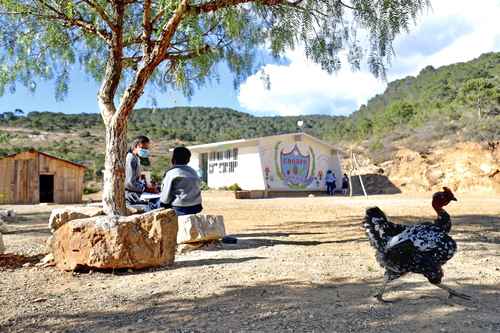
▲ The SOS Children’s Villages organization developed the Educare program to combat school dropouts in Chiapas.Photo Luis Castillo
Alexia Villasenor
La Jornada Newspaper
Monday, January 26, 2026, p. 11
Among the reasons for dropping out of school, especially in basic education in rural communities, are the academic lap, the family economy that leads to malnutrition and child labor, and the type of upbringing, which can include violence, indicated the international organization SOS Children’s Villages.
To combat this phenomenon, a comprehensive program is required that addresses academic regularization, the emotional well-being of children and parents, teacher training, school equipment and community projects to improve family income, said Janet Delgadillo, a member of the organization with a presence in 135 countries for more than 75 years, in an interview.
The organization developed the Educare program to reduce school dropouts, which began in Africa in 2012, but in Mexico it was launched two years ago in Chiapas. Delgadillo mentioned that they chose this entity due to its poverty levels, where 65.97 percent of its population lives in this condition, and two out of every 10 children and adolescents from three to 17 years old do not attend school.
Some of the communities they serve are Comitán, La Trinitaria and Saltillo, where they have benefited 150 students, 60 teachers, 100 parents and have given seed capital for 50 ventures.
Delgadillo explained that one of the issues detected in the diagnoses is academic lag, since the students do not have the knowledge required for the school grade they are studying. Therefore, one of the actions is regularization with private classes. In the event that the infant presents emotional problems, a psychologist works with him or together with the parents, since “their parenting styles involve physical violence,” he said.
family business
Regarding economic shortcomings, he stressed that the program identifies those families that have the skills to develop a business: “in two years we have supported 50 ventures, from backyard animal husbandry, bakeries, stores, chicken shops, butcher shops, creameries, that is, local at the community level.”
He highlighted that they have also trained primary and secondary teachers with the use of technology and how to prevent violence, both within the family and between the students themselves. bullying or harassment. At the same time, they have intervened directly in the schools with the installation of multipurpose rooms, computer rooms and workshops, in addition to providing school supplies.