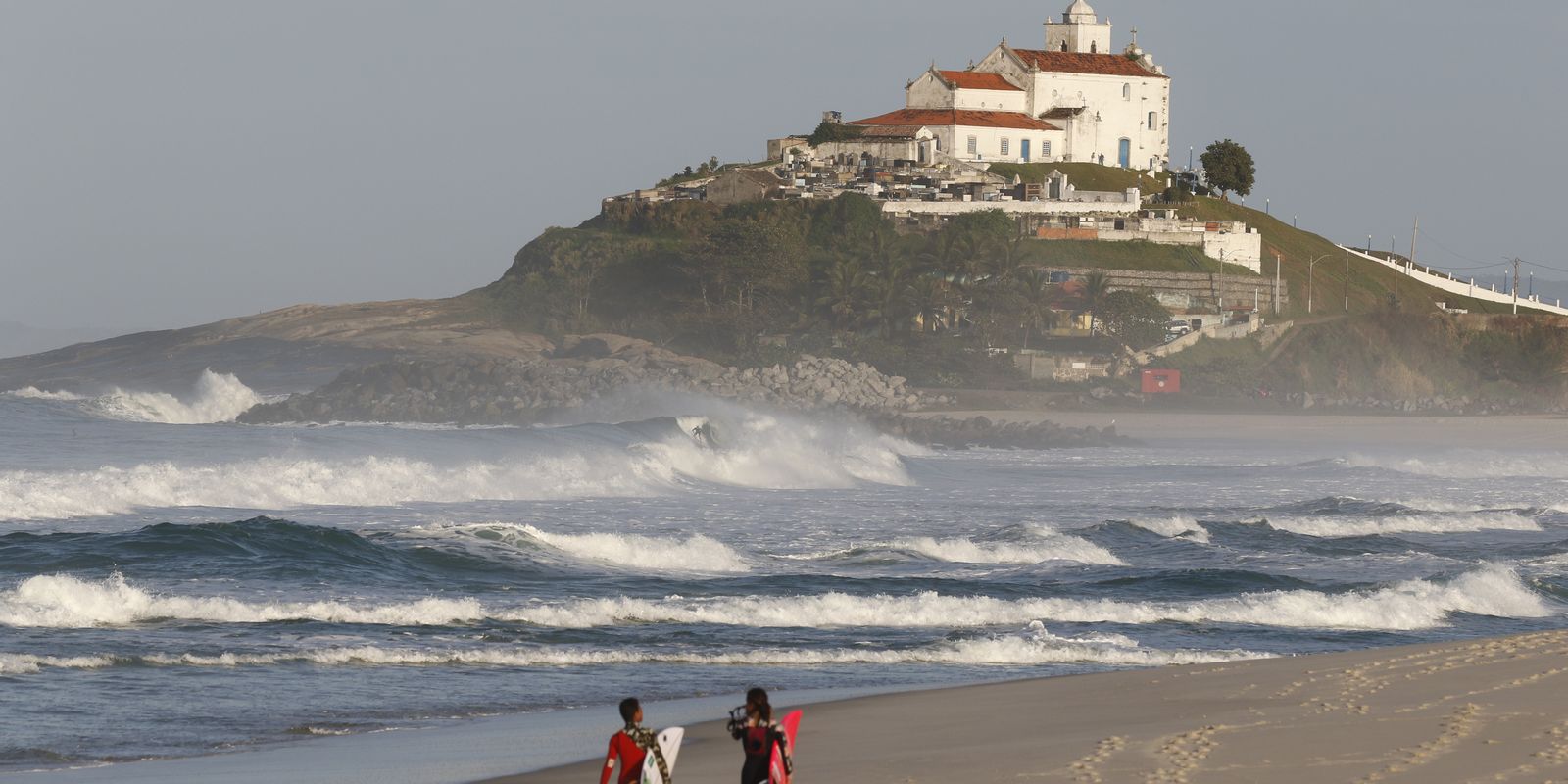
Applications from Brazilian beaches and marinas to obtain the Blue Flag Seal for the 2026/2027 season will be received in April by Instituto Ambientes em Rede, responsible for the Blue Flag Program in Brazil. International certification recognizes compliance with water quality criteria, environmental management, safety and environmental education.
In the case of beaches, registration must be done by city halls, which are legally responsible. If the beach is within a federal or state conservation unit, registration must be done jointly with the Union, which is responsible for most services, such as garbage collection and hiring lifeguards. In the case of marinas, it is the owners of the sites who register.
The reports sent with the applications will be analyzed in May, when a workshop on the award will also be held, so that, in June, the national jury can meet and decide which ones will be approved.
The selected applications will be submitted to the international jury, which will meet in September, in Copenhagen, Denmark, to give the final word. The national coordinator of the Instituto Ambientes em Rede, Leana Bernardi told Brazil Agency that the information presented will be checked.
“In the meantime, the program’s technical team will carry out visits to registered beaches and marinas, to check whether what is in the documentation is actually found on the beaches.”
The institute will hand over the blue flag to participating municipalities at the beginning of November this year, in a national ceremony. Each municipality will then decide whether to start its season during the month of November or the beginning of December.
In the Southern Hemisphere, the season spans two years, because the hottest period begins in November and the high season ends in March. In the northern hemisphere, the season only lasts one year. Leana explained that while the flag is flying, all criteria must be met daily.
Criteria
Currently in 50 countries, certification has criteria adapted to national legislation, but which remain practically the same throughout the world, said Leana. One of the main ones is water quality, which must be proven through bathability tests.
Another point evaluated is environmental management, that is, how the municipality manages waste and all services on the beaches and user support equipment, such as parking, bathrooms, access ramp and lifeguard station, for example.
The third criterion involves environmental education, because the program seeks to change behavior and sustainability. “All beaches and marinas with the Blue Flag Seal must carry out information and environmental education actions, sign with signs or totems with QRCodes about the region’s environment, about conservation units, about restinga and carry out active environmental education actions, involving students and beach workers”, explained the national coordinator.
The fourth criterion that must be met is related to safety in every sense, from the presence of lifeguards to police, if necessary, in addition to equipment safety, so that people have a peaceful experience at the beach.
Current season
In the current 2025/2026 season, Brazil obtained 60 flags, 50 of which were beaches and ten marinas. Two beaches, however, lost their seal due to non-compliance with the determinations: a section of Praia da Reserva, in Rio de Janeiro, in front of the Nelson Mandela Municipal Natural Park, due to issues not resolved with the Union; and Praia da Barra do Rio Piçarras, in Santa Catarina, where the city council began widening the sand strip.
Despite that, Santa Catarina continues to lead Brazil, with 25 beaches and five marinas with the Blue Flag Seal; followed by Rio de Janeiro, with 17 beaches and a marina; Bahia, with four beaches and a marina; São Paulo, with a beach and three marinas; and Alagoas, with a beach.
Leana Bernardi revealed that the number of candidates is expected to grow and that more than 25 beaches are in the pilot phase, including a beach in Ceará, and marinas in Rio Grande do Sul and Paraná.
The Blue Flag Seal was created in France in 1987, gaining support from three more countries the following year. In Brazil, preparation of the first beaches to compete for the seal began in 2006, but the first beach in the country was only approved in 2009. The first beach with the Blue Flag Seal was Jurerê Internacional, in Florianópolis (SC) but, as it did not meet established criteria, it left the list. In the 2010/2011 season, the place was taken by Praia do Tombo, in Guarujá (SP).
Find out which are the 48 Brazilian beaches with the Blue Flag Seal
- Patacho Beach, Porto de Pedras – AL
- Paraíso Beach – Guarajuba, Camaçari – BA
- Praia da Espera – Itacimirim, Camaçari – BA
- Praia da Viração – Ilhas dos Frades, Salvador – BA
- Ponta de Nossa Senhora de Guadalupe – Ilha dos Frades, Salvador – BA
- Azeda-Azedinha Beach, Armação dos Búzios – RJ
- Forno Beach, Armação dos Búzios – RJ
- José Gonçalves Beach, Armação dos Búzios – RJ
- Tucuns Beach, Armação dos Búzios – RJ
- Lagunar Caiçara Beach – Arraial do Cabo – RJ
- Praia do Foguete, Cabo Frio – RJ (Section in front of Lagoa das Garças)
- Peró Beach, Cabo Frio – RJ
- Pontal do Peró Beach, Cabo Frio – RJ
- Cidade Nova Beach, Iguaba Grande – RJ
- Ubás Beach, Iguaba Grande – RJ
- Sossego Beach, Niterói – RJ
- Prainha, Rio de Janeiro – RJ
- Grumari Beach, Rio de Janeiro – RJ (Central section)
- Pedras de Sapiatiba Beach, São Pedro da Aldeia – RJ
- Pedras de Itaúna Beach, Saquarema – RJ
- Canto da Vila Beach, Saquarema – RJ
- Prainha, Saquarema – RJ
- Estaleirinho Beach, Balneário Camboriú – SC
- Estaleiro Beach, Balneário Camboriú – SC
- Taquaras Beach, Balneário Camboriú – SC
- Central Beach, Balneário Piçarras – SC
- Piçarras Beach, Balneário Piçarras – SC
- Ponta do Jacques Beach, Balneário Piçarras – SC
- Conceição Beach, Bombinhas – SC
- Quatro Ilhas Beach, Bombinhas – SC
- Tainha Beach, Bombinhas – SC
- Mariscal Beach, Bombinhas – SC
- Prainha de Mariscal, Bombinhas – SC
- Lagoa do Peri Beach, Florianópolis – SC
- Praia das Cordas, Governador Celso Ramos – SC
- Praia Grande, Governador Celso Ramos – SC
- Prainha de Itá, Itá – SC
- Molhes do Atalaia Beach, Itajaí – SC
- Bacia da Vovó Beach, Penha – SC
- Saudade Beach, Penha – SC
- Praia Grande, Penha – SC
- Red Beach, Penha – SC
- Ervino Beach, São Francisco do Sul – SC
- Ubatuba Beach, São Francisco do Sul – SC
- Praia do Forte, São Francisco do Sul – SC
- Praia Grande, São Francisco do Sul – SC
- Prainha – Praia da Saudade, São Francisco do Sul – SC
- Tombo Beach, Guarujá – SP