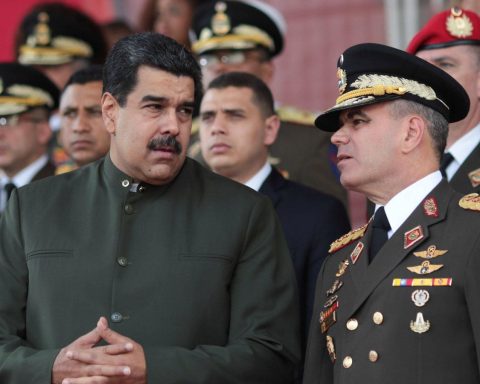
A senior officer of the Bolivarian Military Aviation assured that the capture of Nicolas Maduro and his wife, Cilia Flores, on January 3, 2026, was possible thanks to a combination of electronic warfare, precision attacks and serious structural failures in the Venezuelan air defense systemas stated in an interview given to the journalist Sebastiana Barráez for Infobae.
According to the testimony, the so-called Operation Absolute Resolve, carried out by United States military forces, was characterized by its “surgical precision” and for long-term planning that included previous air defense suppression operations (SEAD/DEAD) and collection of radioelectronic signatures from Venezuelan territory.
“The objective was an extraction operation of high strategic value“: the capture alive of Nicolás Maduro and Cilia Flores,” explained the officer, who asked to keep his identity confidential for security reasons. He indicated that US elite units participated in the mission, including delta Force, with support from other agencies such as the CIA, within the framework of a larger operation called Southern Lance.
The military officer pointed out that for weeks, and even months prior to the incursion, the United States carried out aerospace operations aimed at mapping the Venezuelan air defense system, with emphasis on the corridor that runs from the east of the state of Miranda to Aragua, La Guaira and Falcón.
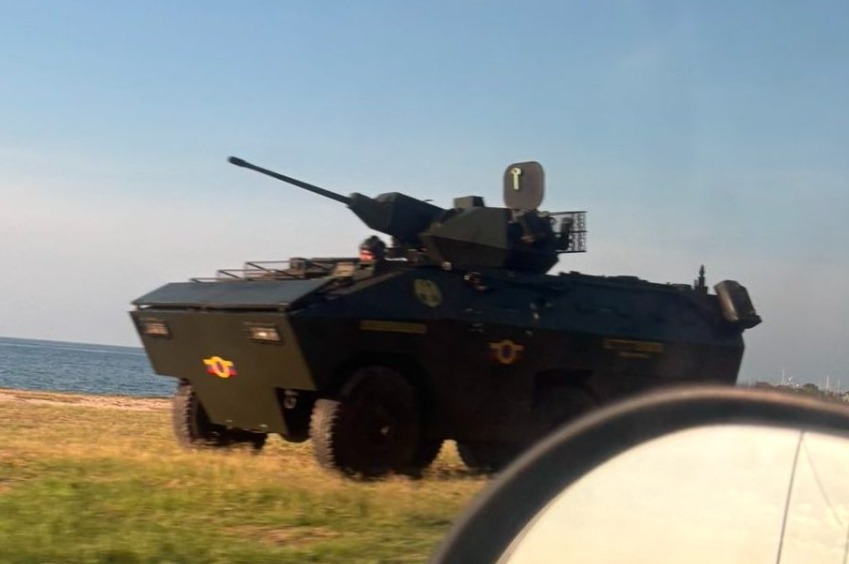
That corridor, which had to be protected by the Caracas Multilayer Protection Systemincluded Buk-M2E medium-range missile batteries, anti-aircraft platforms in Higuerote, La Carlota, La Guaira and the Mamo Plateau, many of which were neutralized or destroyed during the operation.
“Airspace was completely cleared through precision strikes and electronic warfarewhich allowed the entry and exit of helicopters with special forces with minimal risk,” he stated.
Vulnerability of Chinese radars
One of the central points of the interview was the alleged vulnerability of the radars of Chinese origin used by Venezuela, including models such as the JYL-1he JH-12 and the JY-27Athe latter using AESA technology.
The officer explained that the problem was not a specific failure, but “an accumulation of structural errors”among them the dependence on exported architectures, outdated threat libraries and a rigid operational doctrine inherited from the Soviet model.
“The radars emitted predictable patterns for long periods, with little rotation of modes and almost no emission control (Emcon). This allowed the United States to capture complete spectral signatures and decipher critical vulnerabilities,” he indicated.
According to the testimonythe lack of real integration between radars, electronic warfare and command and control caused the system to function as “isolated sensors”, facilitating its progressive dismantling.
The officer also attributed the defensive collapse to the human factor, pointing out deficiencies in operator traininglittle real simulation, lack of cohesion and dependence on foreign technicians who were not present.
“The United States used cognitive electronic warfare, temporary deceptions and signature changes against poorly trained operators and degraded systems. That was decisive,” he said.
In the military’s opinion, the US forces achieved a total electromagnetic mapping of the Miranda–Aragua corridor, identifying overlapping areas, coverage gaps and operation profiles, which allowed the operation to be executed without facing an adaptive defensive network.