In 2025, the capital of São Paulo recorded the highest number of traffic deaths since 2015. There were 1,034 deaths last year; in 2024, 1,029; and in 2015, 1,101 – the three years in which deaths exceeded one thousand. The data comes from the São Paulo Traffic Accident Management Information System (Infosiga SP).
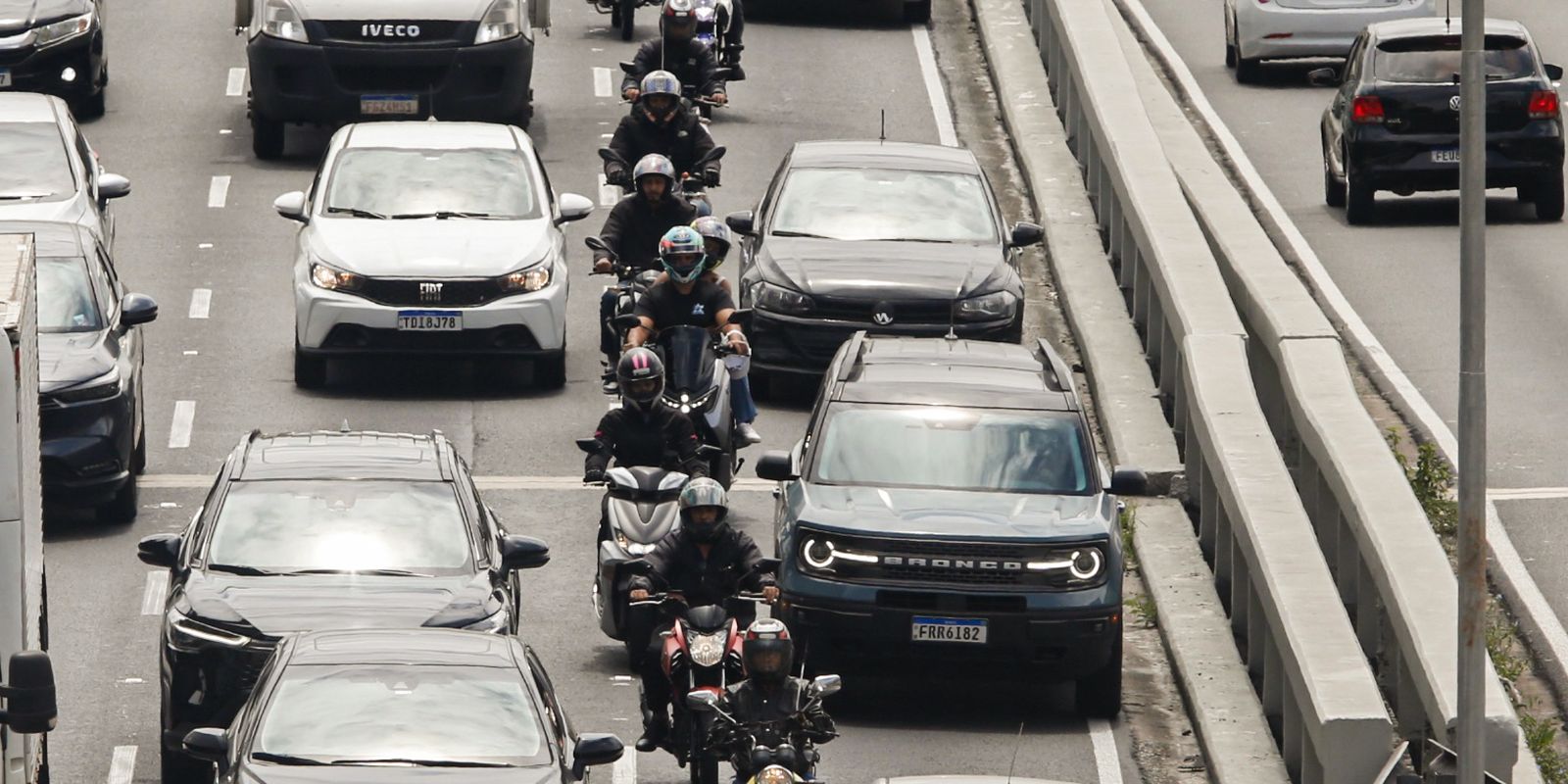
Motorcyclists form the highest number of victims, with 475 deaths, followed by pedestrians (410), car drivers and passengers (85), cyclists (35), truck occupants (6); bus occupants (6); others (2); and not available (15). According to the data, 82% of the victims were men and 18% were women.
In 2025, the age group with the highest number of victims was 25 to 29 years old, followed by those aged 20 to 24, and those aged 40 to 44. The day of the week on which the most deaths were recorded was Sunday (180), followed by Friday (154), and Saturday (151).
According to member of the Institute of Engineering, urban planner and architect Flaminio Fichmann, the high number of deaths in traffic in São Paulo in 2025 can be explained by the increase in the use of motorcycles, a movement that has occurred since the covid-19 pandemic, and also by the migration of users from public transport to individual transport, a mode in which accidents are more frequent.
“We had a decrease in the volume of people using public transport, subways, trains and buses. And this reduction transferred these people to individual transport, which is more dangerous. Public transport is very safe in general, fatal accidents are rare. On the other hand, accidents involving motorcycles and, later, cars, are considerable”, he highlights.
According to Fichmann, traffic deaths can be mitigated by encouraging the use of public transport by public authorities, which would also benefit the public health system.
“The city does not have enough road space to accommodate an ever-increasing number of trips, whether by motorcycle or by car. This produces huge congestion and all other consequences, such as pollution, and all sorts of problems, such as accidents and the consequent greater number of hospitalizations.”
In a statement, the City of São Paulo said that it has adopted several measures to increase safety on urban roads, such as Quiet Areas, with a limit of 30 km/h, Safe School Routes, reducing speed on roads, increasing crossing times, implementing more than 10 thousand pedestrian crossings, elevated crossings, mini roundabouts and the Operational Safety Program, in places with a higher rate of accidents.
“In addition to the Road Safety Programs, the Municipal Target Plan includes the full-time implementation of signalized pedestrian crossings on roads with medians, thus avoiding long waiting times, and Safe Fronts (motorcycle boxes waiting for the vehicle traffic light), which increase safety and visibility between pedestrians and vehicles.”