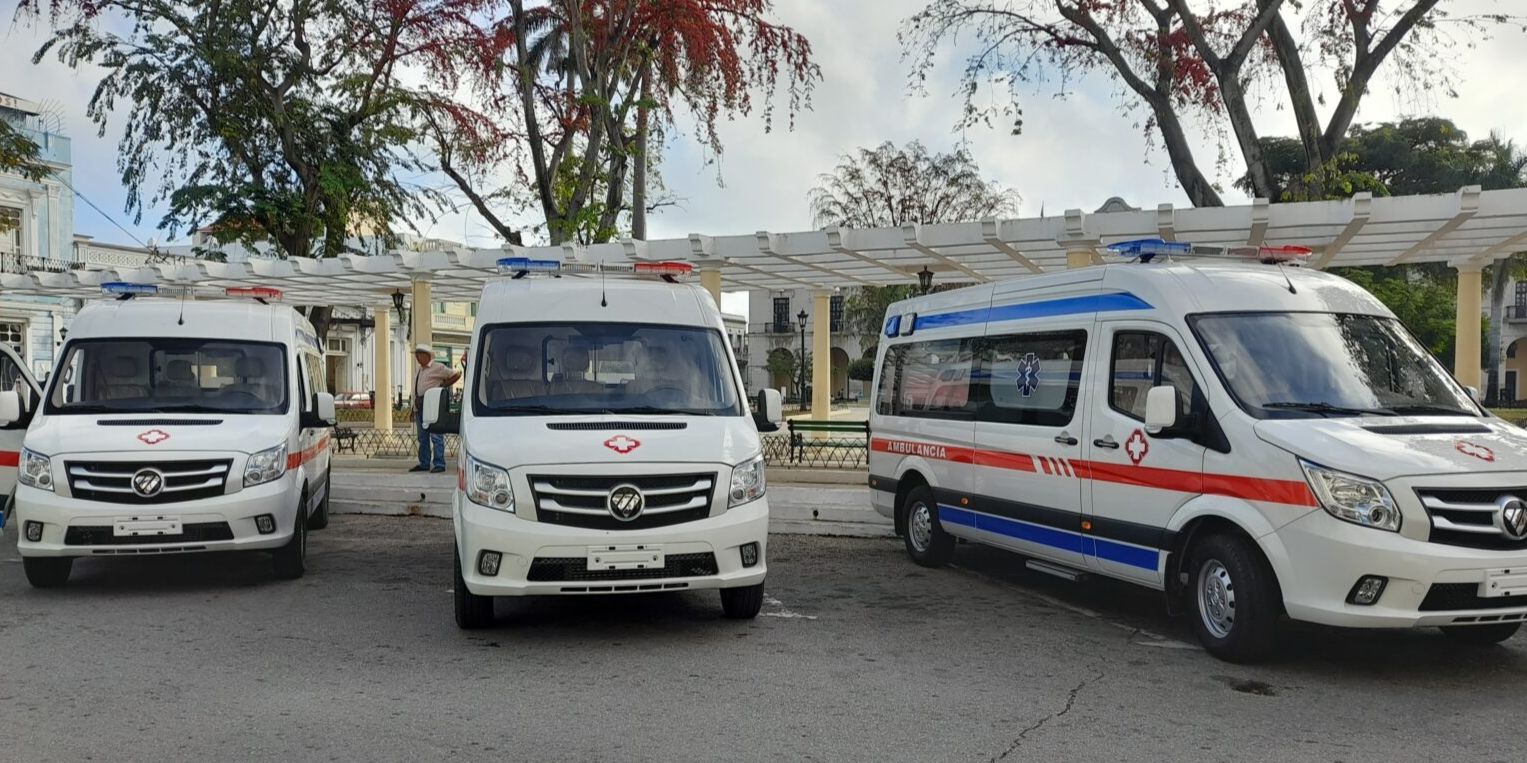
Of the 16 ambulances that must serve nearly 600,000 Matanzas residents, three have just joined the emergency services this week.
LIMA, Peru – The international standards for integrated medical emergency systems (SIUM) establish a coefficient that, in the case of the province of Matanzas and its 600,000 inhabitants, should be 54 ambulances. However, the territory currently lacks 70% of that total number of vehicles, according to official figures.
A report from the state newspaper Giron reported this Saturday that of the 50 new Foton brand ambulances that the Island recently received, only three will soon begin to provide services in Matanzas.
With this incorporation, destined for the territorial bases of Cárdenas, Matanzas and Jovellanos, there are 16 cars in operation in the province, which represents 29.6% of the total stipulated.
The ambulances are equipped with emergency equipment such as a monitor, ventilator and what is necessary to intubate and assist in the transfer of seriously ill patients, said Yofrén Sánchez Dorrego, head of Transportation at the SIUM in Jovellanos.
Dr. Yamira López García, provincial director of Health, assured that another group is under repair for its subsequent start-up, which will increase the technical availability coefficient.
The statistics reflect the current crisis of health services in the country, affected among other things by the lack of medicines or supplies, unhealthiness and the deterioration of hospitals and infrastructure.
Emergency services lack resources and transportation throughout the province of Matanzas, but at the base of the Jovellanos municipality, which also serves Pedro Betancourt, there was only one ambulance in fair condition.
The addition of a new vehicle should help alleviate the situation, although the presence of just two cars serving both municipalities is still an insufficient number.
According to López García, all ambulances in the health system are managed by a provincial coordinating center that manages demands according to priority, taking into account the status of the patients and the rescue algorithms established internationally.
“Although we are aware that increasing to 16 ambulances is still not enough, this translates into greater quantity and better quality in urgent and emergency care,” said Yamira López García, provincial director of Health in Matanzas.