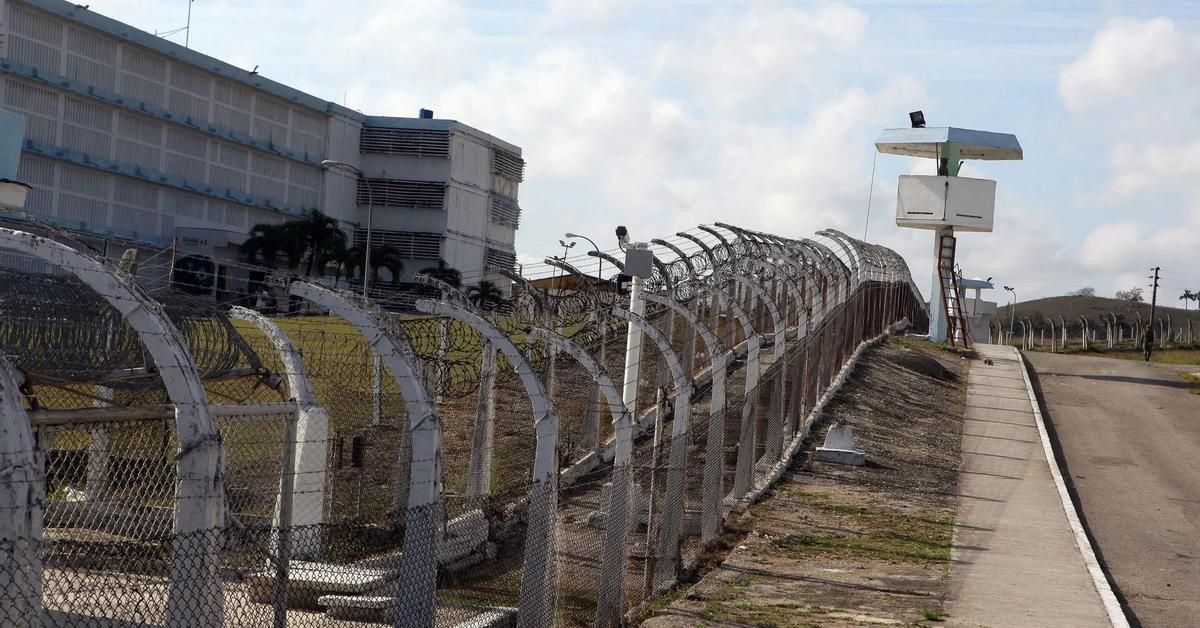
Havana/The human rights situation in Cuban prisons became evident again in December 2025. According to the monthly report of the Cuban Prison Documentation Center (CDPC), an independent organization based in Mexico, during that month at least 61 human rights violations and the death of an inmate in state custody were recorded. The data, compiled from family testimonies, direct complaints and follow-up of individual cases, confirm the persistence of abuse, medical neglect and arbitrary punishments within the island’s penitentiary system.
The report identifies 48 people deprived of liberty affected by these violations, including seven women and 41 men. Although the figure is already alarming, the organization itself warns that it is an under-registration, conditioned by the lack of access to prisons, surveillance of inmates and their families, and the criminalization of any attempt at independent documentation. In this context of opacity, each report implies additional risks for those who make it.
Among the most serious cases documented in December were those of Yosvany Rosell García Caso and Leoncio Rodríguez Ponce, held in prisons in the eastern provinces of Holguín and Las Tunas. Both accumulated multiple violations against them, especially after starting hunger strikes as a form of protest against prison conditions. Far from addressing the demands or evaluating their health status, the prison authorities chose to transfer them to other prisons, a common practice used as a punishment and isolation mechanism.
The violations recorded by the NGO are grouped into 30 different categories, revealing the extent of the abuses
He report He also mourns the death of Yaciel Antúnez Antúnezwho was held in the territorial prison for people with HIV, in the province of Villa Clara. According to the documentation collected, the death was related to the sustained lack of medications and the absence of timely medical care. This case joins other deaths that have occurred in recent years in Cuban prisons, many of them associated with untreated chronic diseases, malnutrition or prolonged medical negligence.
The violations recorded by the CDPC are grouped into 30 different categories, revealing the extent of the abuses. The most recurrent were harassment and repression, followed by poor living conditions in prison, denial of medical care, problems with food, restrictions on communication with the outside, and the use of punishment cells. In practice, these categories overlap and create a systematically degrading environment for prisoners.
The complaints about the material living conditions describe a critical panorama: insufficient food, poorly prepared or in a state of decomposition; shortage of drinking water; deteriorated infrastructure; lack of mattresses and bedding; constant presence of rodents and insects, and epidemic outbreaks without effective sanitary control. These conditions, far from being exceptional, are part of daily prison life and directly affect the physical and mental health of inmates.
The violations collected in December were documented in 33 prisons and detention centers distributed in 14 provinces of the country and in the special municipality of Isla de la Juventud.
Added to these shortcomings are reprisals against those who report. The report documents restrictions and surveillance of communications with family members, arbitrary suspensions of calls and visits, sendings to punishment cells, forced transfers to prisons far from the place of residence, and physical abuse by guards. In many cases, threats function as a deterrent mechanism to prevent new complaints and isolate the most active or considered “problematic” inmates.
The violations recorded in December were documented in 33 prisons and detention centers distributed in 14 provinces of the country and in the special municipality of Isla de la Juventud, which confirms that these are not isolated events or problems concentrated in a specific region. The territorial extension of the complaints points to structural flaws in the Cuban prison system and a control policy that privileges discipline and punishment over basic rights.
The CDPC also emphasizes that certain groups are especially vulnerable within prisons. Among them are people deprived of liberty for political reasons, people of African descent and those suffering from chronic diseases. In many cases, these conditions of vulnerability accumulate, increasing exposure to abuse, medical negligence, and arbitrary sanctions.
The organization insists that the lack of transparency of the Cuban State is a central obstacle to knowing the real dimension of what happens behind prison walls. The absence of official statistics, the refusal to allow access to independent observers, and the persecution of activists and family members who report abuse prevent effective oversight and foster impunity.