Cuba is only sustained by humanitarian aid, specific donations and the limited support of the few strategic allies it has left.
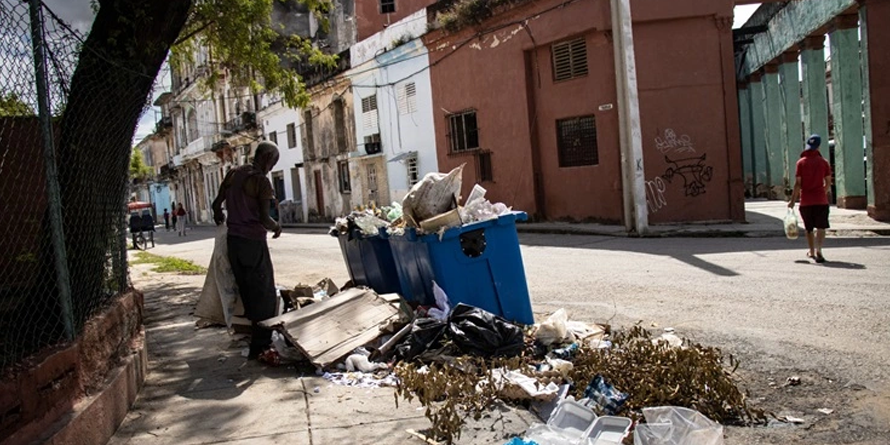
SANTIAGO DE CUBA. – After a particularly hard December, January was marked by extreme food shortages, prolonged blackouts and the paralysis of basic services. The economic suffocation on the Havana regime is almost total.
Last Tuesday, the sea ports of Havana and Santiago de Cuba simultaneously received two ships with some 2,400 tons of rice from China. However, the shipment will barely be enough to distribute between one and two pounds per person—and not in all provinces—for free.
So far this month, only two cans of donated sardines and one pound of brown sugar have been delivered in the province of Santiago de Cuba as part of the basic basket. Nothing else.
Chinese aid It includes a total donation of 60,000 tons of rice and financial assistance estimated at 80 million dollars, which consolidates the Asian country as one of the main political and economic backers of the Cuban regime. Even so, these contributions are far from compensating for the magnitude of the structural crisis facing the country.
“Two little sardines at the beginning of the month and a pound of sugar that was wet and smelled of old. No rice. This month I have had to buy almost 30 pounds and the norm has not yet arrived,” he told CubaNet Gisela Díaz, resident in La Maya, Santiago de Cuba.
Although Santiago is among the provinces “benefiting” from the distribution of Chinese rice—along with Havana, Pinar del Río, Artemisa, Mayabeque, Isla de la Juventud, Guantánamo and Granma—at the time of writing this note the delivery had not yet begun. Even when it arrives, the amount will be practically laughable compared to the real consumption of the population, which pushes millions of Cubans towards the informal market.
Prices that cancel the salary
The prices reflect the true magnitude of the crisis: a pound of rice costs between 180 and 300 pesos, a pound of beans between 450 and 500, a liter of oil between 1,000 and 1,200 pesos and a carton of eggs goes up to 3,500 pesos. Products that for decades were part of the basic basket—oil, coffee, meat—today can only be purchased in private markets or in state dollar stores, at increasingly prohibitive prices.
Between December and January, according to merchants and consumers, prices increased between 50 and 100 pesos for most basic products. With an average monthly salary of 6,506 pesos, buying only the minimum necessary for a small family becomes an almost impossible challenge.

Dianelis del Río from Santiago, whose monthly salary does not reach 5,000 pesos, spent more than 13,000 on a single weekend purchase. Both she and her husband manage to increase their income, knowing that with that salary they are starving.
“I always buy just enough for my husband, my son and me. This time I didn’t exaggerate, but I had to buy 10 pounds of rice for 265 pesos each,” she explained.
Between that rice, five pounds of chicken, two pounds of pork, a liter of oil, 10 eggs, three pounds of minced meat, two pounds of beans, some vegetables, a bath soap and some food, the money evaporated. “Everything fit into two small nylon bags. Even so, I could not guarantee a snack for my son who is in fifth grade. It is incredible how little my work is worth in this country,” denounced the woman residing in La Maya.
Food insecurity: from situation to survival
Food insecurity in Cuba worsened structurally after the contraction of the Venezuelan subsidy, which for more than two decades covered close to 60% of the Island’s energy demand and a good part of its food imports.

As a result, the country led to a chronic energy crisis that paralyzed agricultural production, the food industry and the cold chain, also reducing the state’s capacity to import basic goods. Even before the definitive collapse of the Caracas-Havana axis, which occurred on January 3, more than 4.2 million Cubans—37.8% of the population—were already suffering from severe shortages.
Between 2017 and 2024, national rice production fell by more than 58%, corn by 38%, and the sugar harvest by nearly 90%. As a consequence, food prices multiplied by 10 or more, pushing the population towards the informal market as the only means of subsistence.
Food is not the only problem
But the crisis does not end with shopping: it also affects how to cook. Barely a week after the events in Venezuela, the state-owned Cuba Petroleum (CUPET) advertisement the indefinite suspension of the sale of liquefied gas in Santiago de Cuba and other eastern provinces. Although a ship from Russia was reported, no unloading or distribution deadlines were specified.
As a result of the strike, in the informal market of Santiago de Cuba, gas is now priced at up to 25,000 pesos, when two weeks ago it was at 13,000. Meanwhile, the complete cylinder reaches 35,000, about 5,000 more than a few days ago.
Israel, 42 years old, sensed that the second week of January would be the last gas truck that would enter the point of La Maya, where he lives. He was not wrong, because from that date they stopped the sale.

“I prioritized buying gas and left food for later,” he said. “I hadn’t bought since February 2025 because it always ran out before my number in line arrived. Anticipating that, I took 4,000 pesos that I had earmarked for food and paid for a shift on the left. If I hadn’t done that, I wouldn’t have made it either, like the majority who were there,” he said.
“I already have gas, then I’ll see what I eat. It’s one less worry, because cooking with firewood is hurting me,” Israel acknowledged.
Likewise, the shortage of liquefied gas has forced thousands of families to return to firewood and charcoal, whose prices have also skyrocketed. Right now a bag of charcoal can reach 2,000 pesos in the province, when in December it cost between 900 and 1,500.
The future is not encouraging
Although the Government insists that 2026 will be a year of “economic recovery”, with GDP growth of 1% and the reactivation of key sectors, most analysts foresee a deepening of the collapse.
The total cessation of the supply of Venezuelan oil – only partially compensated by Mexican crude oil – keeps the electrical system, transportation and national production in a situation of extreme fragility. The energy impacts, which already exceed peaks of 60%, anticipate longer blackouts, interruptions in the supply chain and greater difficulties in sustaining other strategic activities.
In parallel, the regime faces a practically exhausted financial margin. The renegotiation of the debt with the Paris Club last Wednesday – after successive postponements – exposes the State’s inability to meet external commitments and further narrows access to new sources of financing. In this context, not even the support of its allies, Russia and China, seems capable of reversing a dynamic of deterioration that is moving towards a breaking point that could be impossible to sustain.