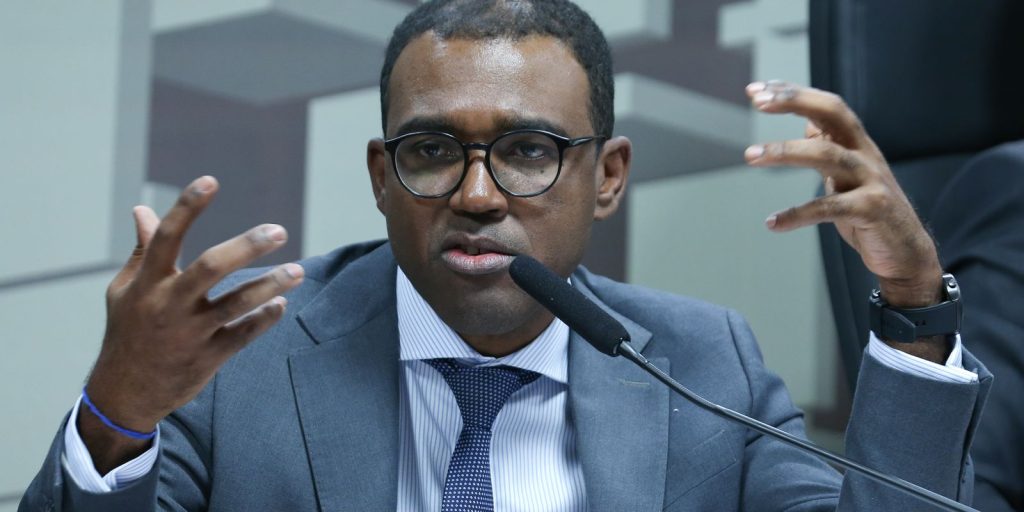
According to the Minister of Tourism, Juan Carlos García Granda, “Cuba reinvents itself every day” and one of its main attractions for the sector is “security.”
MADRID, Spain.- The Cuban Government is trying to reposition the island in the European tourism market in the midst of one of the worst crises in the sector in decades. The strategy was presented at the International Tourism Fair (Fitur), in Madrid, where the authorities were especially committed to the Spanish public as a way to recover a flow of visitors that has plummeted since before the pandemic and has not managed to rebound in a sustained manner.
The Minister of Tourism, Juan Carlos García Granda, said in Fitur that Cuba is “an ideal island for tourism” but that it is going through “some difficulties” but that “Cuba reinvents itself every day” and that the Government has “the intention of working very hard to recover that market,” in reference to the European one.
During his statements, the official insisted that “security” is one of the country’s main assets compared to other destinations on the American continent and regretted that, especially in Spain, “all the news about Cuba really has a traumatic tone,” in reference to the coverage of the economic, social and energy crisis that the island is experiencing. This official narrative that seeks to minimize the situation in the country collides with the daily reality of millions of Cubans and with warnings from foreign governments about the shortage of electricity, water, fuel and basic services. Just as the image of a safe destination contrasts with the reality of recent years, marked by an increase in robberies, violent assaults and homicides, some of them with foreign victims, in a context of widespread impoverishment and weakening of public services.
Downplaying the impact of the blackouts on the sector, García Granda maintained that “international tourism emerged in Cuba in a stage known as special period of greater deficiencies than those we have now, and since then it has had its own infrastructure so as not to depend on the national electro-energy system.” He also added that poles such as Cayo Coco and Cayo Largo “have their own electricity generation”, marking an explicit difference between the conditions of the hotels and those faced by the Cuban people.
Meanwhile, since speech broadcast by state media, Cuba promotes in Europe a wide catalog of “multi-destinations” that includes beaches, heritage cities and natural enclaves in the west and center of the country, presented as safe and fully operational spaces. Varadero, Havana, Trinidad, Viñales, Santa Clara and the northern keys are among the main claims.
However, beyond the fairs and image campaigns, Cuban tourism continues to be burdened by a chronic energy crisis, air connectivity problems, deterioration of infrastructure and an economic environment marked by scarcity and lack of transparency. In a country where luxury hotels operate with priority while the population endures long power outages and basic shortages, the commitment to the European market seeks above all a financial lifeline for a model that offers no signs of deep reforms or structural solutions.
According to official figures, Cuba went from receiving around 4.7 million tourists in 2018 to just over 1.8 million in 2025, a decrease that shows the structural deterioration of a key industry for the regime to obtain foreign currency.