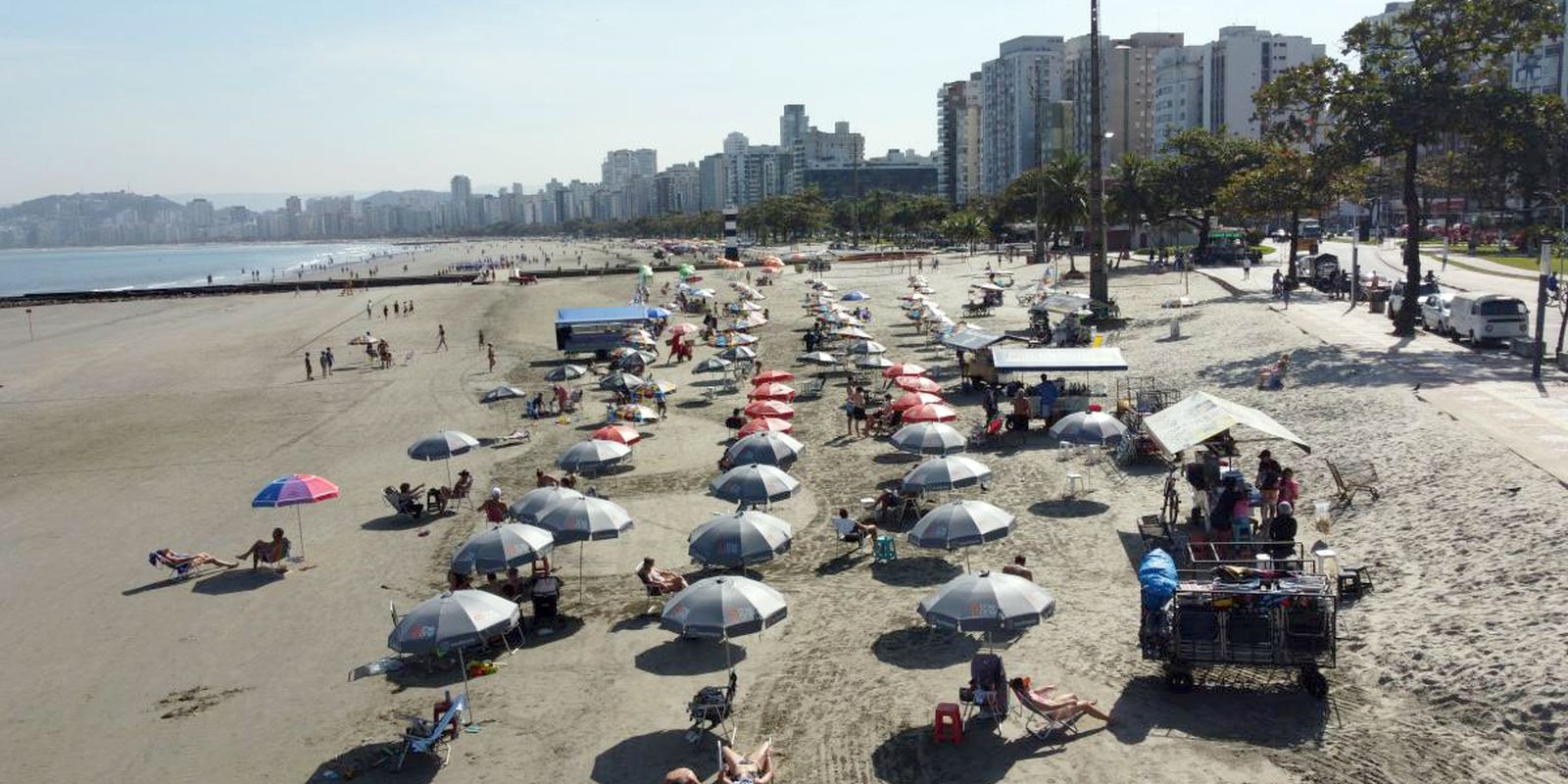
The coastal cities of São Vicente, Santos and Praia Grande, the closest to the capital of São Paulo, have the majority of beaches in unsuitable conditions for swimming, according to the bathing bulletin from the Environmental Company of the State of São Paulo (Cetesb).
Baixada Santista has 15 unsuitable beaches. Nine other beaches in the state, all on the North Coast, are also not recommended for swimming in the sea. The weekly bulletin on beach bathing conditions can be consulted on website of the state body.
In São Vicente, three of the municipality’s six beaches are unfit. In Santos, there are four out of seven beaches without bathing conditions. In Praia Grande, five of the 12 beaches are considered unsuitable. Guarujá has two, out of seven beaches, that inspire care. Itanhaém has only one beach unsuitable for swimming, out of a total of 12.
On the North Coast there is one unsuitable beach in São Sebastião, two in Caraguatatuba, three in Ilhabela and three in Ubatuba, among the 105 beaches monitored in the region.
>> Follow the channel Brazil Agency on WhatsApp
In the agency’s most recent bulletin, 151 beaches in the state are classified as suitable for swimming.
The opposite condition, which has been repeated for decades, has its origins in the lack of ideal sanitary conditions, as well as the structure to deal with the increase in sewage emissions during the holiday period, when the regions receive hundreds of thousands of tourists.
“Apparently clean water may be unsafe. Therefore, monitoring is essential to guide the population and support public management”, explains Claudia Lamparelli, manager of Cetesb’s Coastal Water Sector.
Enterococci
Cetesb’s measurements focus on the presence of Enterococcia type of bacteria that serves as a marker for the presence of sewage in water.
You Enterococci are common bacteria, present in the human gastrointestinal tract and in several domestic or farmed animals. The high presence of colonies of this type of bacteria increases the risk of skin diseases, diarrhea and other infections.
The company’s criteria are that the beach is unsuitable when two or more water samples from the last five weeks exceed 100 colonies of Enterococci per 100 milliliters (ml), or when the most recent collection exceeds 400 colonies per 100 ml.
Collection is carried out weekly, at predetermined points approximately one meter deep, to ensure standardization.
Care
Another recommendation from Cetesb is to avoid swimming in the sea for at least 24 hours after heavy rain, even on beaches classified as suitable.
“Canals, rivers and streams that flow onto the beach should also be avoided, as they may receive irregular sewage”, warns the agency.
According to the health department, contaminated water can expose bathers to disease-causing bacteria, viruses and protozoa.
Children, the elderly and people with low immunity are most susceptible to developing illnesses or infections after this contact.