The dollar as a defense mechanism… and inequality
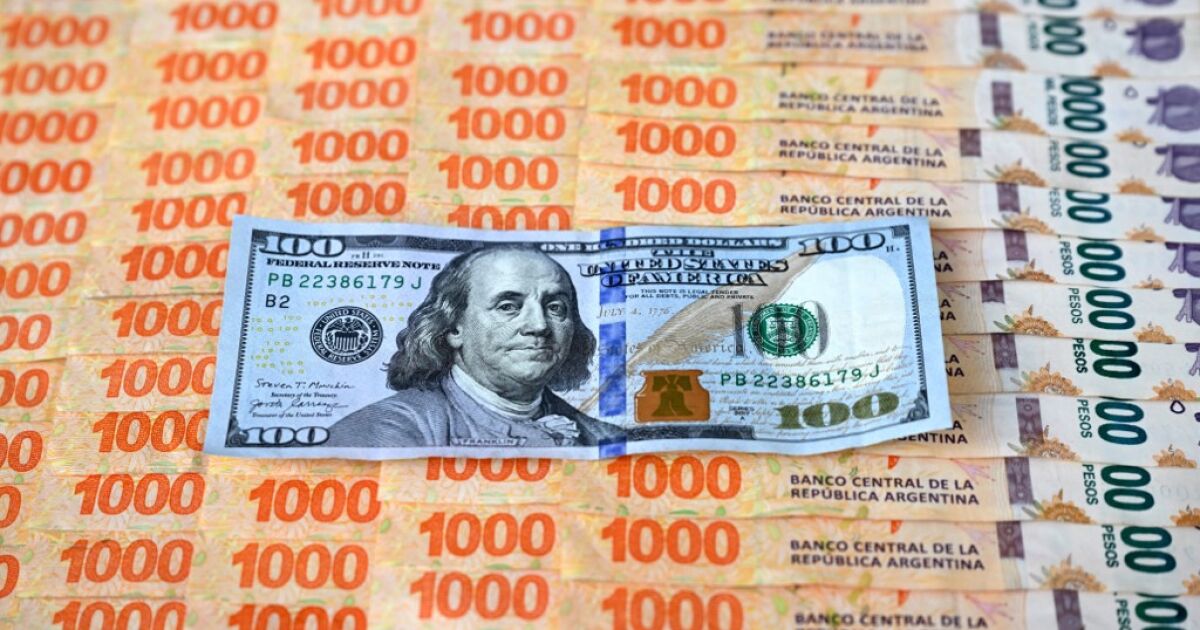
In countries like Venezuela and Argentina, the dollar prevailed before the law. The local currency still exists, but it has lost credibility, says the specialist.
Persistent inflation, recurring devaluations, exchange controls and monetary financing of the deficit led households and companies to take refuge in the US currency.
Venezuela
Venezuela represents the most extreme case. After years of hyperinflation, starting in 2018–2019 the government relaxed controls and allowed transactions in dollars. By 2020, these were already the majority in a large part of the urban economy.
The result was partial relief, on the one hand, inflation moderated compared to previous peaks and on the other hand, some commercial activities were reactivated. But the cost was high, informal dollarization deepened inequality between those who access dollars and those who continue to receive income in local currency, according to organizations such as the International Monetary Fund and the Economic Commission for Latin America and the Caribbean (ECLAC).
In Venezuela, de facto dollarization coexists today with political and economic uncertainty reinforced by the United States military intervention that culminated in the capture of Nicolás Maduro in early January 2026, in an operation that reconfigured the relationship with the oil market and currency flows.
After that episode, the interim government of Delcy Rodríguez has resorted to the injection of petrodollars to try to reduce the exchange gap and moderate prices, which has temporarily softened the parallel dollar and generated expectations of economic relief. However, despite these measures – including an initial injection of some $300 million – the purchasing power of the majority remains eroded, prices remain high and many Venezuelans feel that daily life has not changed substantially despite the intervention and the intensive use of the dollar in the economy.
For these resources to compensate for current limitations, investment, legal certainty, clear rules and access to international markets are needed.
HF Markets Analyst
Argentina
In Argentina, the process accelerated after the 2001–2002 crisis and reappears in each episode of instability, despite the arrival of Javier Milei to the presidency.
During the last decades, the dollar was consolidated in the southern country as a reference for savings, asset prices and foreign trade, while the parallel market became a thermometer of distrust. In this scheme, monetary policy loses power and expectations are formed outside the control of the central bank.
“Dollarization is not the cause of these problems; it is the symptom of previous failures of the macroeconomic and institutional framework,” Chaves emphasizes.