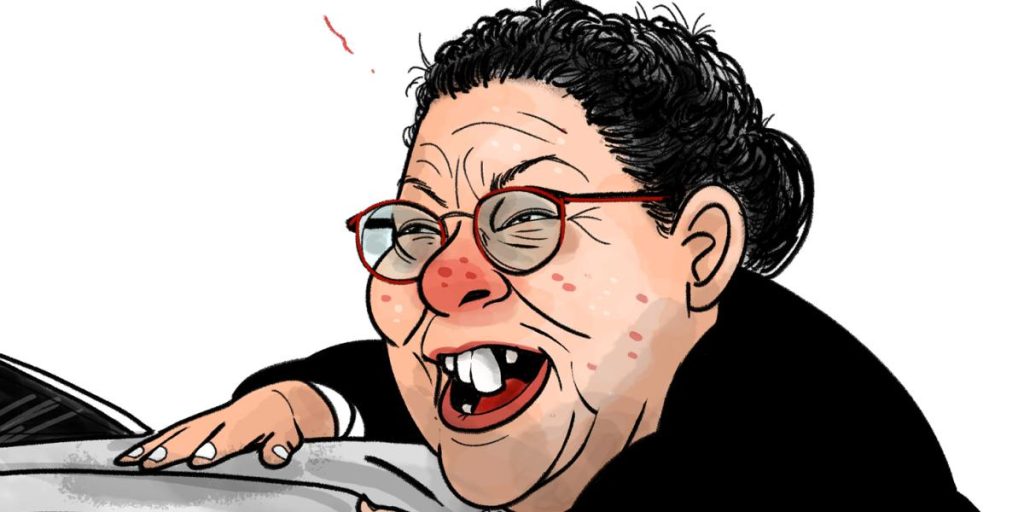
Despite his popularity – or partly because of it – life under Castroism was not easy for Alfredito.
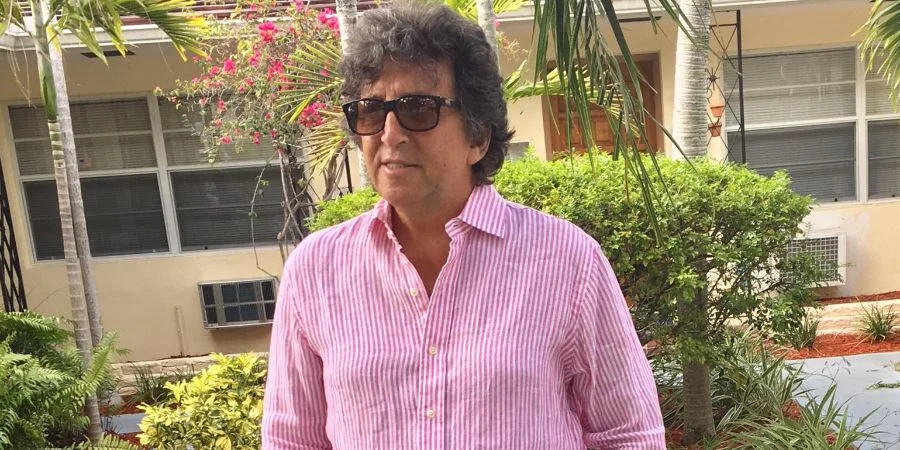
HAVANA, Cuba. – He died in Miamiwhere Alfredo Rodríguez, who was one of the most popular Cuban singers during the 1970s, 1980s and 1990s, had lived for more than a decade.
To be honest, I didn’t dislike Alfredo Rodríguez so much because of his songs but because back in 1972, I was in love with a girl with huge eyes who didn’t even know about my love because she had been Alfredito’s girlfriend and could only manage to regret that the singer had left her for another.
I have to admit that the competition was a lot: I was 16 years old and studying at a high school, and Alfredito was a pop star.
At that time, in Good afternoonthe closest thing to a pop music television program that was allowed in Cuba, Alfredito Rodríguez was always there, alone or with Leonor Zamora and with Mirta and Raúl (the Cuban equivalent of Sonny and Cher) and Los Barbas, with elephant-leg pants and his hair trimmed as far as the commissars of ideological correctness allowed, singing It’s time to finishits Spanish version of Honky Tonk Women.
Alfredito shook and made his numerous admirers cry when at the beginning of his career, back in 1969, he sang, in the style of Dyango, those songs by Sergio Endrigo, we were and far from youand those composed by him, very romantic and catchy. His audience remained loyal to him for decades, applauding him when he sang Sagittarius, At your side I get gray hair, good person and Drenched in sweatsongs that, due to their popularity, won him the Girasol magazine award several times. Give your opinion.
But, despite his popularity – or partly because of it – life under Castroism was not easy for Alfredito. They prevented him from growing his hair long and wearing double-breasted jackets (to save fabric), and they accused him in the official press of distorting the public’s taste with his “easy-going and foreign-oriented” songs, to the point that he had to respond to his critics that to be Cuban he did not need to sing congas or dress like a guarachero, just as Roberto Carlos himself did not need to sing sambas to prove that he was Brazilian.
And what can we say about the songs that he was censored, such as one that he had not written, but rather the Spaniard Danny Daniel, because he said “for the love of a woman, I let my veins bleed,” which irritated the sexist-Castro-Leninists who could not conceive of a male cutting his wrists for a woman. And thank goodness, with as much homophobia as there was in those 70s, which didn’t bother Alfredito for singing by Danny Daniel himself, The waltz of the butterflies.
Whoever thinks that totalitarian regimes allowed tame and innocuous stardom to lull the masses to sleep. Not all real socialist pop stars were lucky enough to be pampered like Karel Gott so he wouldn’t leave Czechoslovakia.
Alfredito Rodríguez, tired of being beaten by the bosses for not singing for “the Revolution,” left, first to Mexico and then to Miami. And then he was free to indulge in singing easy love songs and dressing as he pleased, and rejoice and take pride in seeing his son become an excellent pianist and composer. And not only that, but also to be able to express oneself freely and make statements to the press against the dictatorship.
I confess that after seeing the frontal attitude against the regime that Alfredo Rodríguez maintained in recent decades, I feel sorry for him for having been one of the first to open fire against the television program. The differencewhich he hosted, when in December 2006 he invited the former commander, former prosecutor and censor of the Cuban Institute of Radio and Television (ICRT) Jorge Daddy Serguera. It was too much to see that major repressor, surrounded by candles and acting good, saying that he liked caviar, the songs of Elvis and McCartney and that he only regretted not having “made a better mistake” in the fulfillment of his revolutionary duties.
I jumped because of the audacity of introducing Serguera and because it could portend a new episode of rewriting history. Against the program, he had nothing. Against Alfredito, neither. If I got out of hand on that occasion, I hope he apologized to me before leaving this world. Musical tastes aside, I never doubted that, as he proclaimed in that song of his, Alfredito was a good person. Rest in peace.