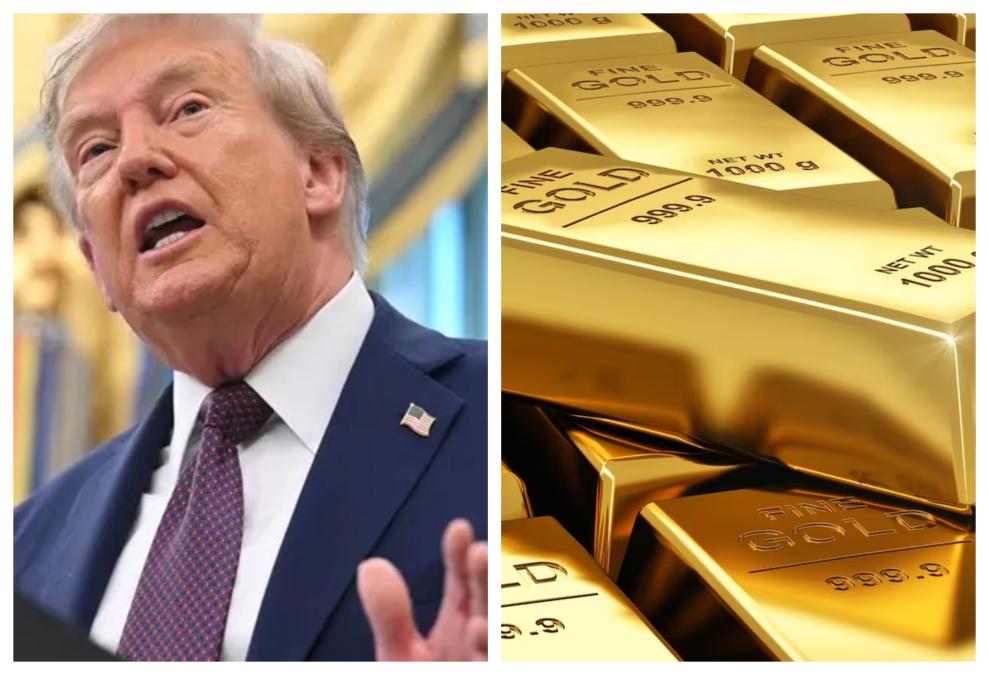
Gold set a new all-time high, approaching $4,900 per ounce, driven by increased geopolitical tension after Donald Trump reaffirmed his intention to take control of Greenland. The episode has intensified risk aversion, weakened the dollar and reinforced the search for safe haven assets.
The precious metal reached a price close to $4,890 per ounce, with an advance of more than 2% on the day, accumulating a revaluation of more than 75% in the last 12 months, according to Bloomberg data. The movement occurs in parallel with falls in the dollar and long-term Treasury bonds, a combination that has strongly favored gold.
| Metal | Recent price | Variation | Key reference |
| Gold (spot) | ~US$4,890/oz | 2.10% | New all-time high |
| Silver (spot) | ~US$95/oz | 0.20% | Near record |
| Platinum | ~US$2,465/oz | 0.10% | After all-time high |
| Copper | ~US$13,000/t | Rise | Flows to the US |
“The rally in gold is all about confidence. For now, confidence has been bent, but it hasn’t been broken,” said Daniel Ghali, senior commodities strategist at TD Securities, speaking to Bloomberg. He added that, if that break occurs, “the momentum will be maintained for longer.”
From the market, expectations are beginning to move towards unprecedented levels. “We expect gold to exceed $5,000 per ounce, as investors continue to seek safe haven assets and hedges against inflation,” said SP Angel analyst John Meyer, quoted by Reuters, although he warned that the pace could moderate if financial purchases decrease.
Goldman Sachs also maintains a positive view. “Gold remains our strongest conviction,” said Daan Struyven, co-head of commodity research at the bank, telling Bloomberg that his base case points to a price of $4,900 per ounce, with upside risks if diversification outside of traditional financial assets is expanded.
The rally is not limited to gold. The tension around Greenland also boosts other metals. Copper is advancing towards $13,000 per ton, supported by flows to the United States and in a context of growing distrust about currencies and sovereign debt. According to Bloomberg, this environment strengthens the so-called “depreciation operation,” which favors both precious and industrial metals.
RECOMMENDED VIDEO