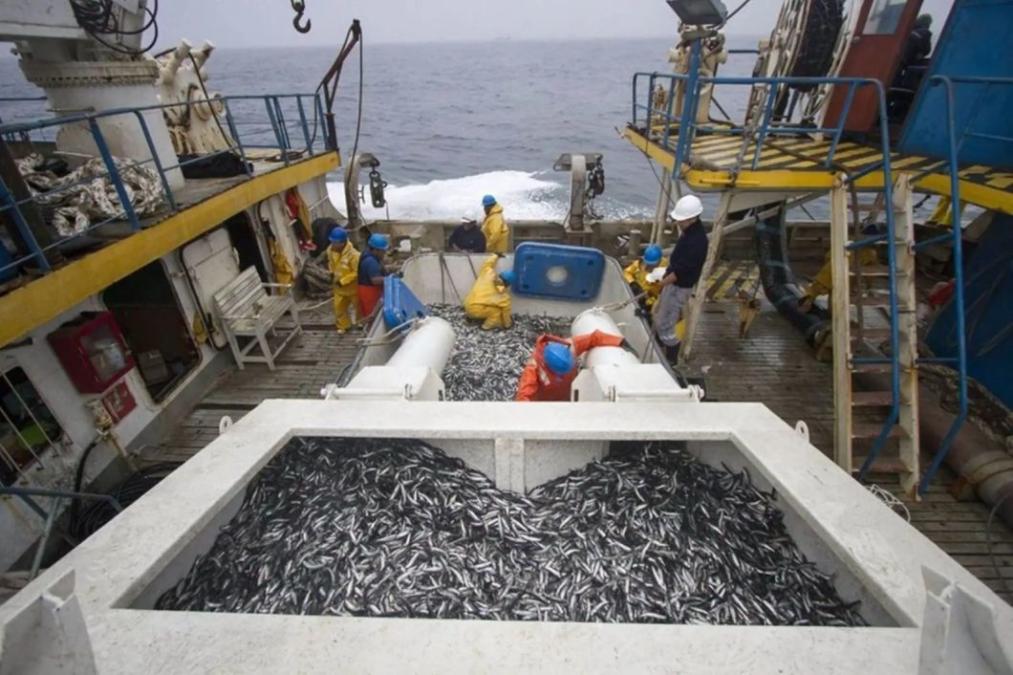
The second season of fishing of anchovy in 2025 closed with results that reaffirmed the economic weight of the fishing sector in the country, both for its contribution to employment and for the links in the economy.
The president of the National Fisheries Society (SNP), Jessica Luna, stated that of the 1.63 million tons assigned in the central-northern zone for said season, the sector captured 1.60 million, equivalent to 98% of the quota.
“That is very positive, it is solid, it is almost capturing 100%,” said Luna. In the cumulative total of the year, landings reached 4.6 million tons, a figure similar to that of 2024, after the sharp drop registered in 2023 due to the El Niño phenomenon.
He explained that, in said campaign, the activity mobilized 675 vessels, of which 286 were steel and 389 wooden, and had a decentralized impact in the main ports of the country.
He indicated that Chicama led the captures with 30.7%, followed by Chimbote (28%) and Coishco with 13%, while Callao concentrated 7.5%.
“The message of the results achieved is this decentralized dynamic effect that industrial fishing has, moving the economy of companies, of workers with better incomes and of SMEs that provide services and goods to the industry,” he highlighted.
Furthermore, in external terms, the second season generated around US$900 million in exports of fishmeal and fish oil. “It is a very important contribution not only because of the local energizing effect, but also because of the generation of foreign currency,” said Luna.
In the annual balance, both seasons totaled close to US$2.6 billion. These results made it possible to sustain 250,000 jobs along the entire coast and contribute 1.5% of the GDP. “Today the results are positive and allow us to continue boosting the economy,” he added.
Lessons learned
Along with the results, Luna warned that the lessons of the season must be translated into timely decisions so as not to compromise the performance of the sector.
He stressed that one of the key factors for a successful season is the timely start of Imarpe’s scientific activities, since “the first days of the season are the most productive” and concentrate the largest catch volumes.
Luna explained that administrative delays can have a direct impact on income and employment, by reducing the use of the resource.
In this context, he stressed the need to immediately start research cruises for the next capture period 2026, considering that these take around 30 days and are the technical basis for defining fishing quotas.
This urgency is accentuated after Enfen activated the state of surveillance for a possible coastal El Niño. According to him, an increase in sea temperature can modify the distribution of the resource, so “timely and rapid decisions are required, based on scientific information.”
RECOMMENDED VIDEO