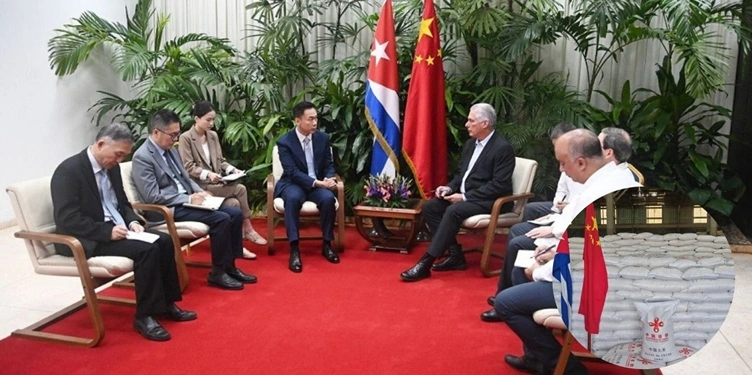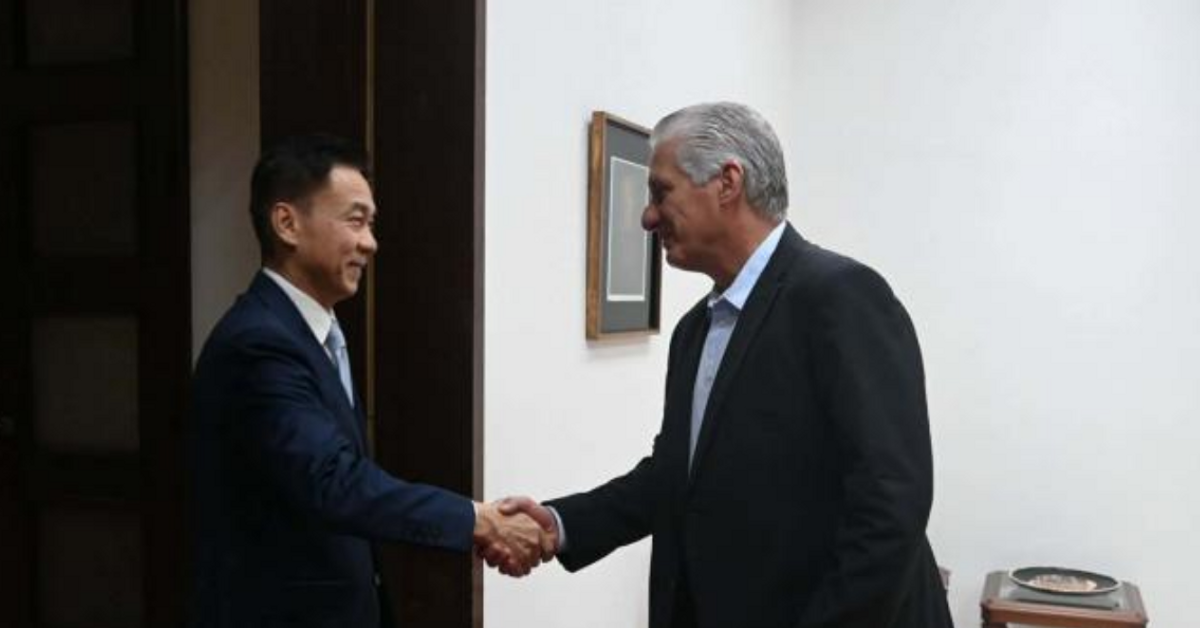
Madrid/There are no very precise details about the new financial aid approved by China for Cuba, although the amount and preferred destination are. The package is valued at $80 million for “the acquisition of electrical equipment and other urgent needs.” The ambassador himself, Hua Xin, met with the president, Miguel Díaz-Canel, to inform him that he had received “the instruction from his Government to transfer this information to the Cuban side,” he says Granma.
The diplomat explained that this proposal is the result of meetings held between the authorities of both countries, especially the Minister of Foreign Affairs, Bruno Rodríguez, and China’s special envoy for Latin American and Caribbean Affairs, Qiu Xiaoqi. However, he also quotes the Deputy Prime Minister and Head of Foreign Trade and Foreign Investment, Oscar Pérez-Oliva Fraga, and the Minister of Energy and Mines, Vicente de la O Levy.
The parties agreed, Hua Xin said, “to establish an executing company” for this task, the reason for the meetings with Pérez-Oliva
From the little that the information reveals, it is clear that both were key to the aid, since China has decided to change the method in which the projects are being developed with the donations of 200 megawatts of photovoltaics and 5,000 solar panels for homes in areas with difficult coverage. The parties agreed, Hua Xin said, to “establish an executing company” for this task, the reason for the meetings with Pérez-Oliva.
In March 2025the authorities announced that the Island planned to build 22 photovoltaic parks with a Chinese donation, of which there were already seven “with the initial endowment to begin construction”, although it was indicated that they would provide 120 MW. This project is independent of the 92 solar parks that are being built by contract with two companies in the Asian country and, although it is not expressly indicated, it seems to be the issue now being discussed. China has not specified, however, why it has decided to “modify the modality” in which they were developed.
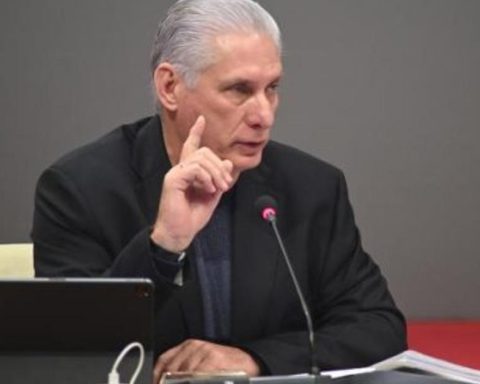
Furthermore, after yesterday’s meeting with the Chinese ambassador Díaz-Canel highlighted “the intense activity” that Hua Xin is carrying out, making express mention of the donation of 60,000 tons of rice that will arrive from the Asian country in the coming weeks. This Monday, Santiago de Cuba and Havana received a first delivery of 2,400 tons each, with a ceremony included in the case of the capital
The Cuban president also spoke about “Phase Four of the digital transformation program that is being carried out with Chinese support, everything that has been achieved in the project for high definition television and other technologies in which progress has been made.”
The last time Díaz-Canel was in China, in September 2025, there were hardly any very specific agreements, unlike on his previous trip, in 2022, when he obtained a donation of 100 million dollars.
However, the president brought in a biopharmaceutical collaboration that had to materialize in the new aspirin 81 milligrams, a drug used as daily therapy to prevent heart disease and stroke. The agreement planned for the medicine to arrive in Cuba through “the transfer of technology from Medsol Laboratories to the Chinese company Hubei C&C, from Wuhan.”
The results arrived, coincidentally, this Tuesday, when the Island received the first shipment, of which the boxes were shown but not the quantity. The drug is “intended to cover the demand for the Basic Table of Medicines,” said BioCuba Farma.
“This mechanism – adds the company – uses part of the profits generated by the sales of PPG, the leading product of the Cuban entity involved, to ensure the stability of the supply of this key medicine in the prevention and treatment of cardiovascular diseases.”