Regarding the measure, Cuban doctors in Calabria consider that it has several drawbacks.
DUBLIN.- The Calabria Health Authority recently launched a public notice to recruit doctors with degrees not recognized in Italy, in an attempt to fill the serious shortage of healthcare personnel in the region. The measure occurs in a context of growing political and legal pressure on the bilateral agreement for the direct hiring of Cuban doctors through the state-owned company Comercializadora de Servicios Médicos Cubanos (CSMC SA), a model questioned by complaints of labor exploitation and considered by some experts as a form of modern slavery.
The decrees and deliberations published in this regard require a medical degree and specialization obtained abroad, legalized, professional qualification in the country of origin, and absence of criminal records, as well as knowledge of Italian or Spanish, with availability for linguistic training. Documentation must be submitted by PEC or international certified mail, with official translations into Italian where applicable.
Regarding the measure, Cuban doctors in Calabria consider that it has several drawbacks. The first, the requirement for a “not disqualified” certificate that ensures that the professional has not been sanctioned and can practice medicine in his or her country of origin. The willingness to legalize degrees may also be impossible for Cuban professionals, as a Cuban doctor in Calabria explains: “Those who are on a mission cannot because it is a warning sign, like a red light for the authorities,” she said, as it constitutes an intention for independence. “Those who are regulated (doctors prevented from leaving Cuba) have to give an explanation of why they want to legalize the title,” he added.
Although the governor of Calabria, Roberto Occhiutoannounced that the call is open to doctors who do not belong or do not graduate in the European zone — which in theory includes Cuban professionals — in practice, Italy would have to “make its requirements a little more flexible,” notes the doctor. The health commissioner also referred to the “400 Cuban doctors who now work in our hospitals”—a figure without documentary support—and justified the initiative as an extension of an agreement that “was born to address a serious emergency” and that has been replicated in other regions as it is considered a “good practice.” “Now we want to go one step further, opening the market and allowing all foreign healthcare professionals to consider working in Calabria,” he added.
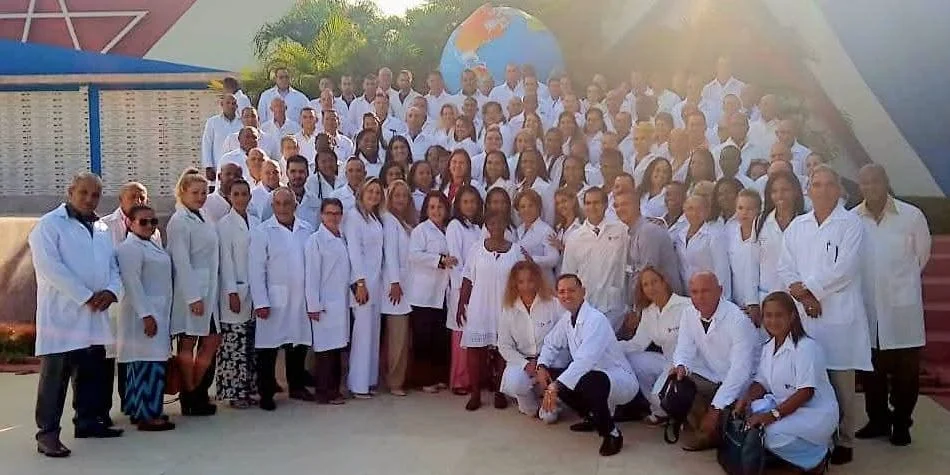
According to the research From Havana to Calabria: the perfect scam on Cuban doctorsbetween December 2022 and May 2025, 372 doctors from the island arrived in Italy out of a total of 497 predicted that have not yet been completed. Of those who actually arrived, 369 were located in the five provinces of Calabria and three located in two towns in the Lombardy region. The report, which has triggered a domino effect of media and political repercussions with legal implications in Italy, revealed how Cuban doctors sent to Calabrian hospitals retain only 23% of what the receiving country establishes as salary, while the rest is transferred to the Cuban Medical Services Marketing Company (CSMC), a mediation company, in conditions that international organizations and experts classify as forced labor.
A meticulous follow-up carried out by this journalist has made it possible to document intentions to extend the contracting model – controlled by the Cuban state company CSMC SA – to at least three other regions: Sardinia, Molise and Veneto. However, so far no new groups or similar contingents have arrived in those regions.
On the contrary. According to the monitoring, own database and investigation updates, the initial number of doctors located has decreased by at least 39, if we count those who have returned to Cuba, either due to the end of their mission or because they were left at the decision of the leadership while they enjoyed their planned vacations, and 30 who have deserted from the Cuban mission in Italy. Of the latter, there is a group that continues to work in the same hospitals, but now outside the control of the Cuban state company and they have refused to continue providing most of their salaries. It is estimated that only 324 remain on the mission. This number, which should be understood as an under-registration, could decrease considerably with the new opportunity for independent hiring just published if the region relaxes the requirements for Cubans who have already been working in the region for between eight months and three years.
The call is experimental in nature and covers multiple specialties, including pathological anatomy, anesthesia and intensive care, cardiology, general surgery, geriatrics, gynecology-obstetrics, emergency medicine, internal medicine, pediatrics, orthopedics and traumatology, psychiatry, radiodiagnosis, radiology and urology. The management of the procedure is centralized by Azienda Zero, but the contracts will be carried out in the different provincial and hospital health companies of Calabria.
Its foundation rests on a series of decree-laws and national regulations that exceptionally allow professional practice without formal recognition of the title, until 2027, the date on which the exceptionality that allows the presence of Cuban brigades in Italy also expires, unless it is extended. The submission of the application constitutes only a willingness to hire, with no automatic obligation to hire on the part of the healthcare companies.
Applications will be evaluated by examining committees appointed by the General Director of Azienda Zero, who will verify requirements and compare the training with the Italian university curriculum. Candidates considered suitable will be included in a regional list, which will serve as a basis for temporary hiring.
The selected doctors will be hired with a subordinate employment contract for a specific period of time, in accordance with the CCNL of the Health Directorate. A payment is also provided in the form of a fixed or fixed reimbursement of expenses, within the available budget limits.
In Novemberthe regional government promised to expand the emergency measures adopted in recent years. Among the projections was the extension of the agreement with Cuba to progressively increase the contingent of Cuban doctors until reaching a total of 1,000 professionals in Calabria. The governor, who on repeated occasions has trivialized the exploitation of Cuban toilets in Italydefended this strategy as a temporary solution to alleviate the shortage of personnel, as long as the regional recruitment plan allows for full autonomy of the health system.
However, the current agreement (renewed in March 2025) that regulates the relationship between the Calabria Region and the Commercialization of Cuban Medical Services SA (CSMC SA), maintains a limit of 497 Cuban doctors.
The new decrees and public notice from Azienda Zero not only do not mention the renewal of the agreement with Havana, but they reveal a strategic shift: far from facilitating the entry of more Cuban doctors, they establish an individual procedure. The measure creates a parallel, legally defensible path, which allows, in addition to attracting new doctors, to temporarily regularize those already working in Calabria with unrecognized degrees. At the same time it reduces the legal exposure of the regional health system.
Last October, the Italian Government alerted the regions about the risk of sanctions from the United States if they hired Cuban doctors through the Havana regime. The warning, broadcast by La C News 24 and to which CubaNet had access, was issued by the Ministry of Foreign Affairs and clarified that there would be sanctions directed at those who employed Cuban health personnel without complying with international regulations. The European Union has expressed its concern about reports of forced labor in the Cuban scheme and especially in Italy.
In practice, the opening could represent a discreet exit from the agreement with Cuba for those who choose to disassociate themselves from the state intermediation system, marking a change in logic: from the contingent managed by a foreign State to direct contracting under domestic institutional control, without public confrontation and with full respect for the law.
Something similar is being implemented by the Government of Antigua and Barbuda, which has begun to hire Ghanaian health personnel to fill the vacancies that Cuban professionals will leave, following the opposition’s announcement about the closure of Cuban medical brigades in the country. It is not the only case.
The agreements of several Caribbean countries with Cuba for the provision of medical services are entering a phase of withdrawal. In Jamaica, the authorities reviewed the current Memorandum of Understanding in advance in March and confirmed the departure of a significant number of Cuban professionals at the end of their contracts, without announcing their replacement. The Bahamas, for its part, reported in June that it was preparing to terminate similar contracts, while the Cuban mission in Venezuela would be evacuated amid the political and military crisis in that country.
Far from necessarily implying the arrival of more Cuban doctors, the measure offers a way for existing professionals to continue working under a transparent framework and in accordance with Italian and European law, reducing dependence on the agreement with Havana. In this way, it could function as a transition mechanism, addressing immediate needs for medical personnel and preparing a more autonomous and regulated recruitment model.
The new package of measures announced seems to put the agreement with Havana in check, rather than serving as a simple mechanism to perpetuate it.