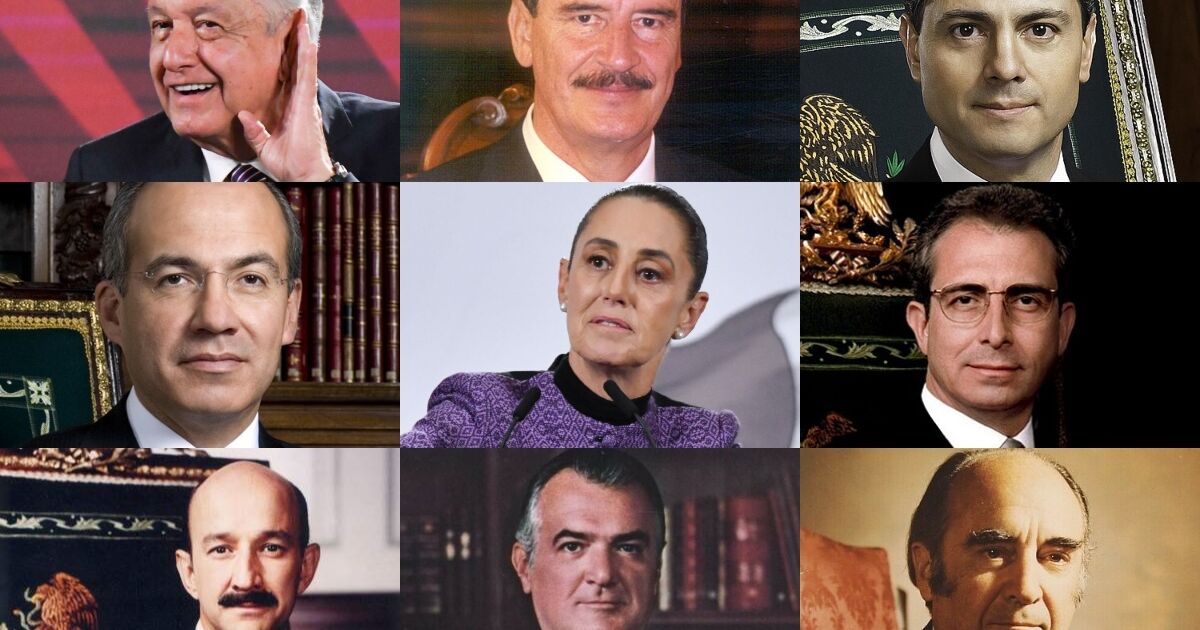
In 2000, the first president of the opposition arrived: the PAN member Vincent Fox. During his government, he presented a reform to allow Mexican citizens residing abroad to vote in presidential elections. This was endorsed.
In 2006 the second PAN government arrived. This time it was Felipe Calderon Hinojosa the one who won the Executive Branch. He promoted a reform so that deputies and senators could be re-elected and the number of legislators reduced, but it did not pass due to lack of votes.
After the victory of the PAN members during two six-year terms, in 2012 the PRI again obtained victory and Enrique Pena Nieto came to the Executive Branch. He presented various reforms, including an electoral one, which was endorsed. Among the changes made was allowing legislative re-election for up to four terms in the case of deputies, and for two terms in the case of senators.
The proposal also established advancing the presidential inauguration to October and not December so that the new federal president would have time to prepare the Federation’s Expenditure Budget for next year.
In addition, the IFE became the National Electoral Institute (INE), which gave it greater powers to organize the elections, and the possibility of forming a coalition government was opened.
In 2018 it arrived Andrés Manuel López Obrador, who twice proposed electoral reforms, but none were discussed due to lack of consensus with the opposition. The first, known as Plan A, proposed converting the National Electoral Institute (INE) into the National Institute of Elections and Consultations, as well as reducing electoral advisors from 11 to seven and eliminating the disappearance of multi-member deputies and senators.
The second proposal, known as Plan B, proposed reducing the administrative support of the INE, reducing the number of district offices of the INE and the departure of more than 80% of the National Electoral Professional Service. It didn’t advance either.
Now Claudia Sheinbaum He has indicated that he will present an electoral reform. Unlike his predecessor, Morena, together with its allies the PVEM and the PT, has the votes to pass a constitutional or secondary reform.
The president has announced that in this reform she will propose reducing the budget for political parties and the number of legislators by proportional representation. The allies, however, have rejected that this will prosper.