The arrest of Nicolás Maduro by the United States has shaken the world. While Donald Trump takes full advantage of the military power at his disposal and plays two sides with Delcy Rodríguez and María Corina Machado, The victims of the Venezuelan regime ask for justice and demand that Maduro be tried for the countless crimes he has committed, not only for drug trafficking..
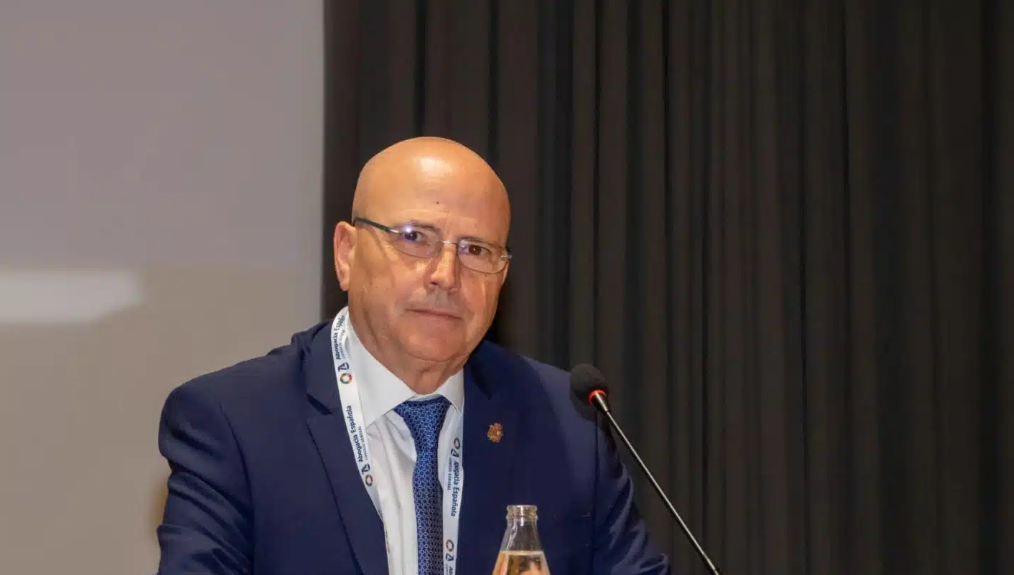
The United States prisoner, unlike Vladimir Putin or Benjamin Netanyahu, has not seen an arrest warrant issued to him by the International Criminal Court (ICC), a factor that, as he explains to the newspaper The Independent the former president of the International Criminal Bar Association, Blas Jesús Imbroda, must be blamed on the body’s Prosecutor’s Office, not on the Court itself. The ICC was born in 2002 with the aim of avoiding unilateral actions and providing legitimacy to international criminal justice, a Court of which, as Imbroda emphasizes, all countries in the world should be a part.
—After Maduro’s capture, one of the most raised issues has been the lack of international mechanisms to act against the regime during these years. What do you attribute this lack to?
The international community would have to reflect to assess whether international organizations have the strength and capacity to carry out an intervention that brings criminals of Maduro’s magnitude to court. From the United Nations, with the Security Council and the veto system, in which there are states that are going to veto any agreement that is directed against certain people or tyrants, it would be necessary to reflect and see what needs to be reviewed so that international organizations have strength and can act against people who are systematically violating human rights, who have people subjugated under a tyranny, who are murdering, detaining and committing crimes against humanity. International law would have to have instruments for there to be an effective response.
—What role should the International Criminal Court play against these types of regimes?
I am convinced that the ICC must play a fundamental role in dealing with this type of people. International criminal justice must take center stage in the face of the most execrable crimes that affect the world, such as crimes against humanity. This must be the one that gives the answer. The ICC has strength, it has mechanisms, but always in the hands of the states. It does not have its own police force: everything derives from the cooperation between them. There are now 125 member states, although that should be all of them, including the United States, which does not support the ICC.
An anomaly of the system is that great powers such as the United States, Russia or China are not state parties. The current tyrannies are neither. Venezuela does, because it comes from before, but, for example, North Korea or Iran does not.
—How is it possible that the Court does investigate actions of a State that is not a party, such as Israel?
Because Gaza is part of the territory of the Palestinian Authority, which is a State party. Therefore, everything that Israel has done in Gaza against the Palestinians can be the subject of investigation and, where appropriate, prosecution at the International Criminal Court.
—Do you think that the case of Venezuela should have been a priority for the ICC?
The case of Venezuela should be a paradigmatic case, although unfortunately this has not been the case due to the slowness of the Prosecutor’s Office. First, because it is a State party. Secondly, because crimes against humanity are being committed that fall under the jurisdiction of the ICC, which, unlike genocide or war crimes, consist of a widespread and systematic attack against the civilian population from the apparatus of power, against the opposition or against anyone who may constitute a danger to power.
There have been many murders, extrajudicial executions and terrible repressions. Also arbitrary arrests, with people who have been in a cell for years without judicial procedures, systematic torture and persecutions. All this has occurred in Venezuela. Maduro turned the regime into a tyranny. Millions of people have had to leave the country; others remain imprisoned. This case is paradigmatic because each and every one of the elements is present.
—Has Venezuela alleged anything in its defense?
The defense that Venezuela made before the ICC was to say that they were already judging and investigating, which is a lie. It is not real, because the first one who should be investigated is Maduro himself. In Venezuela there is no rule of law as such, nor independent judges. There is impunity for all the people in the regime. Consequently, the ICC should have processed a request for an international arrest warrant against Maduro, who would have to be sitting on the bench of the Court.
—Since in principle he is going to be tried for drug trafficking, do you think that at some point he will be tried for these crimes or will it depend on how everything goes in the United States?
The Venezuelan procedure, which continues to be substantiated by the ICC Prosecutor’s Office, must continue. What is being investigated here has nothing to do with what the United States is judging. It is also necessary for the prosecutor to determine the people he considers responsible for these crimes and, accordingly, file charges. One of those people is Maduro. If you do so, which you should, it is at that moment that you can ask the Chamber to adopt detention measures.
If an order is finally issued against Maduro, the ICC should request that he be taken to its facilities to be tried and answer for crimes against humanity. It is a complex situation, absolutely new. We do not know if the Prosecutor’s Office is going to request the order, but if it does not, it would be wrong, because the person most responsible for crimes against humanity is him.
—Can you give any positive examples where the ICC has been effective and acted quickly?
There are procedures that have worked. It is a new Court, which has been operating since 2002; These are not many years for a court of these characteristics. The procedures are extremely complex. There have been convictions. A procedure is recently being held against the former president of the Philippines, Rodrigo Duterte. He is detained at the disposal of the ICC. It is a procedure that is being carried out with great professional success and in a very correct way. There have been other convictions and also some acquittals.
—The process against Venezuela has been open since 2018. Why has it acted so slowly?
It started in February 2018. It’s been eight years, and it’s gone on too long. I am aware of the complexity of criminal proceedings before the Court, but this should have been more agile and swift, and not last as long as it is. In contrast, in the case of Israel and Palestine and in Russia’s aggression against Ukraine, in one year the ICC had issued international arrest warrants against Netanyahu and Hamas leaders, and in the other against Putin and others in Russia. There they acted very well. But there is nothing against Maduro eight years later.
—To what do you attribute this difference in treatment?
The Prosecutor’s Office has not acted correctly. I could have and should have done it sooner. He has evidence about crimes against humanity; Numerous testimonies and evidence of different kinds have been provided that prove them. Furthermore, if the reports of international organizations and missions created under the United Nations to investigate and issue reports on the situation of human rights violations are consulted, which are all published, atrocities and terrible situations have been reported.
Many organizations and NGOs have not stopped exposing serious situations on the part of the regime. With all this, an arrest warrant should have been issued a long time ago. My criticism is of the Prosecutor’s Office, not the Court. Everything is in your hands. The Pre-Trial Chamber cannot do anything if the prosecutor does not press charges and request the international arrest warrant.
—Can’t the United Nations act directly in a case like this?
The ICC is not an organ of the United Nations. It is part of the system, but it is an independent body. The central body of the Court is the Assembly of States Parties to the Court: the 125 States, with their respective delegations, which meet annually in The Hague. This is where it is debated and, where appropriate, approved if any of the articles of the Rome Statute need to be modified. The Assembly is the body that supports the ICC, but cannot intervene in judicial proceedings.
—It has been argued that, if for international law to exist it has to be recognized by both parties and Venezuela ignores that framework, a State can take justice into its own hands. Is the ultimate idea of the ICC precisely to avoid this type of action?
Under international law, it is not acceptable for a State, by force, to enter another country and unilaterally detain a person. Another thing is that there was an agreement through the United Nations, as has happened at other times. However, for the United States it is admissible, because they consider that their criminal laws are extraterritorial to prosecute certain serious crimes that affect national security or put the country’s interests at risk, such as terrorism or drug trafficking. This forcible detention is not considered illegal under American law: they accept that the means used is not decisive, but the purpose.